
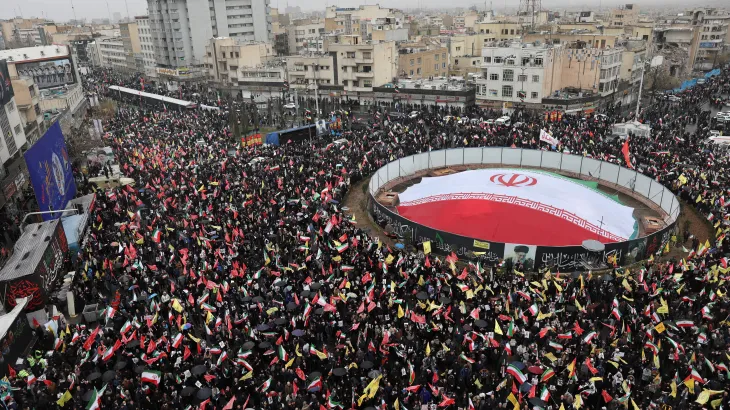
One of the central assumptions behind the US-Israeli military campaign against Iran has failed after three weeks of strikes.
Mossad chief David Barnea told Prime Minister Netanyahu that his agency could spark rebellion within days, a plan he presented to Trump.
Senior US and Israeli intelligence officials warned that aerial bombardment would not trigger mass protests, a prediction now proven accurate.
Agencies on both sides assess Iran’s government as weakened but resilient, with state repression keeping citizens confined to their homes.
Netanyahu reportedly expressed frustration privately, lamenting Mossad’s lack of results and fearing Trump might abandon the operation unexpectedly.
A secondary plan to back Kurdish militias in northern Iraq for a cross-border incursion has quietly collapsed, according to officials.
Israeli strikes in northwestern Iran initially aimed to prepare the ground for the Kurdish push, which Washington ultimately rejected.
Türkiye cautioned the Trump administration against supporting Kurdish forces, and Trump instructed Kurdish leaders on March 7 to stand down.
US-Israeli attacks, launched on February 28, have killed at least 1,300 people, including Supreme Leader Ayatollah Ali Khamenei.
The campaign’s early promise of rapid internal upheaval has not materialised, leaving military planners to recalibrate amid rising tensions.
Analysts say Iran’s resilience underscores the limits of foreign intelligence predictions and the enduring power of state control over dissent.
The failed expectations now shadow the conflict, revealing miscalculations at the highest levels of Israeli and American strategy.