
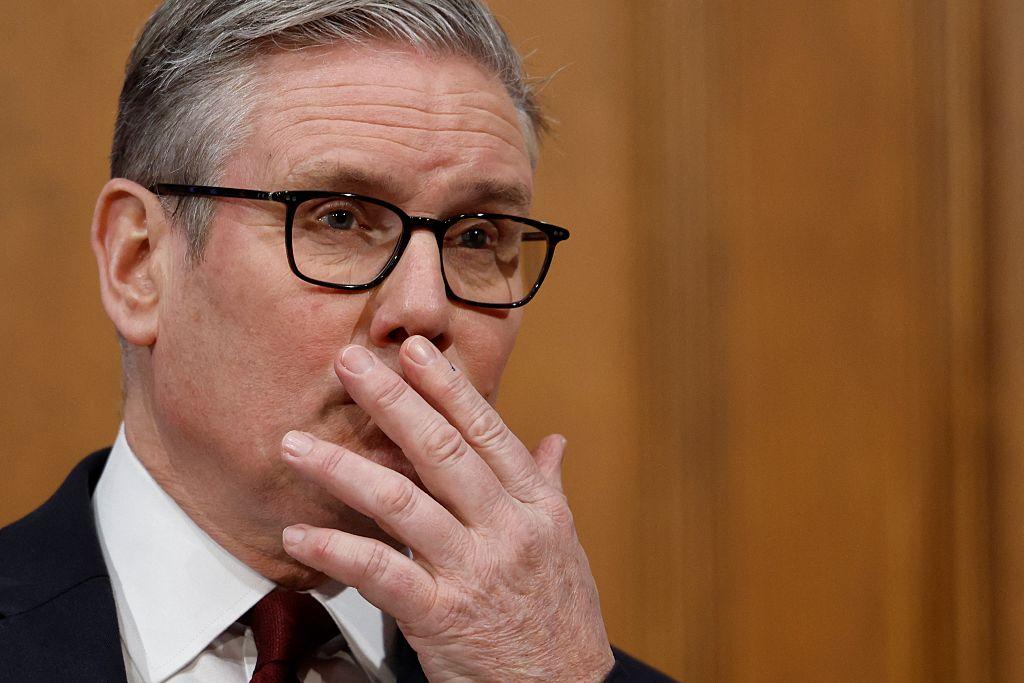
British Prime Minister Keir Starmer announced his resignation on Monday, bringing an abrupt end to his premiership after days of mounting pressure from within the Labour Party.
Starmer confirmed he would step down at a press conference, following a weekend of intense speculation over his future. Downing Street had refused to firmly deny reports that he was preparing to quit, while senior ministers acknowledged that he was weighing the political reality facing his government.
His resignation marks another extraordinary moment in British politics, making him the sixth prime minister to leave office since David Cameron resigned after the Brexit referendum in 2016.
Starmer entered Downing Street promising to restore stability after years of Conservative turmoil. But his government quickly became consumed by poor polling, internal frustration, public anger over immigration and energy costs, and growing doubts over his leadership.
The pressure intensified after Andy Burnham, the Labour mayor of Greater Manchester, won a by-election last week and returned to parliament. Burnham is now widely seen as the leading contender to replace Starmer.
Business Secretary Peter Kyle signalled a shift in the government’s tone on Sunday when he said Starmer was considering the “political reality” of his position. The comment stood in contrast to Starmer’s earlier insistence that he intended to remain in office.
Junior minister Jacqui Smith also admitted that the prime minister was facing a serious challenge, saying he had spent the weekend considering how best to respond while continuing to govern.
US President Donald Trump added to the political drama by claiming on Truth Social that Starmer would resign after what he described as failures on immigration and energy. Downing Street said Starmer had not spoken with Trump over the weekend.
Labour MP Anna Dixon, a supporter of Burnham, said Starmer had appeared to recognise that his time was up and called for a smooth transition of power.
Burnham’s allies argue that his experience in cabinet and his nine years leading Greater Manchester make him a tested figure capable of taking over quickly.
Starmer’s departure leaves Britain facing yet another change of leadership and raises fresh questions about whether any government can deliver the stability voters were promised after a decade of political upheaval.