
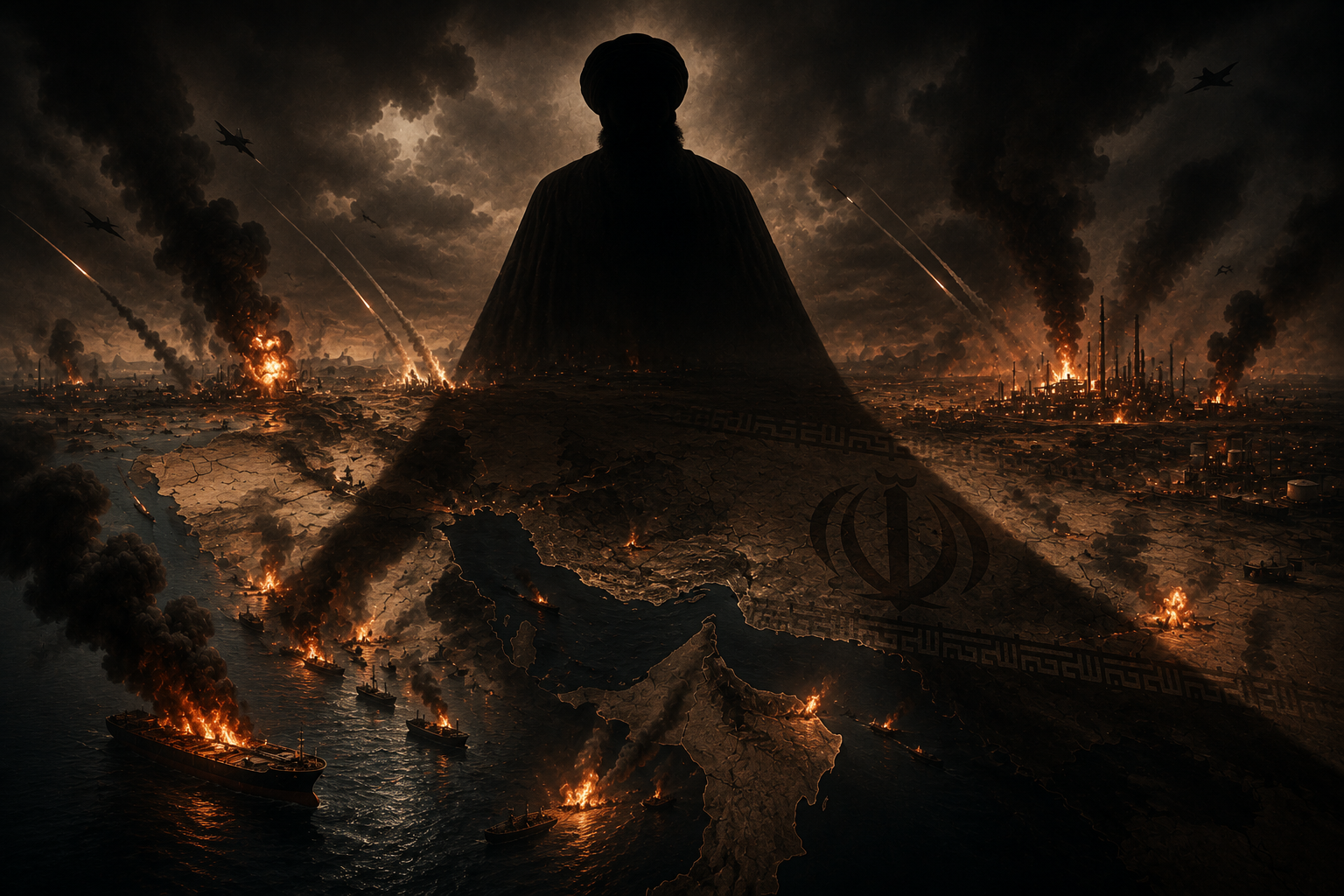
War does not need to burn the Gulf to the ground in order to poison it. It only needs to teach the Gulf how to malfunction. That lesson is already being written in grounded aircraft, rerouted tankers, force majeure notices, refinery outages, repair queues, and insurance repricing. The danger is not one cinematic strike. It is the slow normalization of dysfunction across the richest and most strategically exposed corridor in the Arab world.
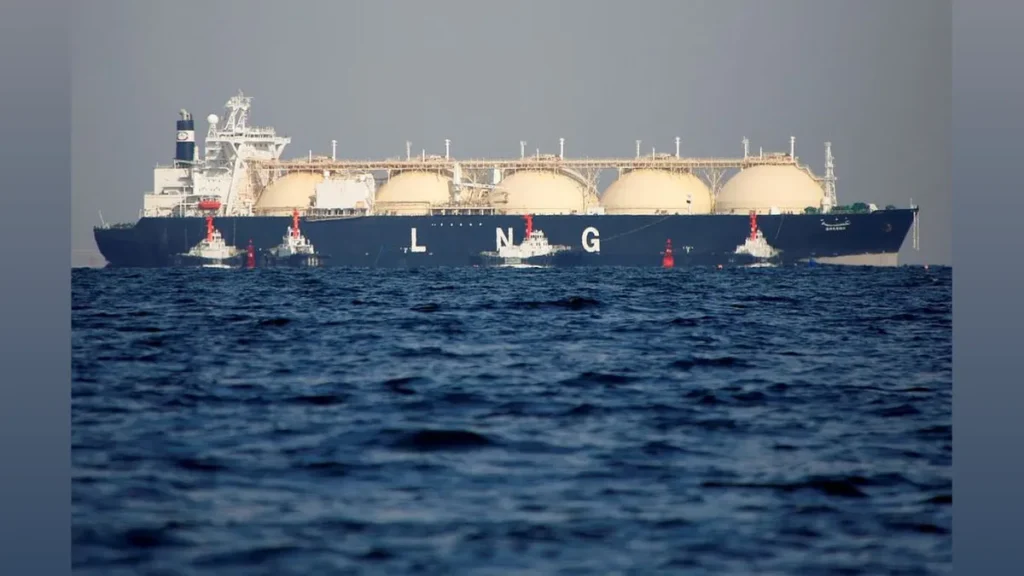
The numbers already look like the opening ledger of a long emergency. The U.S. Energy Information Administration says Gulf producers collectively shut in 10.5 million barrels a day in April and expected nearly 10.8 million b/d in May. Reuters reported that 3.52 million b/d of refining capacity was offline by May 7. QatarEnergy says strikes at Ras Laffan knocked 12.8 mtpa offline, equal to 17% of Qatar’s LNG export capacity, and that repairs may take three to five years. The World Bank says Strait of Hormuz traffic fell to an average of five ships a day between March 2 and March 22, down from 96 a year earlier.
This is a disfigurement of the region’s operating system.
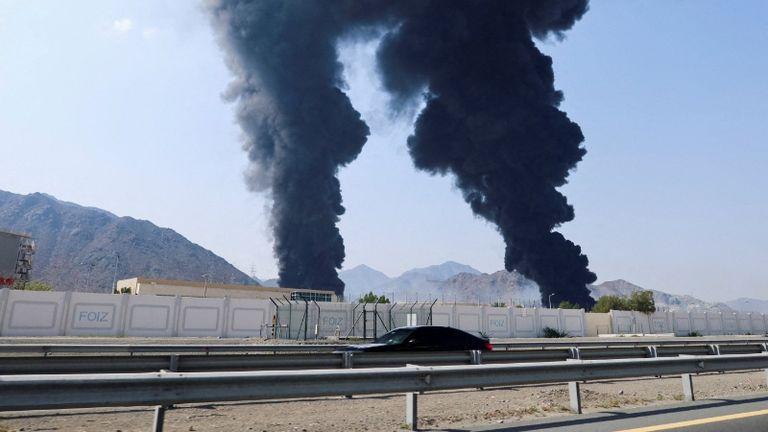
And it is not just hydrocarbons. Reuters reported more than 6,000 flight cancellations across seven Middle Eastern countries after the opening strikes, with Dubai accounting for more than 3,000. By May, Gulf airline recovery was still fragile and well below pre-conflict levels, while jet fuel prices had surged far above prewar norms. In the UAE, Fujairah and Khor Fakkan became emergency lifelines for trade after Hormuz’s effective closure, only for Iranian attacks to show that even the bypass routes are exposed. Fujairah’s crude exports rose sharply, Khor Fakkan’s cargo volumes exploded, and yet both were left under the shadow of Iranian reach.
Even the Gulf’s most resilient states are discovering the limits of resilience. Saudi Arabia restored the East-West pipeline to about 7 million b/d after attacks, and Saudi Aramco says it brought Hawiyah back in under 24 hours and Khurais back in under two days. The UAE is now fast-tracking a new pipeline to double export capacity through Fujairah by 2027. But those facts are not comforting. They show that the region has shifted from assuming unbroken trade to racing for workarounds.
When pipelines, ports, and alternate terminals become wartime arteries, the region is already living inside a different order.
That matters because Gulf wealth is not a private cushion. It is part of the scaffolding of regional order. Saudi Arabia and Qatar cleared Syria’s arrears to the World Bank, reopening access to financing. The UAE has rapidly expanded trade and investment plans with Syria. Lebanon’s modest rebound was driven largely by remittances. Iraq is already seeking financial assistance from the IMF and World Bank after the war and Hormuz disruption blew a hole in state revenues. UNDP’s regional assessment warns that countries including Lebanon, Jordan, Egypt, and Morocco depend heavily on remittances from workers in Gulf economies. If the Gulf is forced into years of repair, subsidy defense, security spending, and risk-premium management, those external cushions will narrow. And when those cushions narrow, fragile states do not merely become poorer. They become easier to penetrate.
That is where the militancy danger begins. Militant resurgences do not usually start with theology alone. They start where states are distracted, prisons are insecure, weapons move, borderlands feel abandoned, and local economies collapse. They start when governments spend more time patching pipelines, subsidizing fuel, and calming investors than they do securing peripheries and managing detainees. They start when rich states still look rich from the air but begin to function poorly on the ground.

The region is already carrying those risk factors. On May 12, Islamic State claimed a deadly ambush on Syrian government forces in Hasakah, its first lethal operation against Damascus since February. Reuters has reported that the group has been reactivating sleeper cells, distributing weapons, moving fighters from the Syrian desert into urban centers, and looking for ways to exploit security gaps. The U.N. Monitoring Team still assesses Islamic State’s combined strength in Iraq and Syria at 1,500 to 3,000 fighters and says it carried out more than 400 operations in Syria in 2024. Iraqi officials told Reuters they worry Islamic State has seized weapons stockpiles left behind in Syria and that some could be smuggled into Iraq.
This is a waiting network.
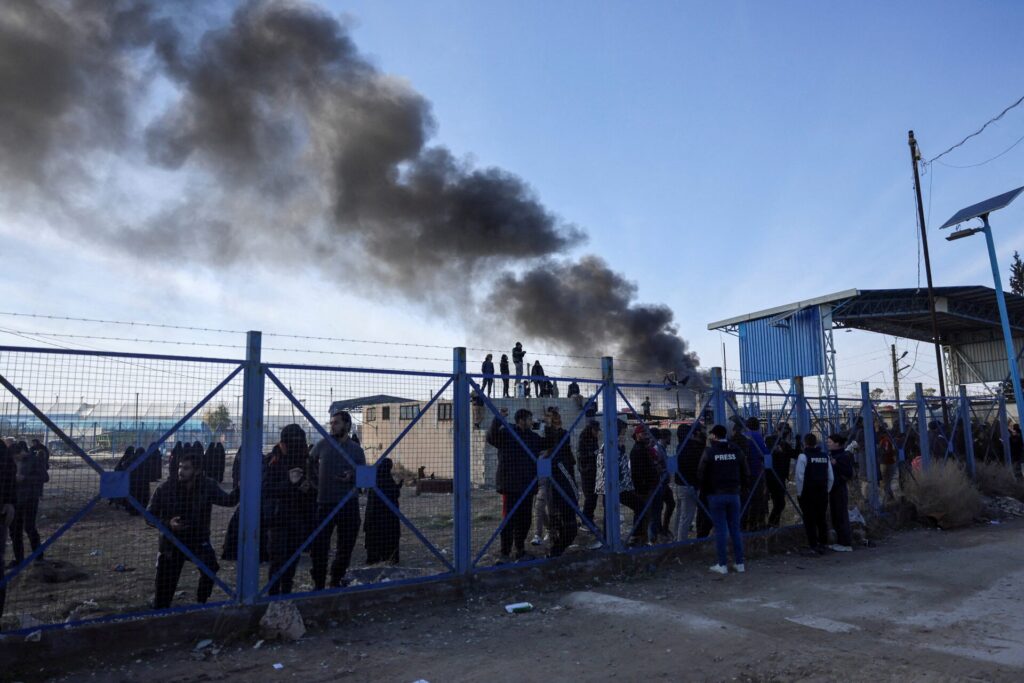
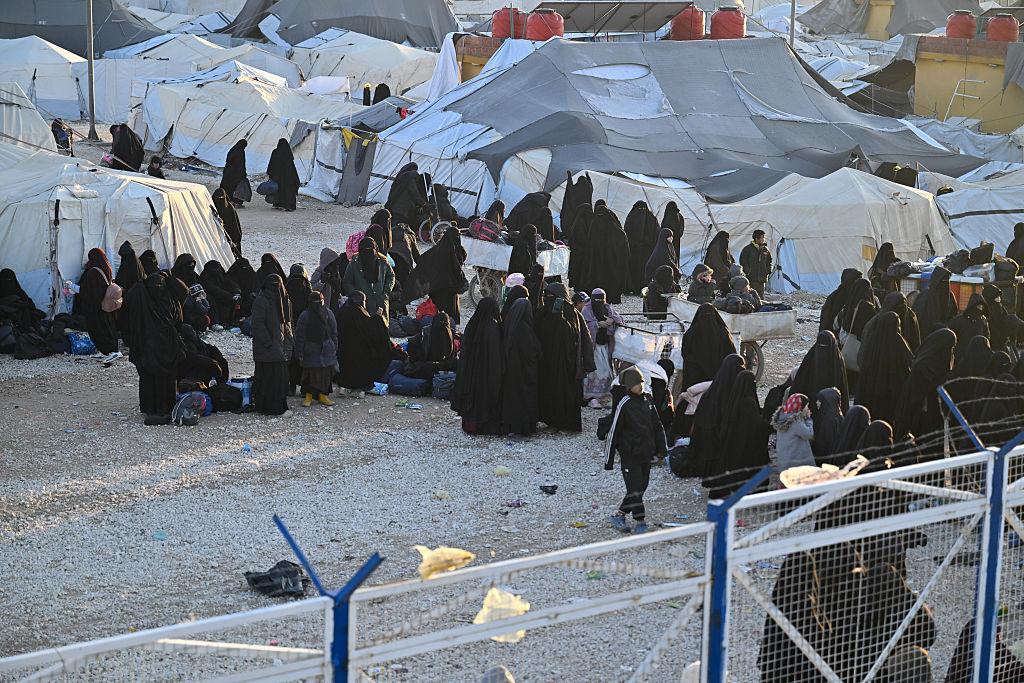
The prison and camp file is even more alarming. The U.N. says camps and prisons in northeast Syria remain a major concern, with roughly 35,000 to 40,000 people in al-Hawl alone and up to 15,000 more in other detention centres. CTC at West Point warns that the collapse of indefinite detention in northeast Syria has created a more diffuse, harder-to-track threat, precisely because prisons have historically served Islamic State as sites of recruitment and operational consolidation. CENTCOM says it transferred more than 5,700 adult male ISIS detainees from Syria to Iraq in February to help prevent a resurgence. That is not the profile of a region safely past the insurgency cycle. That is the profile of a region still trying to hold the doors shut.
History offers no comfort here. CSIS warns that decapitation and externally driven rupture more often produce instability and fragmentation than clean political transition. Brookings experts warn that even successful strikes can simply force repeated rounds of rebuilding and renewed attack. UNDP’s research on violent extremism has likewise found that weak services, broken accountability, abusive securitized responses, and frayed state legitimacy can accelerate recruitment. The lesson is plain: chronic dysfunction does not stay economic for long. It becomes political, then coercive, then militant.
No serious analyst should pretend that Sunni jihadists are on the brink of toppling Gulf monarchies. That remains a tail risk, not the base case. But that caution should not become a sedative. The nearer and more credible danger is a widening militant grey zone: Syria stretched thin, Iraq financially pressured, Lebanon dependent on remittances and fragile calm, detention systems burdened, weapons circulating, and a regional propaganda environment in which states that once projected order suddenly project fatigue. That is more than enough space for militant recovery.
The sharpest warning is the simplest. The Ayatollahs do not need to conquer the Gulf to wound it strategically. If they can keep teaching the Gulf how to malfunction—how to export less reliably, fly less safely, insure less cheaply, repair less quickly, and subsidize more desperately—then the region’s most dangerous legacy will not be one fallen regime. It will be the reopening of the militant space that the Gulf’s money, corridors, and relative order helped suppress.
The death kiss scenario is not an overnight collapse. It is a slow return of the men who thrive when states become busy, tired, and thin.