
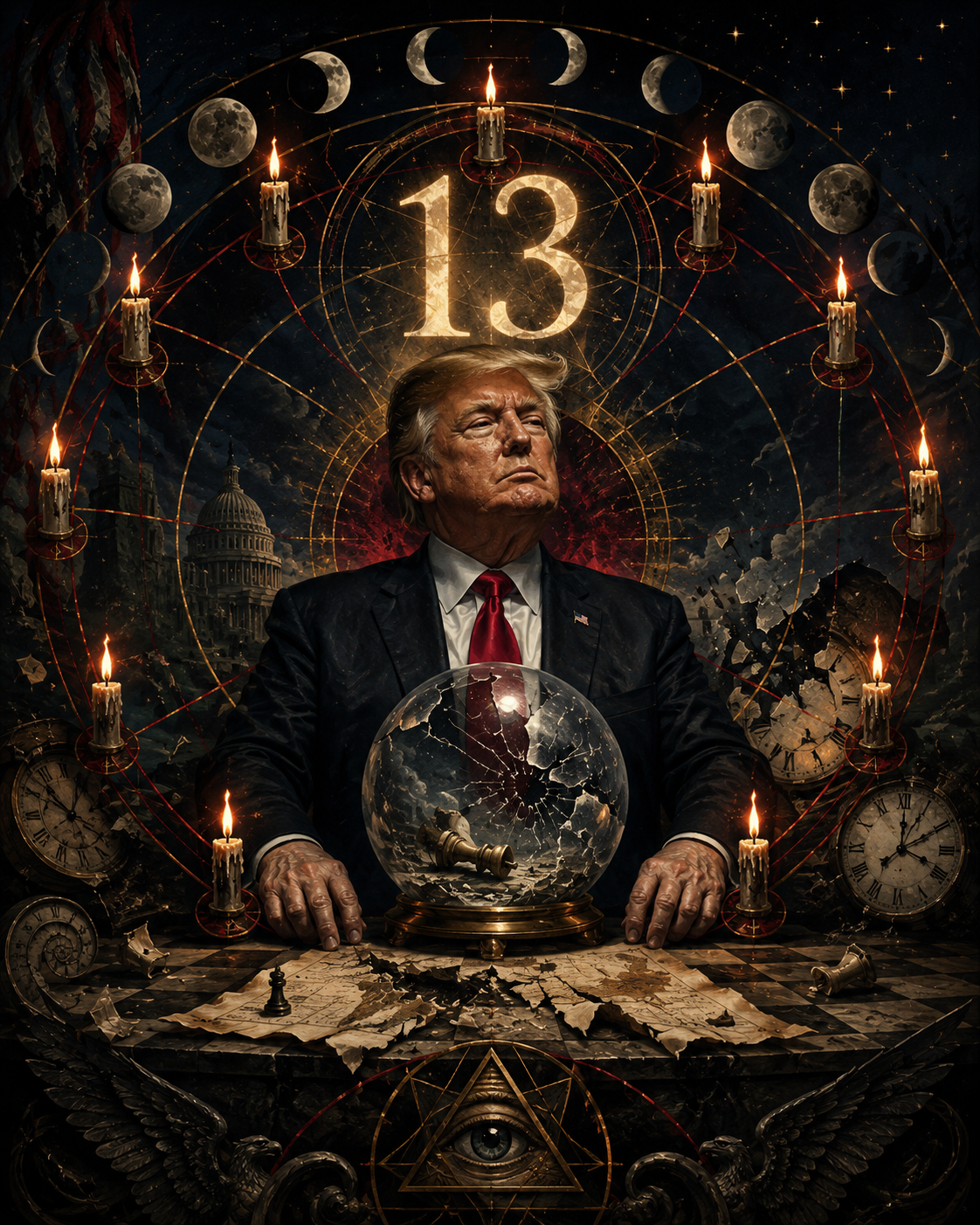
If at first you don’t succeed, try 12 more times.
That appears to have been Donald Trump’s Iran strategy.
Between late March and June 12, the U.S. president and his administration suggested at least 13 times that some version of an Iran breakthrough was close: a ceasefire extension, a peace deal, a nuclear framework, the reopening of the Strait of Hormuz, or what Trump later called a “great settlement.”
Five days. Two weeks. Next week. Two or three days. As soon as this weekend.
Each time, the deal was just over the horizon. Each time, the horizon moved.
The pattern began before the April ceasefire and continued for nearly three months, with Trump repeatedly announcing that diplomacy was in its final stretch, only for Iranian denials, U.S. walkbacks, renewed threats or simple silence to follow.
By June 12, the promised settlement had still not arrived.
What remained is a timeline of public claims that became increasingly difficult to separate from political theater.
The 13 promises
- March 23 — “Giving it five days”
Trump first placed a short clock on the process in late March, saying there was “a very good chance” of reaching a deal and that the sides were “giving it five days.”
The context was the beginning of a diplomatic push around Iran after weeks of military pressure and regional disruption. Trump framed the process as active and near-term.
But five days passed without a deal.
- April 7 — “Very far along”
On April 7, as the first ceasefire entered the public record, Trump wrote that the U.S. was “very far along” in a “definitive Agreement concerning Longterm PEACE with Iran.”
He said “almost all” points of contention had been agreed and that a two-week window would allow the deal to be “finalized and consummated.”
The ceasefire itself was real. Trump announced a two-week pause, while Iran said it would halt operations if U.S. attacks stopped. Israel also agreed to the arrangement.
But the wider agreement Trump described did not follow.
- April 20 — “Relatively quickly”
Nearly two weeks later, Trump insisted he was under “no pressure whatsoever” to make a deal with Iran.
But he still suggested the process was moving fast, saying “it will all happen, relatively quickly.”
That deadline was vaguer than the first two, but the message was the same: the agreement was close enough to describe in near-term language.
Again, no deal emerged.
- May 23 — “Largely negotiated”
On May 23, Trump escalated the claim.
He said an agreement had been “largely negotiated” and that the “final aspects and details” were being discussed. He said an announcement would come “shortly.”
This was one of the clearest claims that a deal was effectively in its final stage.
But Iranian-linked media quickly pushed back. Fars News Agency, close to Iran’s Revolutionary Guard, rejected parts of Trump’s version, including suggestions around the Strait of Hormuz.
- May 23 — Strait of Hormuz reopening claim
In the same May 23 cycle, Trump also suggested that the Strait of Hormuz would reopen as part of the arrangement.
That claim was especially significant because the Strait had become central to the crisis and to global energy concerns.
But Iranian-linked reporting said the waterway would remain under Iranian control and disputed the idea that Washington had secured such a concession.
- May 24 — “Orderly and constructive”
The next day, May 24, Trump shifted tone.
He said talks were “orderly and constructive,” but added that he had instructed his representatives “not to rush into a deal.”
He also said the blockade would remain until an agreement was “reached, certified, and signed.”
The walkback mattered. A deal that had been “largely negotiated” and expected “shortly” was suddenly something not to be rushed.
- May 29 — “Final determination”
On May 29, Trump again suggested the process was near a decisive moment.
He said “other items, of far less importance, have been agreed to” and that he was going to the Situation Room “to make a final determination.”
He also said “no money will be exchanged, until further notice.”
Iranian reporting again challenged the account. Fars described Trump’s version as a “mixture of truth and lies” and said the draft under discussion did involve the release of frozen Iranian assets.
- June 1 — “Over the next week”
On June 1, Trump told ABC News he expected an agreement “over the next week” to extend the ceasefire and reopen the Strait of Hormuz.
This was another clear deadline.
It also linked two of the central promises: extending the ceasefire and restoring passage through the Strait.
The week passed without the announced breakthrough.
- June 1 — “Rapid pace”
Later the same day, Trump wrote that talks were continuing “at a rapid pace.”
The phrase was softer than “next week,” but it reinforced the same message: the deal was moving quickly and was not far off.
There was still no signed agreement.
- June 8 — “Total victory” in two weeks
On June 8, Trump told supporters at a tele-rally that they would see “total victory” over the next two weeks and that it would happen “very soon.”
The language was less specific than some of his other statements, but it kept the same near-term frame alive.
By then, Trump had already missed the five-day, two-week and next-week windows he had previously suggested.
- June 9 — “Final throes”
On June 9, Trump told reporters the sides were in the “final throes” of what he called a “very very good deal.”
He said the Strait of Hormuz would open “immediately upon signing,” which he suggested could happen in “two or three days.”
It was another exact short deadline.
Two or three days later, the deal had still not materialized.
- June 9 — Vance says U.S. “very close”
That same day, Vice President JD Vance said the U.S. was “very close” to a deal addressing Iran’s nuclear program.
But Vance also hedged, saying the deal could come “next week or months from now.”
The contradiction captured the administration’s broader messaging problem: officials wanted to project momentum, but could not say when, or whether, the agreement would actually arrive.
- June 11 — “Great settlement” and “as soon as this weekend”
By June 11, Trump was still selling the breakthrough.
He claimed he had canceled planned strikes because the final points of a deal had been approved by “all parties involved.”
But Iran was not one of the parties he named.
Hours later, he told reporters the U.S. had reached a “great settlement” and said a signing could happen “as soon as this weekend.”
By June 12, there was still no signed peace deal, no nuclear agreement and no clear settlement.
At most, what appeared to be emerging was an MOU to be revealed later — not a deal ending the crisis, but a memorandum to keep talking about one.
In other words, after 13 announcements that peace was close, the result was a document promising more meetings.
By the thirteenth claim, the number itself had become the story.
Thirteen promises.
Thirteen moving deadlines.
Thirteen public claims of an imminent breakthrough, followed by denials, delays, walkbacks or silence.
And you know what they say about 13.
It is an ominous number.