
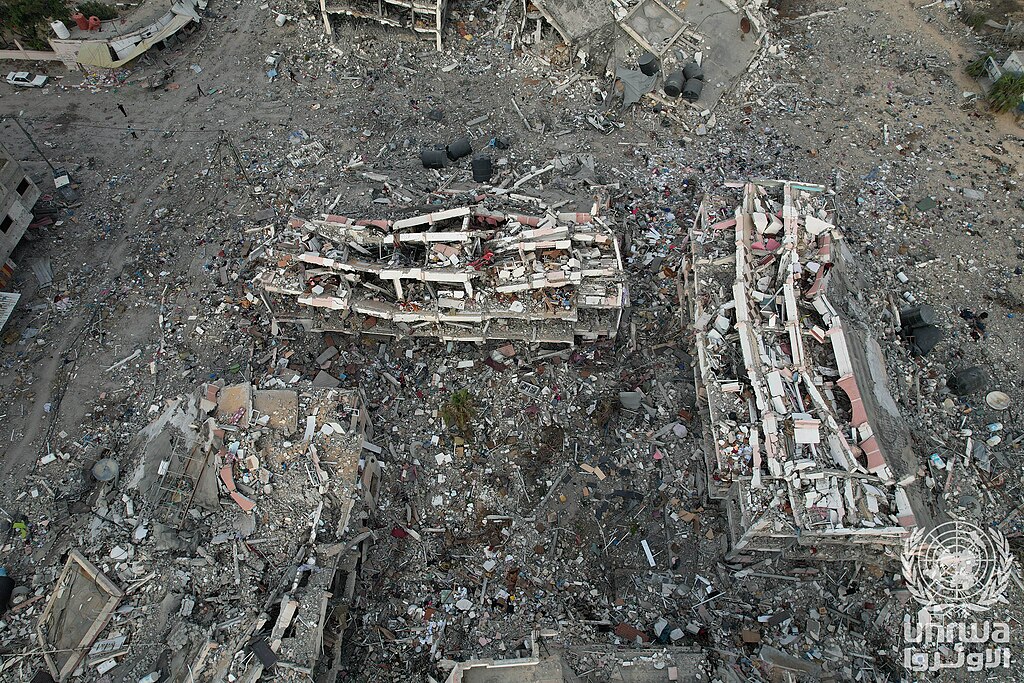
Three years into what UN experts and rights groups have described as genocide in Gaza, the Palestinian enclave has been transformed by death, destruction and displacement.
More than 74,245 Palestinians have been killed since October 2023, according to Gaza’s Ministry of Health. Homes, hospitals, schools, businesses and vital infrastructure have suffered widespread destruction.
Although a ceasefire was announced in October 2025, violence has continued. The Health Ministry says another 1,462 Palestinians have been killed since the ceasefire took effect.
Al Jazeera reported that three years of war have changed almost every aspect of daily life. Palestinians face severe problems accessing housing, healthcare, education, water, electricity and employment.
UN experts and rights organisations have described Israel’s conduct in Gaza as genocide. Israel rejects accusations of genocide. South Africa’s genocide case against Israel remains before the International Court of Justice.
Genocide in Gaza leaves families struggling for basic needs
For many Palestinians, securing the basic necessities of daily life has become increasingly difficult.
In September, the United Nations said 94 percent of Gaza’s population remained in urgent need of shelter and basic household assistance.
Around 65 percent of households were living in tents or makeshift shelters. Many families also lacked adequate bedding, lighting, cooking equipment and sanitation facilities.
Water remains another major problem. According to UN data cited by Al Jazeera, 91 percent of assessed households experienced moderate-to-high water insecurity in early August.
Gaza also remains without a functioning electricity grid. Homes and essential services depend heavily on generators and increasingly limited fuel.
Damaged roads and communications infrastructure have made movement and access to essential services more difficult.
Gaza economy devastated
The war has severely damaged Gaza’s economy.
The UN Conference on Trade and Development estimated in September that 92 percent of Gaza’s economic establishments had been damaged or destroyed since October 2023.
Unemployment reached 78 percent. GDP per capita stood at just $212 in 2025, around 17 percent of its 2022 level.
Agriculture and industry were each operating at only 6 percent of their 2022 output. Construction had fallen to just 1 percent.
Prices in September remained around 200 percent above levels recorded before October 2023, according to the UN.
With jobs and incomes disappearing, many families have become increasingly dependent on humanitarian assistance, debt and informal work.
Nearly all Gaza schools damaged
Education has suffered extensive disruption during the genocide in Gaza.
Nearly 98 percent of schools have been damaged or destroyed, according to UNICEF.
As of April 2026, around 700,000 children aged four to 17 had missed almost three consecutive years of regular in-person education.
Some children are studying in tents and temporary learning spaces. However, around 200,000 children have no access to education.
Palestinian education authorities have warned that prolonged disruption has caused serious learning losses.
Healthcare system pushed towards collapse
Gaza’s healthcare system has also been severely weakened.
All 36 hospitals in Gaza have suffered damage, according to the World Health Organization. Only 19 are currently functioning. None is operating at full capacity.
Medical facilities continue to face shortages of medicines, equipment, diagnostic supplies and fuel.
These shortages have disrupted cancer treatment, dialysis and care for people with chronic illnesses.
Around 12,400 patients have been medically evacuated from Gaza since October 2023. However, WHO says tens of thousands more require specialised treatment unavailable inside the territory.
Overcrowding and inadequate access to shelter, clean water and sanitation have also increased the risk of disease outbreaks.
Palestinians pushed into smaller areas
The physical geography of Gaza has also changed dramatically.
Israeli military control and access restrictions have prevented Palestinians from reaching large parts of the territory, including homes and farmland.
In September, Euro-Med Human Rights Monitor said Israeli military control and restrictions covered around 70 percent of Gaza.
It said more than two million Palestinians were concentrated in less than 30 percent of the territory.
Rafah has been particularly affected. More than one million displaced Palestinians had previously sought refuge in the southern city.
An Israeli military operation there in May 2024 displaced more than 800,000 people, according to the UN.
Much of Rafah is now under Israeli control, preventing many displaced residents from returning home.
Three years of destruction
The genocide in Gaza, as described by UN experts and rights groups, has also disrupted civilian administration and public services.
Hamas governed Gaza before the war, but its administrative and security structures have been severely weakened.
In July, Hamas announced plans to transfer administrative powers to the National Committee for the Administration of Gaza. However, Al Jazeera reported that the transition had yet to take place.
The UN Human Rights Office recorded at least 12 attacks on police between January and May 2026. Those attacks killed 53 people, including 35 police officers.
Three years after the war began, Gaza faces enormous challenges. Housing, education, healthcare and economic activity have suffered extensive damage, while millions of Palestinians continue to face displacement and uncertainty.