
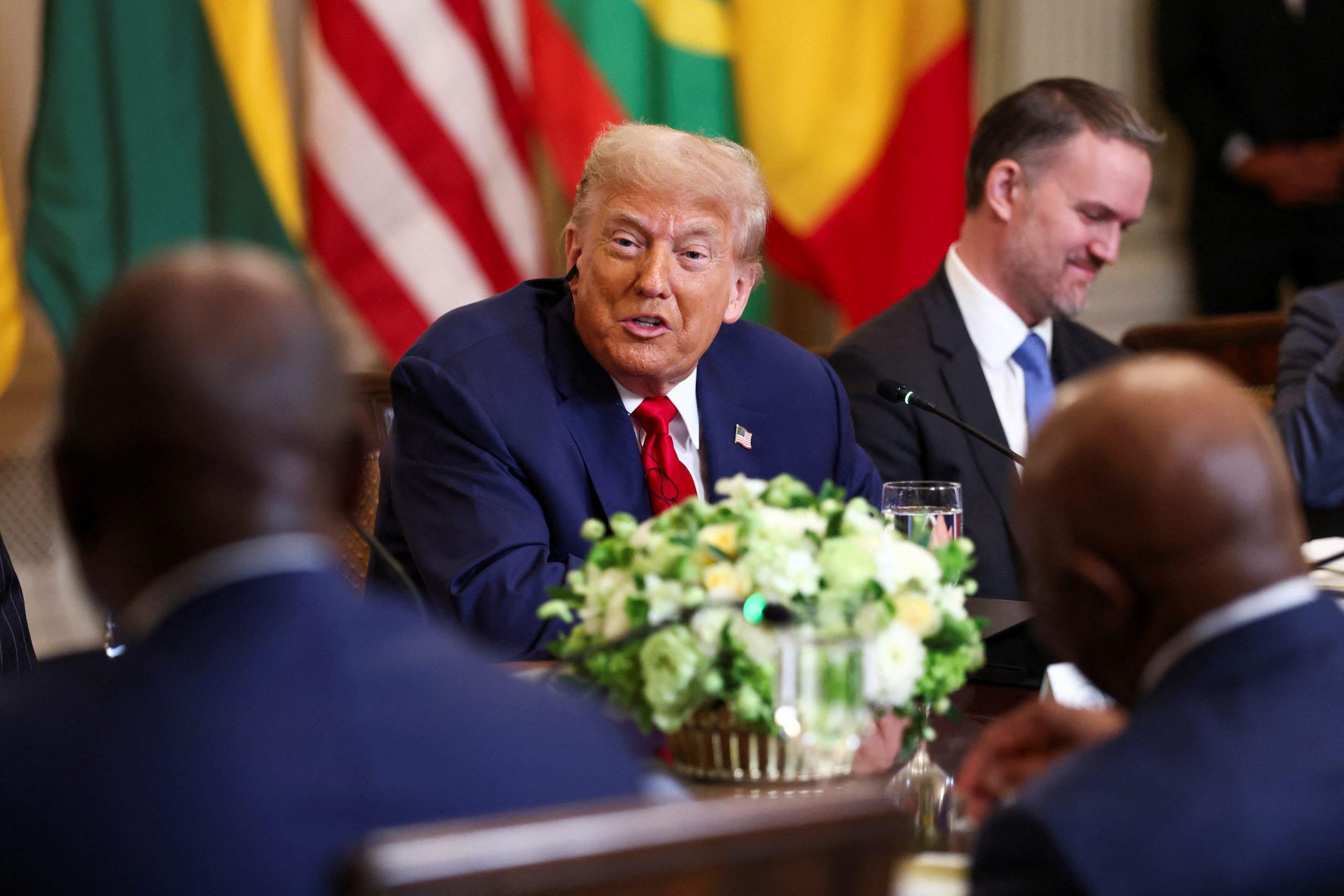
US President Donald Trump is enjoying surprisingly strong support among young Africans, even as his popularity has declined in other parts of the world, according to a new analysis by Foreign Policy.
Around three in five young Africans believe Trump’s leadership could benefit their countries, according to the 2026 African Youth Survey, which interviewed nearly 5,000 people aged 18 to 24 across 16 African countries.
The findings point to a striking shift since the 2024 US presidential election. At the time, 42% of young Africans surveyed believed Joe Biden would be more beneficial to their countries, compared with just 23% who favoured Trump. Now, nearly two-thirds express optimism about what Trump’s second administration could deliver.
Appeal of Trump’s transactional politics
Foreign Policy said Trump’s appeal appears to extend beyond specific US policies toward Africa.
For some young Africans, particularly men and socially conservative respondents, his image as a wealthy businessman and political outsider who speaks openly about power, national interests and dealmaking has proved attractive.
Chipo Dendere, an associate professor of Africana studies at Wellesley College, told the magazine that some young African men may have been drawn toward Trump by forces similar to those influencing younger male voters in the United States, including the growth of the online “manosphere” and other male-oriented social media communities.
The attraction also reflects growing support for a more transactional approach to international relations.
More than half of respondents in the African Youth Survey said foreign partnerships should be judged primarily by tangible benefits such as investment and trade rather than ideological alignment or shared values.
‘America First’ with an African interpretation
Support for Trump does not necessarily mean young Africans want their countries to emulate the United States.
In South Africa, Freeman Bhengu, a member of an organisation campaigning against irregular immigration, told Foreign Policy that Trump’s “America First” message could be interpreted in an African context as a call for governments to put their own citizens first.
That sentiment also does not appear to translate automatically into support for authoritarian rule.
Foreign Policy noted that other surveys continue to show strong backing among African youth for democracy, independent institutions and limits on presidential terms.
In Nigeria, political analyst Joshua Akintayo said Trump’s popularity may in some cases represent dissatisfaction with the country’s own political establishment, with support for the US president serving as an indirect protest against domestic leaders.
Aid cuts divide opinion
Trump’s sweeping reductions to US foreign assistance have generated alarm among humanitarian organisations and development experts, but African youth are divided over their impact.
Around 26% of those surveyed believed cuts to US assistance could have positive consequences, particularly by forcing governments to take greater responsibility for citizens’ needs and become less dependent on foreign aid.
That view was particularly visible among respondents in Ghana, Liberia and Nigeria.
At the same time, just under half of respondents said the dismantling of USAID would negatively affect their countries, particularly in healthcare and disease prevention.
In the Sahel, Foreign Policy said Trump’s reluctance to intervene in countries’ internal politics has also found support among some governments and communities, which increasingly favour partnerships based on mutual interests rather than governance conditions.
Washington itself has increasingly shifted toward that model.
The US State Department’s Bureau of African Affairs has launched a $500 million US-Africa Strategic Investment Program focused on critical minerals and commercial diplomacy. Official documents describe the programme as part of an “America First” approach aimed at advancing US interests through private-sector-led investment rather than traditional aid.
Support for Trump does not equal trust in Washington
Despite Trump’s relatively favourable standing, the survey also revealed deep suspicion of US intentions in Africa.
Large majorities remain concerned about foreign influence, particularly competition for the continent’s natural resources.
Foreign Policy said seven in 10 young people surveyed in South Africa and Liberia believed Washington could disregard international law in order to secure access to those resources.
China also remains a formidable competitor for African public opinion.
Although the United States is viewed as slightly more influential overall, China receives stronger favourable ratings among respondents who consider it influential.
The survey also suggests that enthusiasm for Trump should not be mistaken for enthusiasm for a US-led international order.
Young Africans overwhelmingly favour a more multipolar system, with 79% supporting reform of the United Nations and a permanent African seat on the UN Security Council.
The broader picture is therefore more complicated than simple support for Washington: many young Africans appear attracted to Trump’s emphasis on national interest, bargaining power and economic deals while simultaneously demanding greater African autonomy in the international system.