
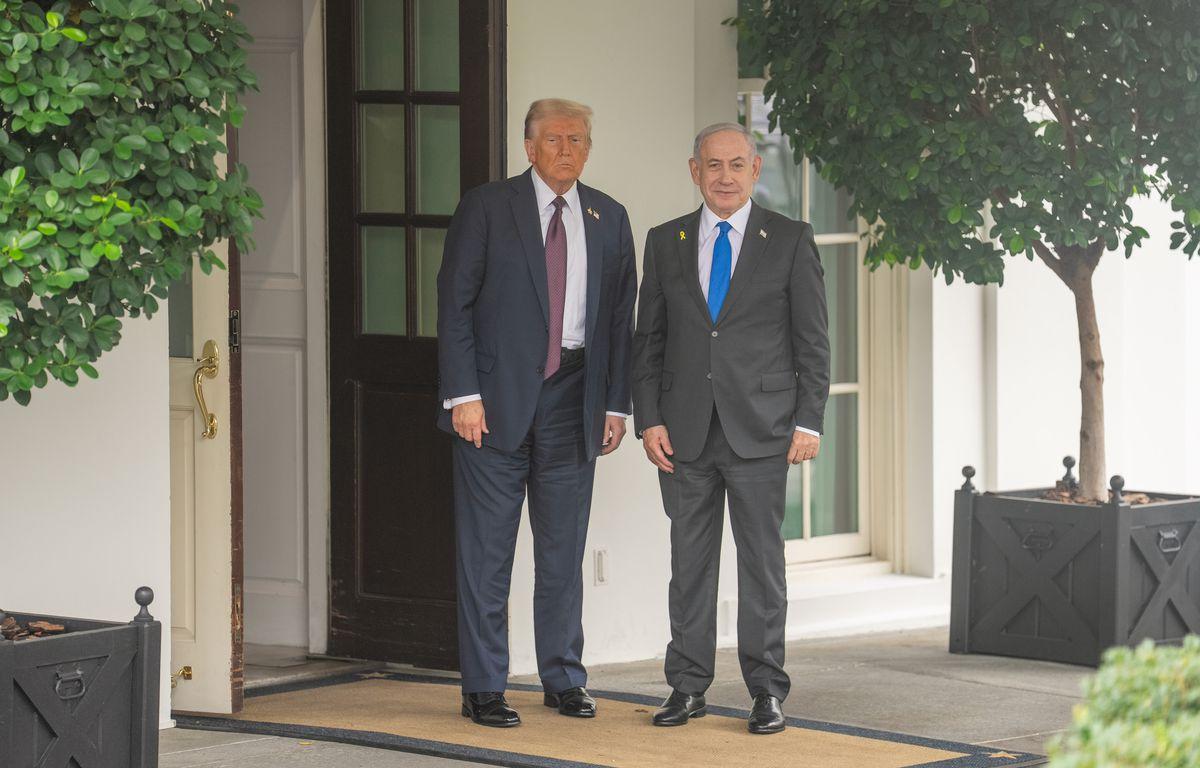
A forthcoming meeting between US President Donald Trump and Israeli Prime Minister Benjamin Netanyahu could determine the timing and scope of a possible joint military operation against Iran, according to US diplomatic and military sources cited by Erem News.
The sources said the Trump administration is preparing an operational framework to present during Netanyahu’s expected visit to Washington, should the two leaders agree to launch a coordinated campaign.
The proposed operation would initially focus on weakening Iran’s Islamic Revolutionary Guard Corps and reducing its influence over Tehran’s military and political decision-making, rather than immediately targeting the country’s nuclear facilities.
According to the sources, the first phase would target the Revolutionary Guard’s air and naval forces, ballistic missile systems, drone units, air defences and command centres, with the aim of severely restricting its operational capabilities within approximately 10 days.
Washington reportedly believes that neutralising much of the Revolutionary Guard’s military capacity would strengthen its position in any subsequent negotiations with Tehran over Iran’s nuclear programme, shipping security in the Strait of Hormuz and wider regional disputes.
Three levels of possible military action
The sources said a joint operations group involving US military and intelligence officials has prepared three broad levels of potential action against Iran. The plans are reportedly being updated before they are submitted to political leaders in Washington and Tel Aviv.
The first level would focus on the Revolutionary Guard’s military infrastructure, including land, naval and air bases, missile launch sites, drone units and command-and-control centres.
The second would expand the campaign to strategic infrastructure, including energy facilities, transport networks, oil storage sites and industrial installations considered important to Iran’s economy and military logistics.
The third level would involve strikes against Iranian nuclear facilities. According to the sources, any decision to pursue that option would remain solely with the US president because of its potentially far-reaching political and military consequences.
Washington seeks control over operation
A US diplomat familiar with relations between Washington and Israel said Trump agreed to meet Netanyahu following intensive political contacts aimed at aligning the two governments’ positions.
The White House, however, reportedly insists that the United States retain political and military leadership of any joint campaign.
The source said officials from the Pentagon, CIA, Israel’s Defence Ministry and Mossad had held intensive discussions over the past two weeks concerning the division of responsibilities, potential targets and the management of a wider confrontation.
Most logistical and military preparations were said to be largely complete, while current discussions were focused on the timing, scale and initial targets of any operation.
Washington also reportedly wants to ensure that Israel does not act beyond the operational framework approved by the US administration.
Concerns over Iranian retaliation
A former US Defense Department official said one of Trump’s biggest challenges would be managing a coordinated operation while preparing for possible Iranian retaliation through Tehran-aligned groups across the region, particularly Yemen’s Houthis and Hezbollah.
US officials are reportedly considering how to divide operational sectors between American and Israeli forces based on geography and target type.
They are also assessing whether Israel could contain retaliatory attacks without disrupting the broader campaign.
A potential “war meeting”
Hussein al-Deek, an analyst specialising in US-Israeli relations, described the forthcoming Trump-Netanyahu summit as a possible “war meeting”.
He said the two leaders could agree on the timing, targets and level of firepower involved in any future military operation.
According to al-Deek, Washington’s position has moved closer to Israel’s after earlier attempts to pressure Iran through negotiations failed to produce the desired outcome.
He said military action against Iran was not a newly developed option, but part of contingency planning prepared over several years by US and Israeli security institutions.
Al-Deek added that future action might not be limited to air strikes. More complex scenarios could include limited landings along Iran’s coastline and coordinated activity by Iranian opposition groups if Washington and Israel decide to escalate the confrontation.
The claims regarding the proposed operation, its targets and its timetable were attributed by Erem News to unnamed diplomatic, military and intelligence sources and had not been publicly confirmed by the US or Israeli governments.