
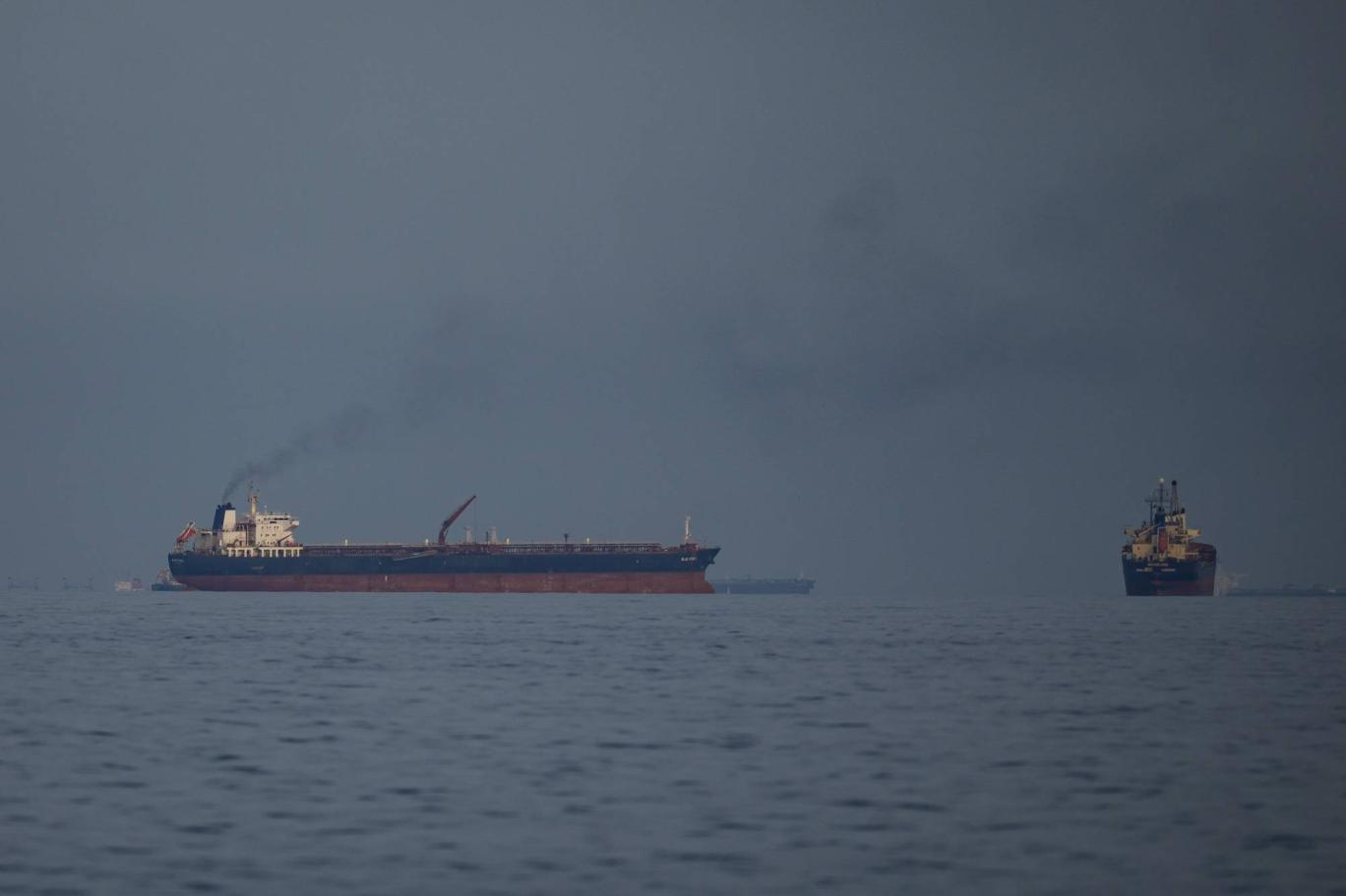
U.S. President Donald Trump said on Sunday there was no need to rush into a deal with Iran, dampening expectations of an imminent breakthrough after earlier suggesting that Washington and Tehran were close to an understanding to reopen the Strait of Hormuz.
Trump wrote on Truth Social that the U.S. blockade on Iranian ships in the Strait of Hormuz would “remain in full force and effect” until any agreement was completed, certified and signed. He said both sides should “take their time and get it right.”
The comments came a day after Trump said the two sides had “largely negotiated” a memorandum of understanding on a peace deal that could reopen the vital waterway, which carried about one-fifth of global oil and liquefied natural gas shipments before the conflict.
Iran’s government did not immediately respond. However, Tasnim news agency, which is linked to the Revolutionary Guards, said Washington was still obstructing key parts of a possible deal, including Tehran’s demand for the release of frozen Iranian funds.
A senior Trump administration official said no agreement would be signed on Sunday, citing unresolved “practical considerations” and the pace of Iran’s decision-making system.
The official said Iran had agreed “in principle” to reopen the Strait of Hormuz in return for the lifting of the U.S. naval blockade, and had also agreed to dispose of its highly enriched uranium. He said Washington understood that Iran’s Supreme Leader Ayatollah Mojtaba Khamenei had endorsed the broad outline of the proposal.
There was no immediate confirmation from Iran.
The official said the U.S. envisioned a phased process, beginning with the reopening of the strait and the lifting of the blockade, followed by negotiations on the mechanism for Iran to give up parts of its nuclear programme.
Negotiations over the nuclear details would take more time, he added, saying the remaining dispute was not whether Iran would give up its enriched uranium stockpile, but how it would do so.
Iranian sources have said future stages could include “feasible formulas” for addressing the highly enriched uranium issue, including dilution under the supervision of the U.N. nuclear watchdog.
Iran has long denied U.S. and Israeli accusations that it is seeking nuclear weapons, saying its nuclear programme is for civilian purposes. Western states have argued that the level of enrichment achieved by Tehran far exceeds what is needed for power generation.
Another possible obstacle emerged after an Iranian military adviser to Khamenei said Tehran had the legal right to manage the Strait of Hormuz. It was not immediately clear whether that meant Iran intended to keep controlling which vessels could pass.
Iran’s Revolutionary Guards said 33 vessels had crossed the strait in the previous 24 hours after receiving permission from Tehran, far below the roughly 140 vessels that passed daily before the war.
A deal that strengthens the current fragile ceasefire could ease pressure on global markets, but officials and energy executives warn it would not immediately end the energy shock caused by the conflict. The head of Abu Dhabi National Oil Company said last week that full flows through the strait may not return before the first or second quarter of 2027.
The U.S.-Israeli bombing campaign against Iran, launched on February 28 and suspended in early April, killed thousands of people in Iran. The wider conflict has also devastated Lebanon, where Israel’s campaign against Hezbollah has killed thousands and displaced hundreds of thousands. Iranian strikes on Israel and Gulf states have killed dozens.