
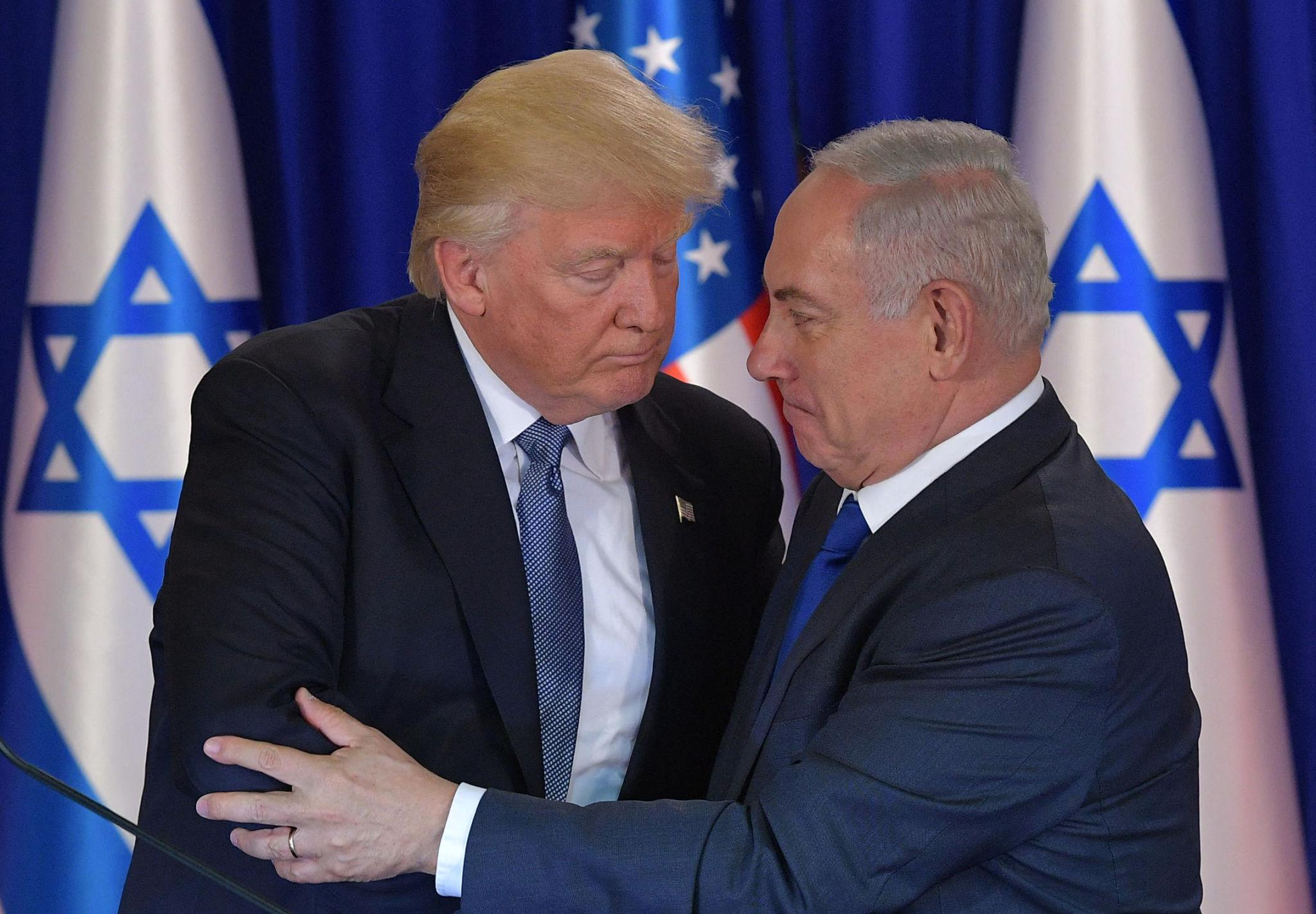
Donald Trump is already preparing the escape route.
After days of insisting that a deal with Iran was close, ready, imminent, agreed, delayed, revived and then somehow still “very close,” the US president has now found the man he may blame if the entire weekend spectacle collapses: Benjamin Netanyahu.
Trump publicly criticised Israel’s strike on Beirut’s southern suburbs, saying it “should not have happened” and warning there should be no more Israeli attacks in Lebanon. Privately, according to Axios, he was even harsher, asking why “Bibi” had to launch an attack and saying Netanyahu had “no fucking judgment.”
Trump also claimed the US-Iran agreement had been delayed by Israel’s strikes but would still be signed within the next few hours. That line is the tell. He is not simply condemning Netanyahu. He is pre-writing the excuse: if the deal appears, he takes the victory; if it collapses, Netanyahu becomes the man who ruined it.
But the timing of Trump’s sudden fury tells its own story.
For days, the White House has sold the Iran track as a breakthrough waiting only for signatures. Pakistan, acting as a mediator, has echoed the same line. Trump has presented the agreement as something almost complete, something that could be delivered over the weekend, something that would reopen the Strait of Hormuz, unlock frozen funds and end a war that has badly damaged his claim to be the president who brings conflicts to a close.
Now, as Tehran signals hesitation, Israeli strikes continue, and the promised signing slips again, Trump is doing what Trump always does when the show starts falling apart: he is looking for someone else to carry the stink.
Netanyahu is the easiest target. He is unpopular internationally, already isolated by the war, and openly resistant to any deal that limits Israel’s freedom to strike Hezbollah or Iran-linked targets. By blaming Netanyahu for a Beirut strike at the “last second,” Trump can present himself as the peacemaker betrayed by a reckless ally, rather than the salesman of a deal that was never as final as he claimed.
That is the point of the latest comments.
Trump is not simply angry at Netanyahu. He is building the alibi.
If there is no deal, the story from Washington can now become simple: Trump had it done, Pakistan had it lined up, Iran was almost there, and Netanyahu ruined it with one more attack. The failure becomes Israel’s fault, not Trump’s. The collapse becomes sabotage, not overpromising. The farce becomes betrayal.
That is why the next few hours matter.
If Iran fires again, Trump can say Tehran chose escalation over peace. If Israel strikes Hezbollah again, he can say Netanyahu sabotaged diplomacy. If Hezbollah responds from Lebanon, he can say the region’s “bad actors” destroyed a deal he had already secured. Every possible strike now serves the same political purpose: it gives Trump the event he needs to explain why the promised agreement did not arrive.
In other words, the battlefield may become the excuse.
The danger is that Trump is no longer just negotiating around the war. He is waiting for the war to provide him with the cleanest possible scapegoat. A fresh Israeli strike, an Iranian retaliation, or a Hezbollah attack would all allow him to say he had peace in his hands before someone else knocked it away.
The problem is that the record is already too messy for that version to hold.
Since the ceasefire, Iran has largely kept its public position consistent: no final agreement without guarantees, no confidence in Washington while Israel continues to attack, and no surrender dressed up as diplomacy. Trump, by contrast, has flipped from certainty to warning, from celebration to blame, from claiming a deal is ready to suggesting others may have disrupted it.
Trump has repeatedly tried to turn a fragile, unfinished process into a personal victory lap before the agreement even exists. He has spoken as though the deal was done, then admitted it was delayed. He has promised a breakthrough, then blamed the timing. He has treated diplomacy like a television reveal, only to discover that Iran, Israel, Hezbollah and Pakistan are not extras in his campaign commercial.
That is why Netanyahu may not be the last scapegoat.
If Israeli attacks continue, Trump will blame Israel. If Iran retaliates, he will blame Tehran. If Pakistan fails to deliver the optics he wants, the phrase “at the request of Pakistan” may quickly become “Pakistan misled us” or “Pakistan was dishonest.” Every actor around Trump is now a potential fall guy for a deal he has oversold.
The desperation is not hard to read.
Trump is under domestic pressure ahead of the midterms. His administration needs a foreign policy win. His war with Iran has dragged on, disrupted oil markets, strained allies and exposed the limits of American coercion. And the timing of the supposed breakthrough — pushed over Trump’s birthday weekend — has always looked less like diplomacy than political theatre.
A real peace deal does not need to be rushed like a birthday gift.
A real agreement does not require hourly declarations that it is about to happen. A real breakthrough is not constantly endangered by every missile, every Israeli strike, every Iranian statement and every mediator’s leak. What Trump is selling is not stability. It is a photo opportunity he badly needs before the politics turn even uglier.
That is why his attack on Netanyahu matters.
It is not just a rupture between two leaders. It is the first visible stage of Trump’s blame operation. The president who claimed he alone could end the war is now preparing to say someone else prevented him from doing it.
The deal may still be announced. A document may still be signed. Trump may still appear before cameras and declare victory. But the frantic movement of the past few days has already exposed the truth beneath the performance.
Washington is not managing peace. It is managing around Trump’s birthday bash this weekend.
Whatever Trump sells as an “incredible” breakthrough is nothing more than a memorandum of understanding — a signature without power, a prop dressed up as peace.
Battlefields do not change because Trump needs a headline. Missiles do not stop because Washington waves a document at the cameras.
Trump is not ending a war. He is trying to brand an unfinished MOU as historic diplomacy before the next explosion exposes it, and he is already reaching for the nearest scapegoat.