
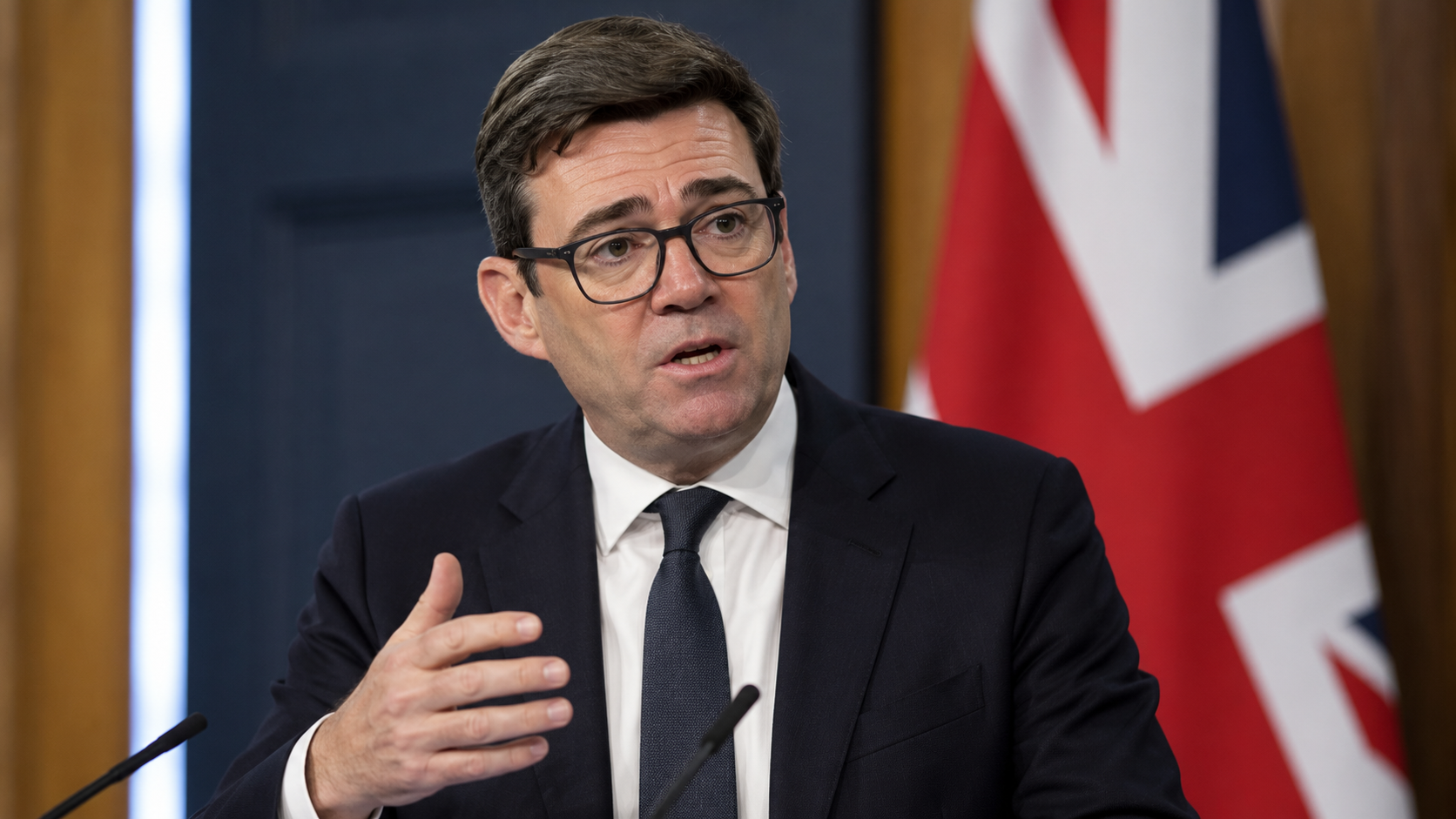
British Prime Minister Andy Burnham has opened the door to a formal apology for Britain’s role in the transatlantic slave trade but ruled out financial reparations, despite longstanding demands from Caribbean countries.
The announcement comes ahead of a Commonwealth leaders’ summit in Antigua and Barbuda, where the legacy of slavery and demands for historical justice are expected to feature prominently.
Burnham outlined his position in an article published by The Guardian on Friday, October 30.
According to Al Jazeera, the British leader expressed regret over the suffering caused by slavery and proposed structured discussions with affected countries.
However, he maintained that present-day British citizens should not be held financially responsible for historical injustices.
Britain considers formal slavery apology
Burnham said his government was willing to discuss whether Britain should issue an official state apology for its involvement in the transatlantic slave trade.
He proposed talks with governments and campaign organisations representing communities affected by slavery.
The prime minister acknowledged the suffering experienced by millions of enslaved Africans and their descendants.
His willingness to consider an apology represents a possible shift in Britain’s approach to acknowledging its historical role.
However, no formal apology has been announced.
Burnham’s position also stops short of accepting demands for direct financial compensation.
UK rejects financial slavery reparations
Despite supporting discussions about an apology, Burnham rejected calls for Britain to pay financial reparations.
He argued that people living today should not be held personally responsible for actions committed under different historical circumstances.
The position is consistent with the approach taken by previous British governments.
Caribbean countries have repeatedly called for reparatory justice to address the lasting economic and social consequences of slavery.
Their demands include more than direct payments.
They also involve education, healthcare, development assistance and measures to address historical inequalities.
The issue has become an increasingly important subject in relations between Britain and its former colonies.
Britain proposes debt relief instead
Rather than financial reparations, Burnham proposed an international initiative to reduce the debt burden on poorer countries.
The plan would involve extending repayment periods and reducing interest rates.
Former British Prime Minister Gordon Brown is expected to assist with the initiative.
Burnham said more than 40 percent of the world’s poorest and most vulnerable countries spend more on debt interest than on healthcare.
The proposed measures could provide financial relief to developing countries struggling with debt repayments.
However, debt restructuring is different from reparations, which seek to address historical harm and responsibility.
It remains unclear whether affected countries would consider the proposal an adequate response to their demands.
Caribbean leaders respond to Britain’s proposal
Barbadian Prime Minister Mia Mottley welcomed Britain’s willingness to engage in discussions.
However, she reaffirmed Barbados’s support for reparatory justice.
Mottley said cooperation could also include healthcare, education, economic development and fairer borrowing conditions.
Antigua and Barbuda’s Prime Minister Gaston Browne also welcomed the proposed debt initiative.
He expressed support for cooperation on renewable energy and development.
Nevertheless, Caribbean governments continue to seek broader recognition of the historical consequences of slavery.
The Caribbean Community, known as CARICOM, has developed a 10-point plan for reparatory justice.
Its proposals include a formal apology, investment in education and healthcare, and measures to address the economic damage caused by slavery.
Slavery reparations return to Commonwealth agenda
The issue is expected to feature at the Commonwealth summit beginning on Sunday, November 1.
The Commonwealth includes 56 countries, many of which were formerly part of the British Empire.
Several African and Caribbean members have called for greater recognition of the consequences of colonialism and slavery.
The debate also emerged during the 2024 Commonwealth summit in Samoa.
At that meeting, leaders called for discussions about reparations despite opposition from then British Prime Minister Keir Starmer.
King Charles III is expected to attend the upcoming summit.
However, Buckingham Palace has indicated that the monarch will not issue a formal apology for slavery during the visit.
What Britain’s position means for Africa
The debate over slavery reparations extends beyond the Caribbean.
Millions of Africans were forcibly transported across the Atlantic during the slave trade, leaving lasting consequences for communities on both sides of the ocean.
Calls for reparatory justice have increasingly become part of wider discussions about historical responsibility, economic inequality and relations between Africa and former colonial powers.
Britain’s willingness to discuss a formal apology could create opportunities for further diplomatic engagement.
However, its continued rejection of financial compensation remains a major point of disagreement.
As Commonwealth leaders prepare to meet, the central question is whether discussions about historical responsibility will lead to concrete commitments.