
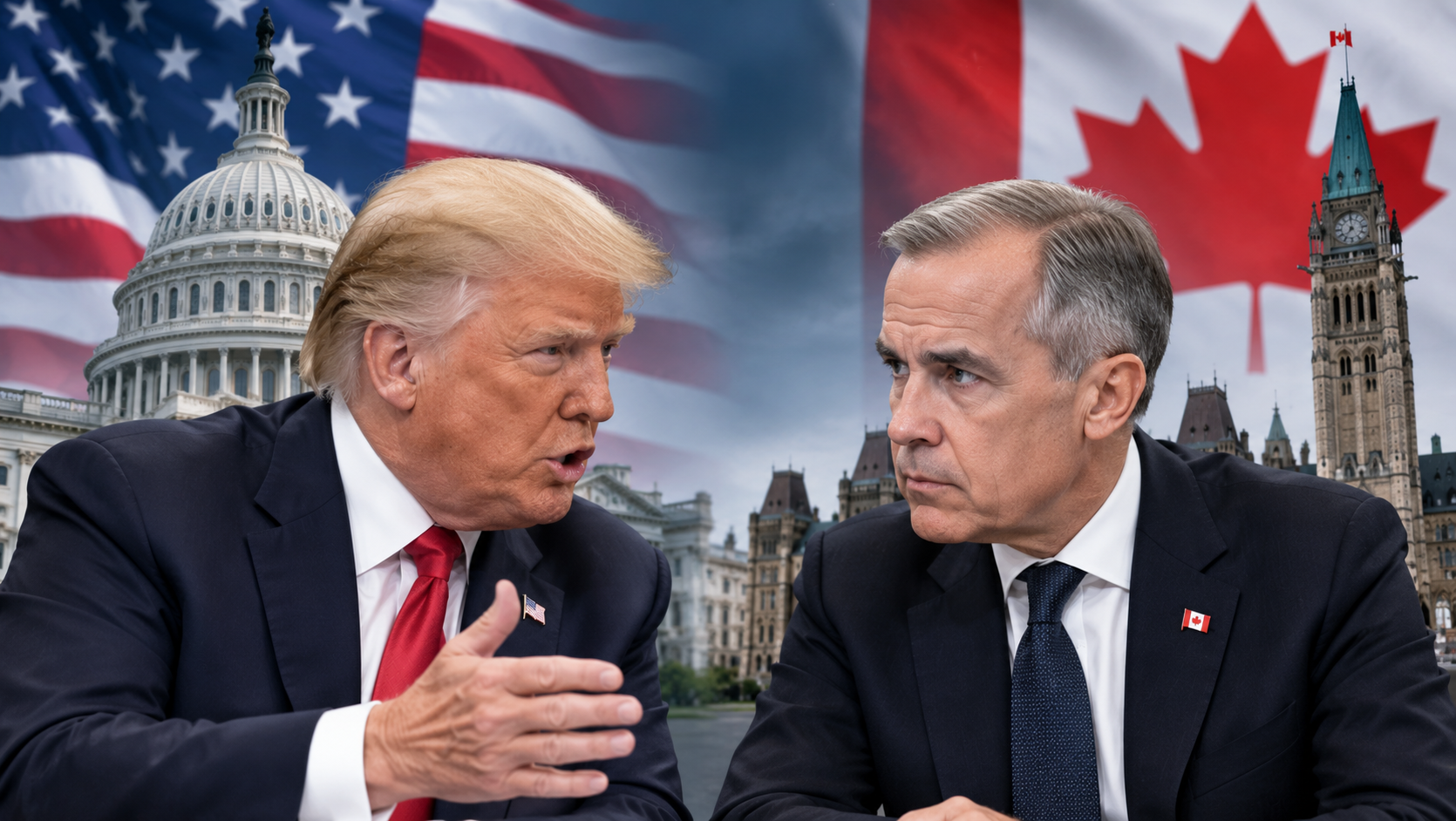
The United States has accused Canadian political officials of attempting to influence its upcoming midterm elections, escalating tensions between the two neighbouring countries.
Washington pointed to public statements, trade measures and meetings involving Canadian officials and American politicians as grounds for its concerns.
However, Canada has rejected the allegations, maintaining that its actions are intended to protect national economic interests rather than interfere in US elections.
The dispute comes as several African countries prepare for major elections between late 2026 and 2027.
Washington raises concerns over Canadian actions
The US government has questioned whether Canadian officials are attempting to influence American domestic politics.
According to Business Insider Africa, Washington cited an official US embassy fact sheet outlining its concerns.
The document referred to Canadian government statements, retaliatory tariffs and diplomatic meetings with American political figures.
US officials argued that some of these activities could amount to attempts to exert political pressure.
However, the allegations have not established that Canada unlawfully interfered in an American election.
The dispute centres on the distinction between diplomatic pressure, trade negotiations and electoral interference.
Canadian minister’s tariff remarks draw criticism
Canadian Industry Minister Mélanie Joly has faced particular scrutiny over comments about responding to US trade measures.
In August, Joly discussed targeting products from specific American states as part of Canada’s tariff strategy.
Washington interpreted the remarks as evidence that Canadian officials were seeking to influence American political decisions.
However, Canada maintains that its trade policies are responses to economic measures affecting Canadian businesses.
Joly also defended her meetings with American politicians from both major parties.
She said her engagements were aimed at attracting investment and protecting Canada’s economic interests.
The competing explanations highlight growing disagreements over the political implications of trade negotiations.
Canada rejects election interference allegations
Canadian Prime Minister Mark Carney has rejected the suggestion that his government seeks to interfere in US elections.
Speaking to Global News, Carney said Canada expects foreign governments to respect each other’s electoral processes.
He emphasised that the principle should apply equally to Canada and the United States.
Meanwhile, US Ambassador Pete Hoekstra said American officials were monitoring developments.
He warned that Washington could respond if Canadian activities crossed the line into election interference.
However, US authorities have not announced a formal finding that Canadian officials violated election laws.
The disagreement reflects broader tensions in the relationship between Washington and Ottawa.
Africa prepares for major elections
The diplomatic dispute comes as African countries approach a busy electoral period.
According to election-monitoring platform Polls Africa, 21 national elections are expected across 18 African countries before the end of 2027.
Several countries have announced election dates, while others continue preparations for their respective votes.
Nigeria is among the countries preparing for a major national election.
The country’s general election is listed for January 16, 2027, in the reported electoral calendar.
Nigeria’s vote is expected to attract considerable attention because of its population, economic importance and regional influence.
Other countries preparing for elections include Cabo Verde, The Gambia, South Sudan and Kenya.
Key African election dates
Cabo Verde is scheduled to hold a presidential election on November 15, 2026.
The Gambia is preparing for its presidential election on December 5, followed by parliamentary elections on April 10, 2027.
South Sudan has also scheduled general elections for December 22, 2026.
Meanwhile, Kenya’s general election is listed for August 10, 2027.
The dates reflect the continent’s approaching electoral calendar, although election schedules can change.
These African elections are separate from the dispute between the United States and Canada.
There is no evidence in the cited report connecting the Canadian allegations to interference in African electoral processes.
Election integrity remains under scrutiny
The disagreement between Washington and Ottawa has renewed debate about the boundaries of foreign political influence.
Governments regularly engage in diplomacy, economic negotiations and discussions with political representatives abroad.
However, allegations of election interference require careful examination of the activities involved and the evidence supporting them.
Canada maintains that its actions fall within normal diplomatic and economic engagement.
The United States says it will continue monitoring developments ahead of its midterm elections.
Meanwhile, African countries are preparing for their own electoral processes as the continent approaches a significant period of political activity.