
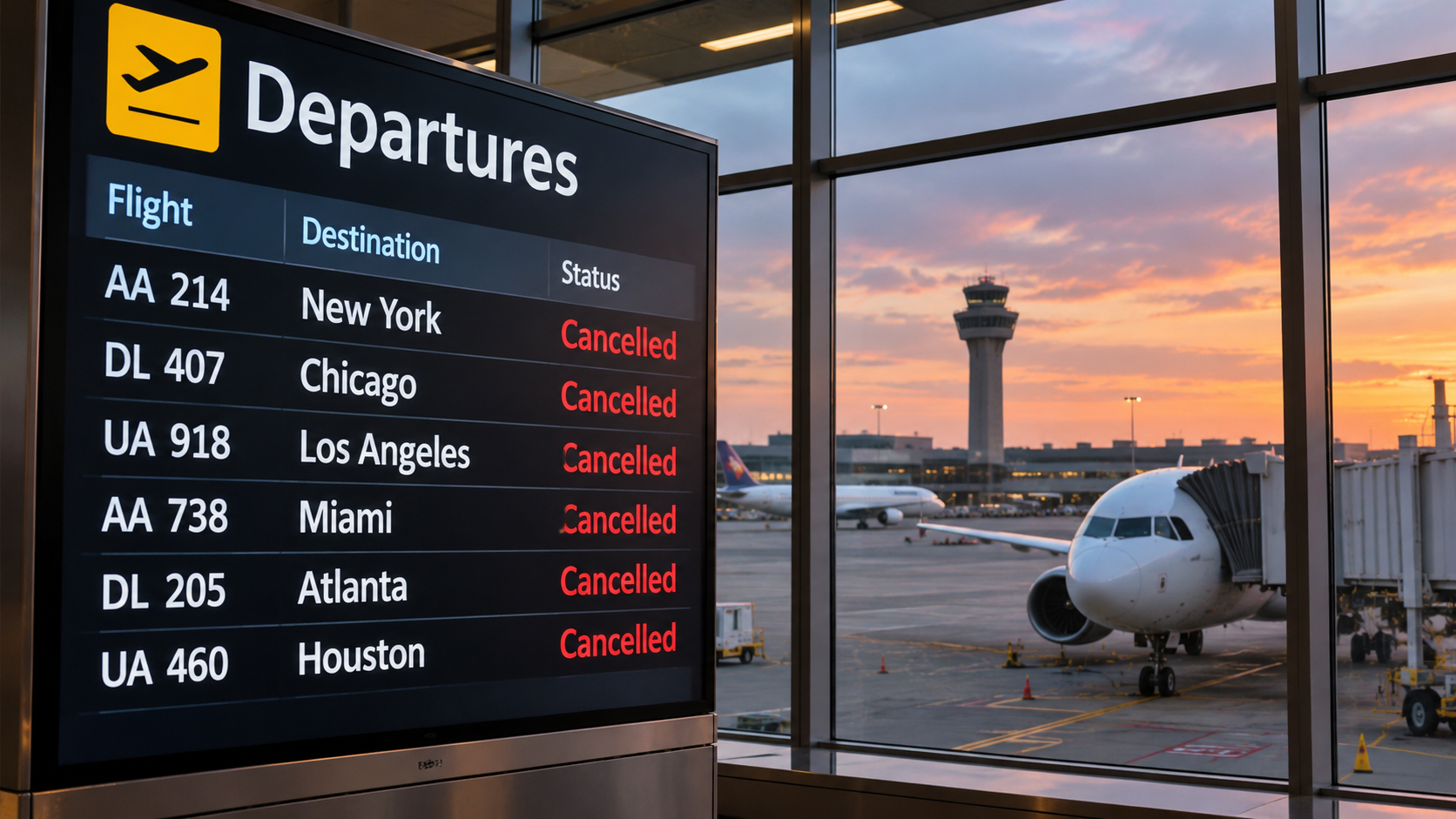
Nearly 7,500 flights were cancelled across the United States following a rare nationwide air traffic control outage, leaving thousands of passengers facing major travel disruptions.
The Federal Aviation Administration (FAA) ordered a nationwide ground stop on Friday, November 13, temporarily preventing aircraft from departing airports across the country.
According to Business Insider, citing FlightAware data, nearly 7,500 flights to, from and within the United States had been cancelled by 10:45 p.m. Eastern Time.
Although authorities lifted the ground stop later that evening, disruptions were expected to continue throughout the weekend.
FAA outage causes nationwide flight chaos
The FAA introduced the ground stop at approximately 3:45 p.m. Eastern Time after an air traffic control outage disrupted aviation operations.
The restriction prevented flights from departing while authorities worked to address the problem.
The ground stop was lifted at approximately 8:30 p.m., nearly five hours after it began.
However, airlines faced significant challenges restoring normal schedules.
Thousands of cancellations left passengers stranded or searching for alternative flights.
Furthermore, the disruption affected connecting flights and airport operations across the country.
The scale of the incident raised concerns about the vulnerability of the US aviation system to major technical failures.
Passengers face delays and unexpected costs
The nationwide flight disruption also created financial uncertainty for affected travellers.
According to Business Insider Africa’s coverage of the disruption, US airlines are generally not required to provide hotel accommodation or meal vouchers when cancellations result from events outside their control.
Air traffic control outages typically fall into that category.
However, passengers whose flights are cancelled are entitled to refunds under US Department of Transportation rules if they choose not to travel.
These refunds must generally be returned to the original payment method rather than issued only as travel credits.
Travellers may also qualify for refunds on unused additional services, including baggage or seat selection fees.
Meanwhile, some airlines may voluntarily offer accommodation or meal assistance.
What affected travellers can do
Passengers facing cancellations are advised to check their airline’s website or mobile application for available rebooking options.
Online services may provide faster alternatives than waiting in airport customer service queues.
Travellers should also request written confirmation of the reason for their flight disruption.
This information can help determine whether additional assistance or compensation is available.
In addition, passengers who purchased tickets using credit cards with travel insurance may qualify for reimbursement of certain expenses.
However, coverage depends on individual policies and the circumstances of the disruption.
For those facing prolonged delays, alternative transport options may include trains, buses or rental vehicles.
Flight disruptions expected to continue
Although the FAA lifted the nationwide ground stop on Friday evening, the impact was expected to extend into the weekend.
Airlines must reposition aircraft, reorganise schedules and accommodate passengers whose journeys were interrupted.
As a result, delays and cancellations may continue even after normal air traffic control operations resume.
The incident highlights the importance of contingency planning across the aviation industry.
For passengers, the immediate priority remains securing alternative travel arrangements and understanding their rights following the disruption.