
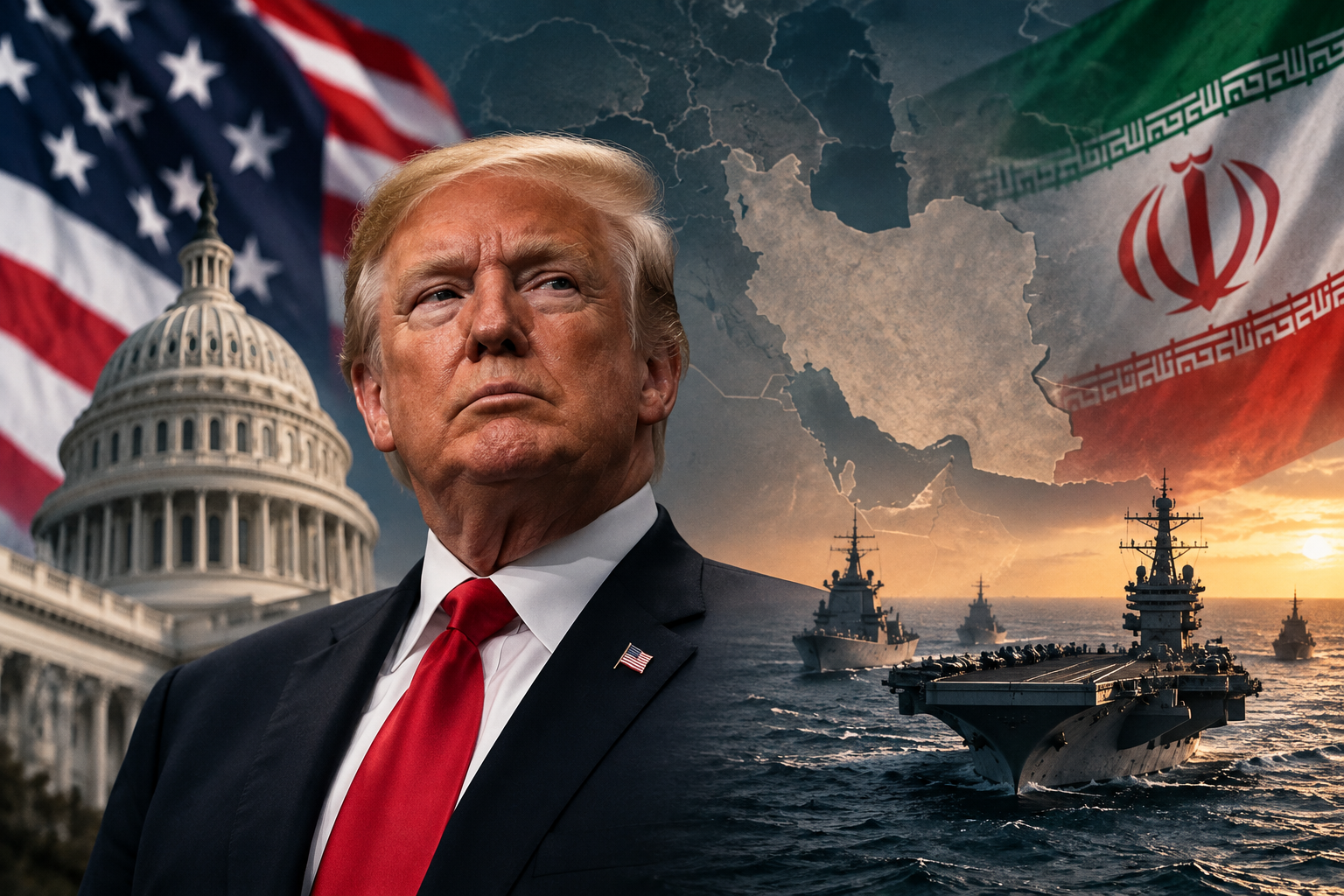
US President Donald Trump has ruled out renewed attacks on Iran before the November 3 midterm elections, despite reports that the Pentagon is preparing for possible military operations.
Several American media outlets have reported that US military officials have developed plans for renewed strikes against Iran. However, Trump insists that Washington will not launch attacks before voters head to the polls.
The developments have raised questions about whether the United States could resume military operations after the elections.
Meanwhile, diplomatic negotiations between Washington and Tehran continue amid tensions over the Strait of Hormuz.
Trump rules out Iran strikes before November elections
Trump announced his position on Thursday through his Truth Social platform.
He said the United States would not attack Iran before the November 3 congressional elections.
The president also described ongoing discussions with Iranian officials as productive.
However, he did not provide details about the negotiations or explain whether military preparations would continue.
According to Al Jazeera, Trump’s announcement followed reports that the Pentagon was preparing options for possible strikes.
The New York Times and The Wall Street Journal cited unnamed officials familiar with the military planning.
Additionally, Axios reported that US Central Command had been instructed to prepare for potential major combat operations.
These reports do not establish that Trump has authorised new attacks.
Iran war faces growing opposition in the United States
Public opposition to the conflict has increased as the war continues into its eighth month.
The fighting began on February 28, when the United States and Israel launched attacks against Iran.
Since then, the conflict has affected energy markets and contributed to higher living costs.
According to a Pew Research Center survey released Thursday, approximately 65% of Americans disapprove of Trump’s handling of the Iran war.
The survey also found that many Americans expect the conflict to continue for at least another year.
Meanwhile, Republican voters have become increasingly concerned about the war.
A Reuters/Ipsos poll found that only 30% of Trump supporters expressed enthusiasm about voting in the midterms.
By comparison, 48% of Democratic voters expressed similar enthusiasm.
The findings suggest that the conflict could influence voter participation and political support.
Could US attacks on Iran resume after the elections?
Although Trump has ruled out strikes before November 3, he has not excluded military action afterwards.
In recent weeks, the president has repeatedly suggested that the conflict could reach a decisive stage following the elections.
During a Republican gathering in September, he said the war would end immediately after the vote.
Furthermore, Trump told Time magazine that increasing military strikes after the elections remained possible.
However, he did not announce a specific operation or timetable.
Some political analysts believe delaying military action could reduce electoral pressure on Republican candidates.
Nevertheless, the administration’s intentions remain uncertain.
Any renewed attacks would depend on future political, diplomatic and military decisions.
US military increases presence in the Middle East
The United States has also strengthened its military presence in the region.
According to Al Jazeera, Washington recently dispatched approximately 7,000 sailors and 2,000 Marines aboard several vessels.
The deployment reportedly included the USS Theodore Roosevelt carrier strike group.
As a result, the reported US military presence in the region has reached approximately 20,000 personnel.
The deployment also includes military aircraft and multiple aircraft carrier groups.
However, military preparations do not necessarily mean an attack will take place.
Washington has not publicly confirmed a decision to resume strikes against Iran.
Strait of Hormuz remains central to US-Iran tensions
Disagreements over the Strait of Hormuz continue to complicate diplomatic efforts.
The strategic waterway is an important route for global oil and gas shipments.
Washington and Tehran reached a ceasefire agreement in June. However, the arrangement quickly broke down amid disputes over control of the strait.
Iran has proposed reopening the waterway under certain conditions.
These reportedly include sanctions relief, the release of frozen Iranian assets and guarantees against further attacks.
Washington rejected an earlier Iranian proposal.
Meanwhile, Iranian Foreign Minister Abbas Araghchi said Tehran was considering a counterproposal from the United States.
The negotiations remain unresolved.
Uncertainty continues over future US-Iran relations
Trump’s latest statement provides a temporary assurance that the United States will not resume strikes before the midterm elections.
However, reports of military planning and additional deployments have raised concerns about what could happen afterwards.
Diplomatic negotiations offer a possible path towards reducing tensions.
Nevertheless, major disagreements remain over sanctions, regional security and the Strait of Hormuz.
For now, the prospect of renewed US military action against Iran remains uncertain.