
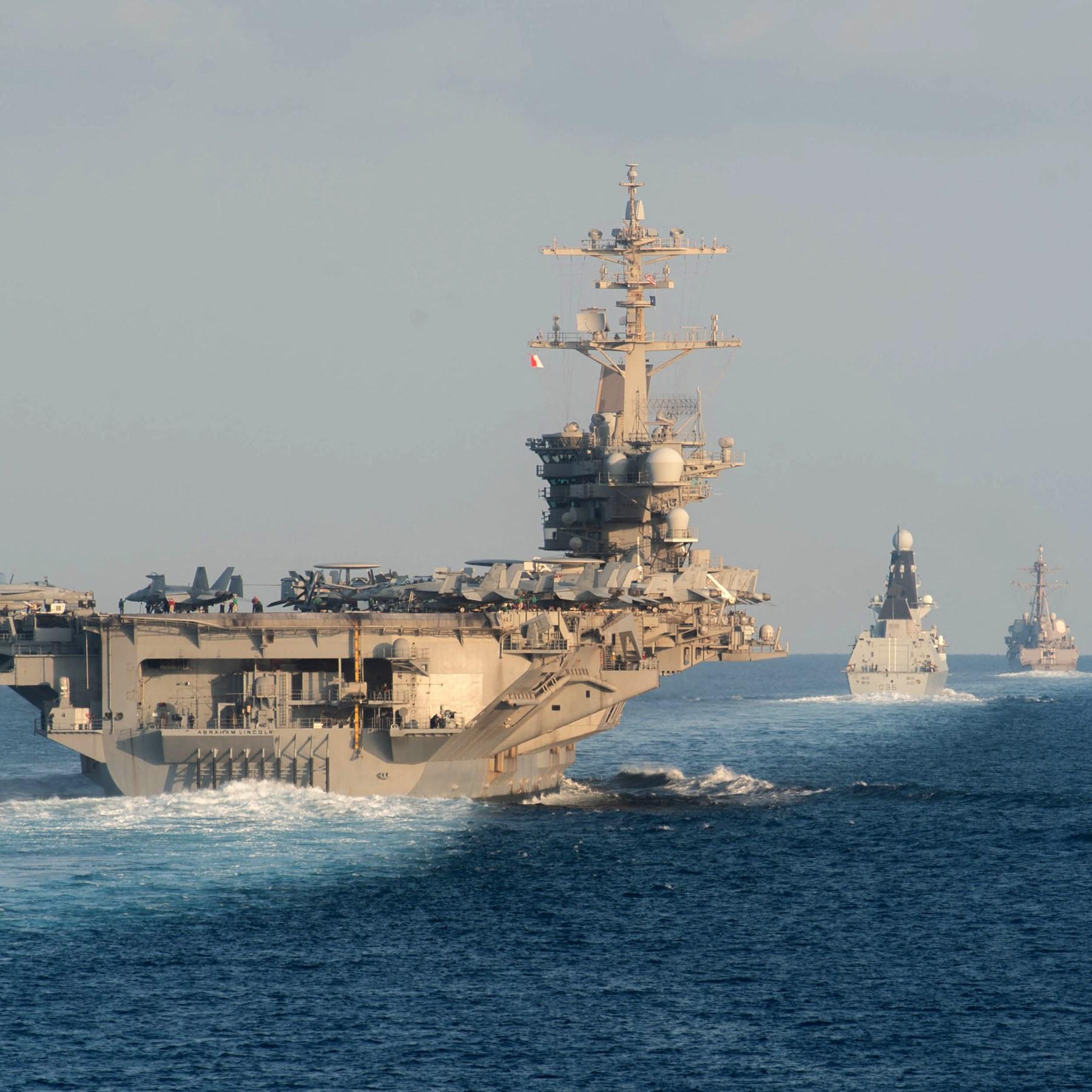
The United States launched a new wave of overnight strikes on targets in Iran, hours after President Donald Trump threatened to attack Tehran “very hard” if no peace deal is reached.
US Central Command said the strikes began at 5:15 p.m. EDT on Wednesday, or 12:45 a.m. Thursday in Tehran, and targeted multiple sites. It described the operation as a response to what it called Iran’s “continued aggression.”
The strikes mark the latest escalation in a widening exchange of attacks between Washington and Tehran, threatening to reignite a full-scale war that had been paused under a fragile ceasefire reached in early April.
Iranian media reported an explosion in the port city of Sirik and said air defences were activated in western Tehran. Mehr news agency carried reports of the blasts, while Iranian officials accused Washington of striking water facilities that supplied drinking water to several villages.
Iran’s Foreign Ministry spokesperson Esmaeil Baghei described the alleged targeting of reservoirs as a “calculated war crime” and a violation of international law. The Pentagon did not immediately respond to requests for comment on the Iranian accusation.
Trump had earlier told reporters at the White House that the US would be “attacking them very hard,” without specifying the targets. Defence Secretary Pete Hegseth later said during a visit to Central Command in Florida that the strikes would strengthen Washington’s military and diplomatic position.
“If we need to negotiate with bombs, we’ll negotiate with bombs,” Hegseth said.
The latest US strikes followed earlier attacks on Iranian air defence and radar sites near the Strait of Hormuz after a US attack helicopter was downed close to the strategic waterway. Iran responded with missile and drone attacks on US bases in Jordan, Kuwait and Bahrain, though a US official said there was no significant damage.
Tensions have continued to rise despite ongoing diplomatic efforts. Qatar, which has been mediating between Washington and Tehran, reportedly sent a delegation to Iran on Wednesday for talks on the crisis.
Trump also claimed that ships carrying 100 million barrels of oil had passed through the Strait of Hormuz under a secret US military operation, despite Iranian efforts to block traffic. Hegseth said the vessels had moved through the waterway at night under US protection.
Oil prices rose by nearly $3 after Trump’s threat of escalation, reaching around $94 per barrel.
The conflict has severely disrupted shipping through the Strait of Hormuz, a key route for global oil and gas supplies. Iran has restricted traffic through the strait, while the United States has maintained pressure on Iranian ports and oil shipments.
The fighting has also continued to overlap with the war between Israel and Hezbollah in Lebanon. Lebanese security sources said Israeli airstrikes killed at least 13 people in southern Lebanon on Wednesday, while Hezbollah claimed new attacks on Israeli forces.
Iran’s demands include an end to Israeli strikes in Lebanon, sanctions relief, the release of frozen assets, and recognition of its control over the Strait of Hormuz. Trump says Iran must lift restrictions on shipping and agree to measures ensuring it cannot develop a nuclear weapon.
Iran denies seeking nuclear weapons.
The escalation came as the UN nuclear watchdog’s Board of Governors passed a US-backed resolution calling on Iran to declare its remaining enriched uranium stocks and allow inspectors to verify them. Tehran dismissed the resolution as political.