
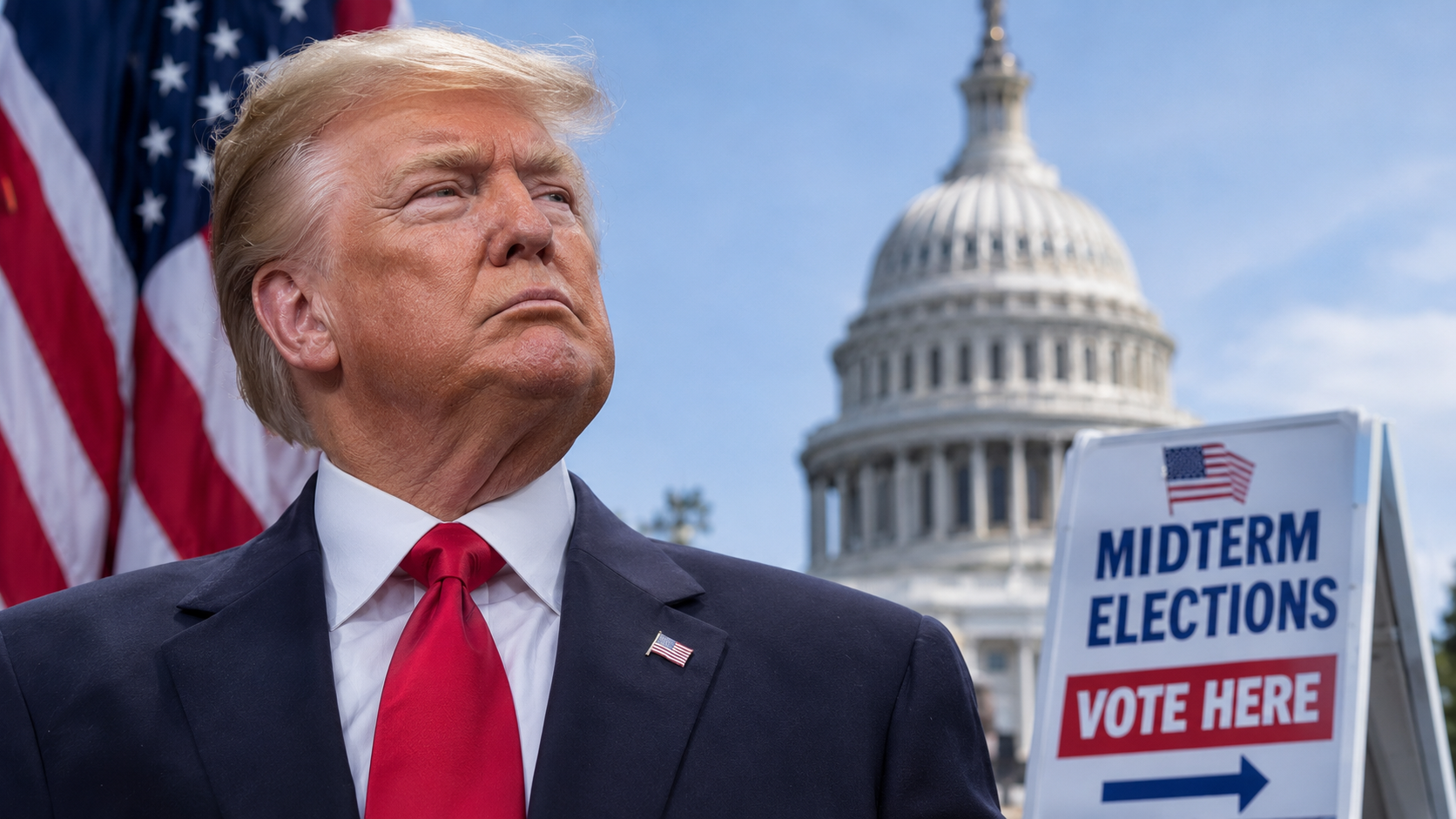
Americans headed to the polls on Tuesday, November 3, in the US midterm elections 2026, with control of Congress and the future of President Donald Trump’s legislative agenda at stake.
Voters are deciding all 435 seats in the House of Representatives and 35 of the Senate’s 100 seats. Elections for governor are also taking place in 36 states.
The outcome will determine whether Republicans retain control of Congress or Democrats gain the power to challenge the administration’s policies.
Rising living costs, immigration and the ongoing war involving Iran have emerged as major issues in the campaign.
What is at stake in the US midterm elections?
Republicans currently hold a majority in both chambers of Congress.
According to AFP, Democrats need a net gain of three seats in the House and four seats in the Senate to secure control of both chambers.
If Democrats win the House, they could block parts of Trump’s legislative agenda and initiate congressional investigations into his administration.
Control of the Senate would also influence the confirmation of senior government officials and federal judges, including Supreme Court nominees.
However, the president would retain significant executive powers regardless of the election results.
The midterms represent the first nationwide congressional election since Trump returned to the White House in January 2025.
Rising living costs dominate voter concerns
Economic pressures have become a central issue in the campaign.
Trump returned to office promising to reduce prices and improve economic conditions.
However, inflation, tariffs and higher fuel costs linked to the Middle East conflict have placed pressure on household budgets.
Democrats have highlighted these concerns while arguing that voters need stronger congressional oversight.
Republicans, meanwhile, have defended the administration’s tax policies and immigration measures.
They argue that their economic agenda will support businesses, investment and American households.
The competing messages have shaped campaigns across several closely contested states.
Democrats seek gains in House and Senate
Democrats are seeking to gain seats in both chambers, although the Senate presents a particularly challenging electoral map.
Republicans entered the election holding a 53–47 Senate majority, including the two independents who caucus with Democrats.
Competitive contests extend beyond traditional swing states into places such as Texas, Iowa, Ohio, Kansas and Alaska.
Democrats are also defending seats in states where Republicans see opportunities.
Michigan has attracted attention following divisions among Democratic figures over the Senate race.
Meanwhile, Georgia Senator Jon Ossoff is among the candidates facing a closely watched contest.
The results will depend on turnout and voter preferences across individual states and congressional districts.
More than 57 million Americans vote early
Early voting has highlighted strong public engagement in the election.
More than 57 million Americans had cast ballots before Election Day, according to figures cited by AFP.
However, early turnout does not necessarily indicate which party will perform better.
Both parties have invested heavily in advertising, campaign operations and voter mobilisation.
Political advertising spending has reportedly exceeded $11 billion during the election cycle.
The substantial financial investment reflects the importance both parties place on control of Congress.
Election integrity and certification draw attention
Questions surrounding election administration have also featured prominently in the final days of campaigning.
Trump has repeatedly raised allegations of widespread voter fraud. However, the reporting did not provide evidence substantiating those claims.
Legal disputes over voting procedures have emerged in several states.
In Alaska, a court rejected an attempt that could have affected certification of the state’s Senate election.
Meanwhile, the US Supreme Court rejected an emergency request concerning more than 20,000 mail-in ballots in California.
Election officials will be responsible for counting votes and certifying results under applicable state laws.
Close contests may require additional counting before winners are confirmed.
What happens after the polls close?
Voting concludes at different times across the United States because of the country’s multiple time zones.
Election officials will begin reporting results after polls close in their respective jurisdictions.
Some races may be decided quickly, while others could remain unresolved as mail-in and other outstanding ballots are counted.
The composition of the next Congress will shape legislative negotiations during the remaining years of Trump’s presidency.
A divided Congress could lead to greater political negotiations and more disputes over government spending, legislation and oversight.
If Republicans retain both chambers, the administration would have a clearer path to pursuing its legislative priorities, although internal disagreements could still affect legislation.
For voters, the election offers an opportunity to determine who represents them in Congress and how federal power is distributed.
As Americans cast their ballots, attention is turning to the results that will shape Washington’s political landscape ahead of the 2028 presidential election.