
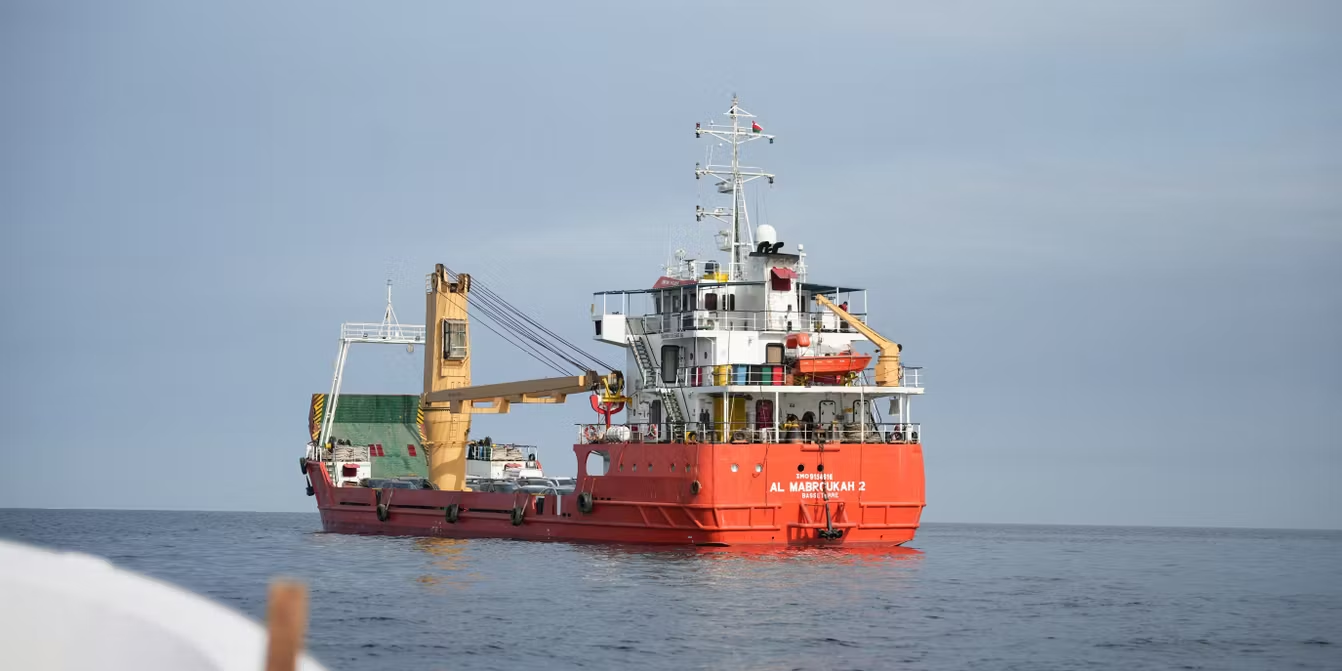
The United States said Tuesday that six merchant vessels were forced to turn back within the first 24 hours of a newly imposed naval blockade targeting Iranian ports, following the collapse of talks to end the ongoing war between Washington and Tehran.
According to U.S. Central Command, no ships have successfully passed through the blockade since it was launched on Monday, marking the first concrete enforcement details of the operation ordered by Donald Trump.
“During the first 24 hours, no ships made it past the U.S. blockade, and six merchant vessels complied with direction from U.S. forces to turn around,” the command said, noting the ships were redirected back toward Iranian ports along the Gulf of Oman.
The blockade applies to all vessels entering or leaving Iranian ports across both the Gulf and the Gulf of Oman, effectively sealing off Iran’s maritime access points under U.S. control.
More than 10,000 U.S. personnel, backed by over a dozen warships and dozens of aircraft, are enforcing the operation, underscoring the scale of Washington’s military posture in the region.
U.S. forces warned that any vessel attempting to enter or exit the designated zone without authorization could face interception, diversion or seizure.
Officials said the measures are being applied to vessels of all nationalities, while humanitarian shipments — including food, medicine and essential goods — would be allowed through subject to inspection.
The blockade was announced after weekend negotiations between Washington and Tehran failed to produce a breakthrough, escalating tensions in a conflict now entering its sixth week.
The move has added fresh uncertainty to traffic through the Strait of Hormuz, a vital global chokepoint through which roughly one-fifth of the world’s oil and gas supplies transit.
Oil prices surged back above $100 per barrel following the announcement, reflecting market fears of prolonged disruption in one of the world’s most critical energy corridors.