
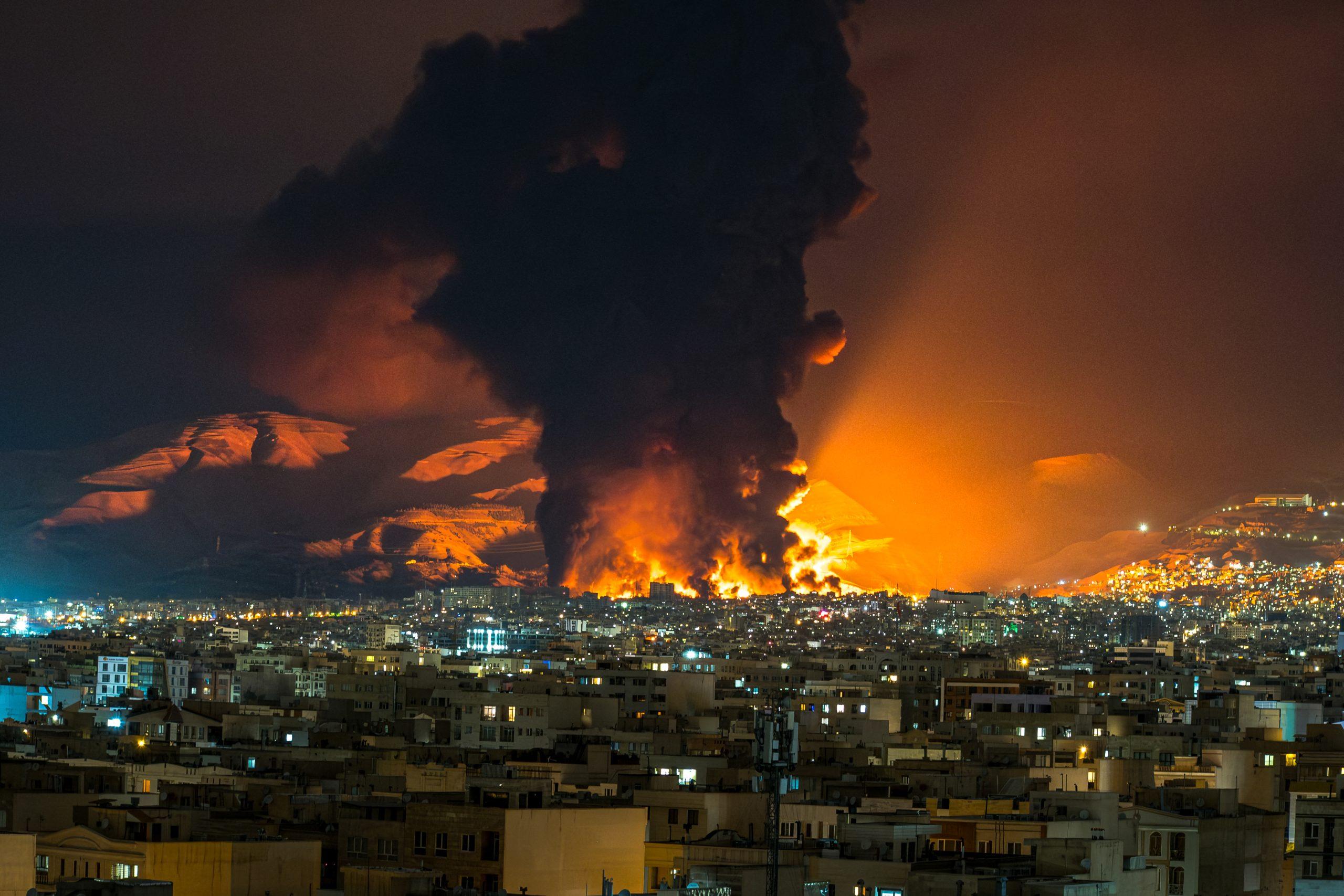
The final whistle of the World Cup is being viewed by some Israeli analysts as more than the end of a sporting tournament, with speculation mounting that it could coincide with a broader and more dangerous phase of the US confrontation with Iran.
There is no confirmed military timetable tied to the final between Argentina and Spain. Instead, Israeli commentary has treated the end of the tournament as a symbolic political marker, arguing that several domestic and media events that may have constrained US President Donald Trump’s room for manoeuvre have now passed.
The theory remains speculative. However, it has gained attention amid an expansion of US strikes inside Iran, heightened Israeli military readiness and a growing number of Iranian attacks across the region.
A symbolic turning point
Israel’s Maariv newspaper reported that officials and security analysts were watching the night of the final as a possible turning point in the conflict.
Military commentator Avi Ashkenazi said the date should not be interpreted as a formally agreed “zero hour.” Its significance, he argued, lies in the conclusion of several high-profile events that had dominated the political agenda in the United States, including July 4 celebrations, Trump’s birthday and the US national team’s participation in the World Cup.
With those events concluded, the White House may have greater political space to adopt a more aggressive position toward Tehran, Ashkenazi suggested.
Under that reading, the tournament’s closing whistle could symbolically mark the beginning of a new round of escalation.
Reports citing Maariv said the options under discussion in Washington and allied capitals ranged from tighter economic sanctions and increased pressure on Iranian exports to a maritime blockade and a broader military campaign.
Washington expands its target list
Israeli concerns are not based on timing alone. They also reflect signals that Washington is widening the scope of its operations against Iran.
Israel’s public broadcaster reported that the United States had informed Israel of plans to expand its strikes beyond conventional military sites to facilities connected to infrastructure and the energy sector.
Israeli security assessments have also raised the possibility that the US campaign could continue for several days, amid a belief in Washington that Tehran is using negotiations to delay military pressure without making meaningful concessions.
US Central Command said its operations had entered a broader phase targeting Iranian command-and-control capabilities, radar and surveillance systems, military logistics networks, weapons depots and naval assets linked to the Islamic Revolutionary Guard Corps.
CENTCOM said the seventh wave of strikes involved advanced fighter aircraft, attack drones and warships deployed across the region.
According to the command, the targets were selected because of their role in supporting Iranian military operations or threatening shipping routes, US bases and allied forces.
The expanded campaign suggests that Washington is no longer focused only on missile launchers and weapons storage facilities. It is also attempting to dismantle the command, supply and logistics networks that allow the IRGC to sustain prolonged operations.
Israel waits for Washington
Unlike earlier phases of the confrontation, when Israel played the leading military role, the current round has left Tel Aviv largely observing developments while remaining prepared to intervene.
Israeli reports indicate that the government is seeking US approval before directly entering the latest phase of the conflict, with officials expecting exchanges between Washington and Tehran to continue over the coming days.
Israel’s Channel 12 reported that military readiness had been raised amid growing expectations that direct Israeli involvement could resume unless diplomatic talks produce a breakthrough.
The Israeli Air Force and Home Front Command have reportedly maintained a high level of preparedness since the previous ceasefire. Defensive and offensive plans remain ready for activation in the event of a direct Iranian attack or a US decision to widen the war.
Israeli forces are also closely monitoring Iranian missile activity elsewhere in the region.
Missiles recently fired toward the Jordanian city of Aqaba prompted the activation of Israeli air-defence systems over concerns that debris or intercepted projectiles could fall inside Israeli territory.
For Israel, such attacks are not viewed solely as threats to neighbouring states. They are also being assessed as signals of Tehran’s willingness to expand the conflict and test new fronts.
Iran shows little sign of compromise
Despite the growing military pressure, there is little indication that Iran is prepared to make concessions on issues it considers central to its national security.
Israeli assessments suggest Tehran is unlikely to surrender its entire stockpile of enriched uranium, dismantle its ballistic missile programme or sever ties with allied armed groups across the region.
These issues represent the core divide between Iran and the United States.
Washington is seeking an agreement that goes beyond restrictions on Iran’s nuclear programme and also addresses ballistic missiles, regional influence and the security of international shipping.
Tehran considers such demands an attempt to strip it of its principal deterrent capabilities.
Iranian officials have repeatedly described the country’s missile programme as an essential part of its defensive strategy and have rejected efforts to place major restrictions on its range or capabilities.
Increasing military pressure may therefore fail to force Tehran into retreat. Instead, it could prompt Iran to intensify attacks against US bases, naval vessels and strategic facilities across the region.
That possibility means the period after the World Cup final may prove significant, but not because of any sporting deadline. Its importance lies in whether Washington decides that the political and military conditions are now in place for a larger and potentially less controllable war.