
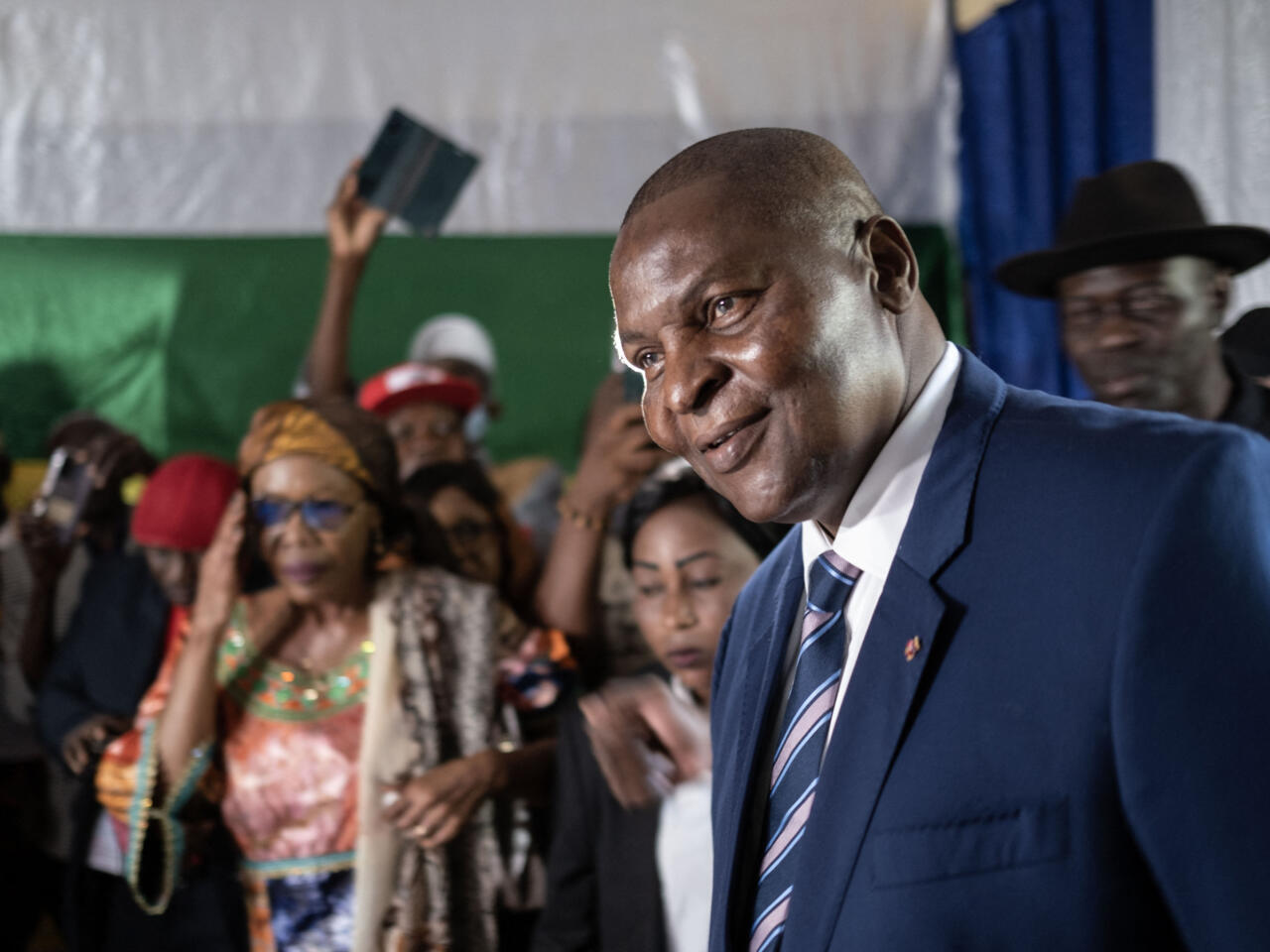
Central African Republic President Faustin-Archange Touadera is seeking a controversial third term this weekend, extending a decade in power marked by deepening ties with Russia, fragile security gains and experimental cryptocurrency projects.
Touadera, 68, cleared the way for another term after a 2023 referendum removed presidential term limits, a familiar tactic among long-serving leaders in the region. A former mathematics professor, he has leaned heavily on foreign security support, most notably from Russia and Rwanda, to stabilise a country long plagued by rebellion.
CAR became the first country in West and Central Africa to host Russian Wagner mercenaries in 2018, a move later echoed by Mali, Burkina Faso and Niger. In 2022, it also broke new ground by adopting bitcoin as legal tender, becoming the first African country to do so.
Campaigning on improved security and promises of infrastructure investment, Touadera has highlighted deals such as a recent agreement to launch Starlink services in the country. Speaking at a rally in Bangui, he told supporters that travel and daily life had been transformed since he took office in 2016, after years of insecurity and state collapse.
Despite his close alignment with Moscow, Touadera has recently signalled openness to renewed Western partnerships, saying he would welcome investors willing to develop CAR’s lithium, uranium and gold reserves. Analysts say he is the clear favourite to win, helped by state resources, civil servants campaigning on his behalf and a wide financial advantage over rivals.
CAR’s recent security improvements remain fragile. Rwanda deployed troops five years ago to prevent rebels from disrupting elections and still maintains a presence. Peace deals signed this year with some armed groups have reduced violence in parts of the country, helping economic growth rise to about 3 percent, according to IMF data.
Yet insecurity remains voters’ top concern. Many rebel groups have not fully disarmed, reintegration efforts are incomplete and fighters crossing from neighbouring Sudan continue to destabilise eastern regions. Analysts warn these factors could easily trigger renewed violence.
Rights groups have accused Russian mercenaries of serious abuses, including executions and torture, allegations that have drawn international criticism. While the UN recently extended its peacekeeping mandate, the United States opposed a long renewal, urging a faster transfer of security responsibility to Bangui.
Russian security support has also come at a high price. Think tanks estimate billions of dollars in African gold have flowed to Russian-linked networks through operations in CAR and elsewhere. Touadera’s crypto initiatives, launched to attract investors, have raised concerns about exposing state assets to criminal networks.
Despite promises of mining reform, new rail links and foreign investment, illegal mining and organised crime remain widespread. Poverty is still entrenched, with about two-thirds of the population living in extreme hardship.
“We are always promised jobs and schools,” said Clarisse, a university student in Bangui. “But many young people are still unemployed.”