
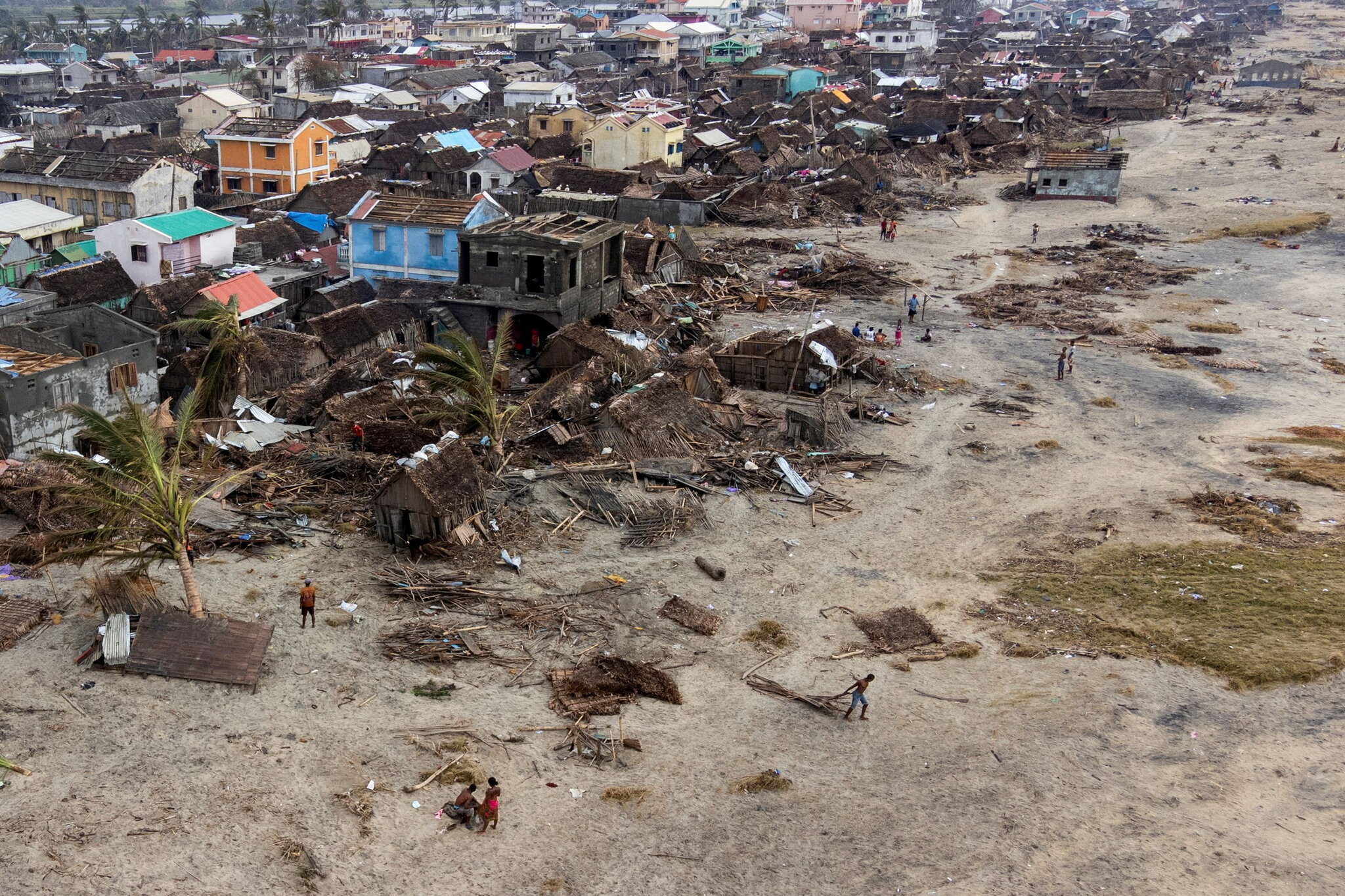
At least 38 people were killed after Cyclone Gezani tore into Madagascar’s eastern coast this week, authorities confirmed Thursday.
The storm made landfall Tuesday in Toamasina, Madagascar’s second-largest city, unleashing winds of 250 kilometres per hour.
The National Office for Risk and Disaster Management reported six people missing and at least 374 injured as assessments continued.
More than 12,000 residents were displaced, while entire neighbourhoods were reduced to splintered wood and twisted metal.
President Michael Randrianirina appealed for international solidarity, saying the cyclone ravaged up to 75 percent of Toamasina and surrounding areas.
Images from the coastal city of 400,000 showed streets choked with uprooted trees and roofs ripped from buildings.
Residents sifted through debris and corrugated iron, trying to salvage what remained of their fragile homes.
Authorities said over 18,000 houses were destroyed and more than 50,000 others damaged or flooded by the storm surge.
The main highway linking Toamasina to the capital Antananarivo was severed in several places, blocking humanitarian convoys.
Telecommunications remained unstable as damage assessments expanded across the hard-hit Atsinanana region.
France dispatched food aid and rescue teams from Reunion Island, about 1,000 kilometres away, to support relief efforts.
The International Organization for Migration described widespread destruction and disruption, with thousands forced from their homes.
Meteorologists on Reunion said Toamasina was struck by the cyclone’s most intense core, calling it among the strongest recorded locally in the satellite era.
They compared its force to Cyclone Geralda in 1994, which killed at least 200 people and affected half a million.
Though Gezani weakened into a tropical storm after landfall, forecasters warned it could regain cyclone strength over the Mozambique Channel.
Mozambique issued alerts Thursday, cautioning residents about violent winds and waves reaching 10 metres as the storm approaches.
The southern African nation has already endured severe flooding this season, with nearly 140 deaths reported since October.