
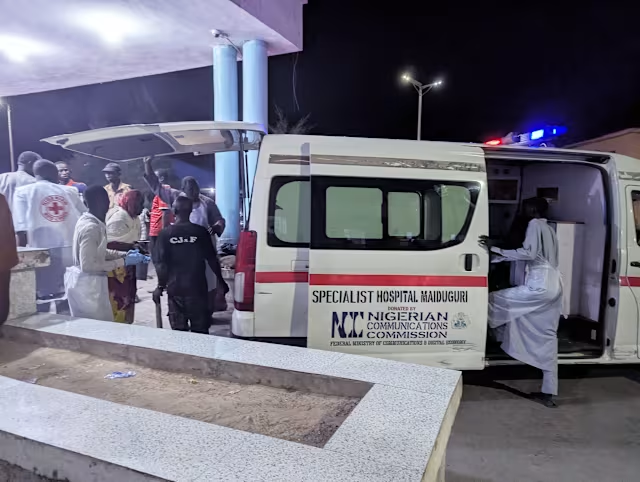
At least 23 people have been killed and more than 100 wounded in a wave of suspected suicide bomb attacks targeting multiple locations across Maiduguri, the capital of Nigeria’s conflict-hit Borno state, authorities said.
The coordinated blasts struck key civilian sites on Monday evening, including a post office, a crowded market, a major hospital, and the Kaleri district, in what officials described as a highly synchronized assault.
Security sources and residents said the first explosion hit a central post office before a second blast tore through the nearby Monday market, one of the city’s busiest commercial hubs. Additional explosions were reported at the University of Maiduguri Teaching Hospital and in eastern neighbourhoods.
Police said preliminary findings indicate the attacks were carried out by suicide bombers, though no group has officially claimed responsibility.
“Preliminary investigation reveals that the incidents were carried out by suspected suicide bombers,” the Borno State Police Command said, adding that a full investigation is ongoing.
Security forces have since increased patrols across Maiduguri, with authorities stating that “normalcy has been restored” following the attacks.
Analysts say the coordinated nature of the bombings bears the hallmarks of Boko Haram, the Islamist militant group that has waged a 17-year insurgency in northeastern Nigeria. The conflict has killed thousands and displaced more than two million people.
Maiduguri, once the epicentre of the insurgency, has in recent years been considered relatively secure compared to surrounding areas. However, the latest attacks underscore persistent vulnerabilities, even in heavily guarded urban centres.
The city was last hit by a major bombing on Christmas Eve, when a suspected attacker killed five worshippers and injured dozens inside a mosque.
Beyond the northeast, militant violence has also spread across Nigeria’s northwest, where armed groups continue to carry out kidnappings and raids on rural communities and schools.
The renewed wave of attacks comes amid increasing international involvement, including recent U.S. air strikes targeting militant positions in the northwest and the deployment of trainers to support Nigerian forces.