
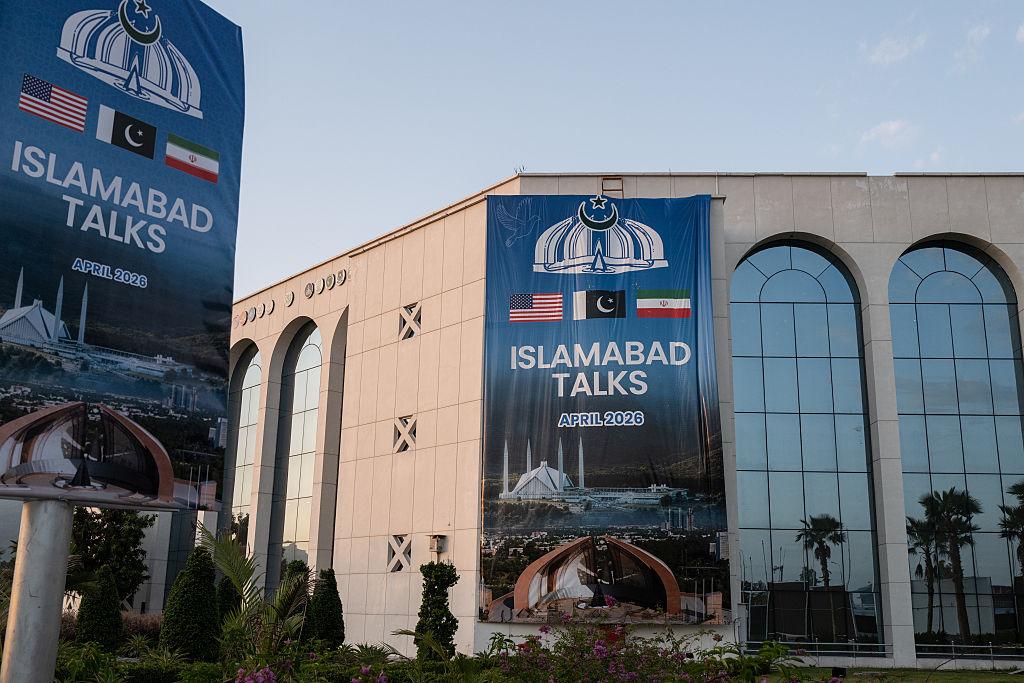
Iran has made clear it will not accept what it described as “maximalist” demands from the United States, as Pakistan intensifies mediation efforts to sustain a fragile ceasefire in a war that has shaken global energy markets.
Iranian Foreign Minister Abbas Araqchi left Islamabad on Saturday following talks with Pakistani leaders, including Prime Minister Shehbaz Sharif. He departed under military escort, according to officials, with no concrete details released about the outcome of discussions.
The diplomatic push comes as Washington prepares to deepen its involvement. The White House confirmed that envoy Steve Witkoff and adviser Jared Kushner are set to travel to Pakistan for indirect talks with Iranian representatives.
Despite the renewed efforts, Tehran signalled little flexibility. An Iranian diplomatic source said the country would “not accept maximalist demands,” underlining a widening gap with Washington as negotiations remain stalled.
The conflict — triggered by US-Israeli airstrikes on Iran in late February — has escalated into a regional confrontation involving strikes on Israel, US bases, and Gulf states. While a ceasefire is currently in place, both sides continue to position themselves for potential escalation.
Araqchi reiterated what he called Iran’s “principled positions,” stressing the need for a complete end to the war. Tehran has also ruled out direct negotiations with Washington, opting instead to communicate through Pakistani mediation channels.
US officials, however, maintain that diplomacy remains possible. Defense Secretary Pete Hegseth said Iran still has a chance to reach a “good deal,” urging Tehran to abandon its nuclear ambitions in verifiable terms.
President Donald Trump suggested progress may be underway but offered little clarity, saying US negotiators were “dealing with the people who are in charge now,” without specifying counterparts.
Meanwhile, the broader impact of the conflict continues to ripple globally. Iran’s effective closure of the Strait of Hormuz — a corridor that normally carries about one-fifth of global oil and LNG supplies — has disrupted energy flows and driven oil prices sharply higher.
Shipping traffic through the strait has collapsed, with only a handful of vessels crossing daily compared to roughly 130 before the war. Data suggests most transits now involve sanctioned or Iran-linked vessels, underscoring the scale of disruption to global trade.
There were, however, limited signs of normalization. Commercial flights resumed from Tehran on Saturday after weeks of airspace closures caused by missile and drone threats. Tens of thousands of flights had been cancelled or rerouted during the conflict.
Still, tensions remain high. Iranian officials insist they retain full control of the Strait of Hormuz and have warned of retaliation if US forces continue what they describe as a blockade.
On the ground, ceasefires appear increasingly fragile. In Lebanon, where fighting is tied to the broader conflict, Israeli strikes and Hezbollah rocket fire were reported on Saturday despite a recently extended truce.
With indirect talks ongoing and positions hardening, the path to a lasting settlement remains uncertain — and the risk of renewed escalation continues to loom.