
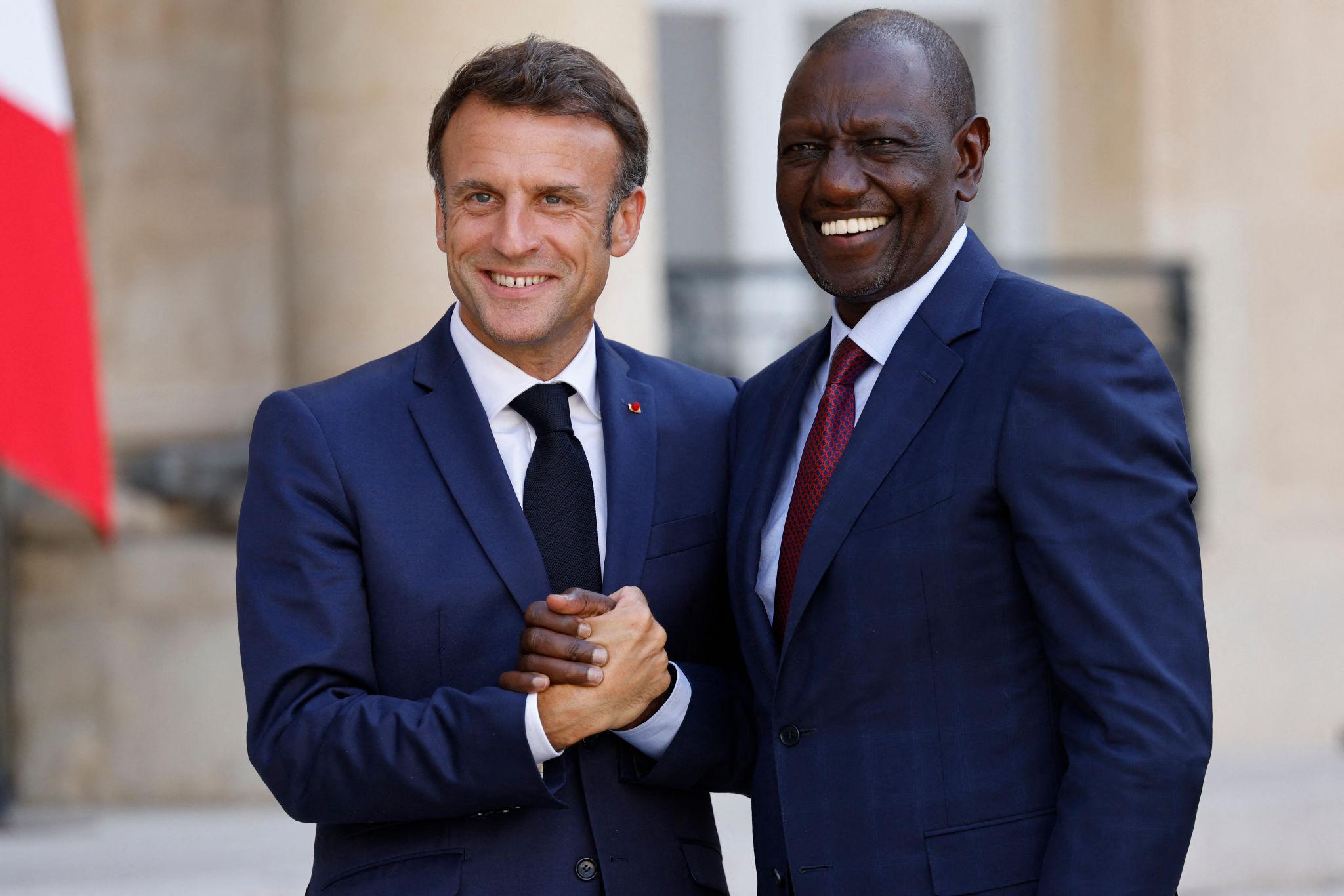
French President Emmanuel Macron used this week’s Franco-African summit in Nairobi to promote France’s renewed economic engagement with Africa, announcing $27 billion in investments and unveiling plans aimed at easing financing challenges for debt-stricken African economies.
During the summit, Macron met university students, held talks with African leaders and business executives, and even joined Kenyan marathon champion Eliud Kipchoge for a public jog as France sought to project a more equal partnership with the continent.
However, analysts and campaigners argued that the summit’s financial proposals fell short of addressing Africa’s deepening debt crisis, saying the measures largely preserve the current international financial system rather than reform it.
At the center of Macron’s proposals was a “first-loss guarantee” mechanism, under which governments or international financial institutions absorb initial investment losses to encourage private investors to finance projects in developing countries.
French officials described the initiative as part of a broader push to mobilize private capital at a time when wealthy nations are redirecting spending toward defense and domestic priorities instead of overseas development assistance.
“We need to make the international development finance system work better,” a French finance ministry official said, adding that international lenders and states could help guarantee loans for poorer nations.
But critics said the proposals failed to include stronger measures such as debt cancellation, repayment suspensions or large-scale refinancing programs sought by many African governments and civil society groups.
Hannah Ryder, founder of Africa-focused consultancy Development Reimagined, said France missed an opportunity to push for meaningful structural reforms.
“Those France picked, even if credible, will simply preserve the architecture as it stands,” Ryder said.
African leaders, including Kenyan President William Ruto, who co-chaired the summit alongside Macron, renewed calls for reforms to global credit rating systems, arguing that African economies are often assessed as riskier than they truly are, leading to higher borrowing costs.
Meanwhile, several advocacy groups, including Oxfam France and the African Forum and Network on Debt and Development, urged France to use its influence to support debt cancellations for Global South countries requesting relief.
Macron, who currently holds the G7 presidency, invited Ruto to next month’s G7 summit, where discussions on the proposed financial guarantee mechanisms are expected to continue.
The Nairobi gathering marked the first Franco-African summit hosted in a non-Francophone African country, a move widely viewed as part of France’s effort to rebuild ties across the continent after growing tensions with several former colonies in West Africa.
Still, some observers questioned whether the summit represented genuine change or a strategic attempt by Paris to maintain its political and economic relevance in Africa amid growing competition from global powers.
Jervin Naidoo, a political analyst at Oxford Economics, said the summit reflected France’s attempt to reposition itself as “a more equal and respectful partner” while also seeking to preserve its influence on the continent.