
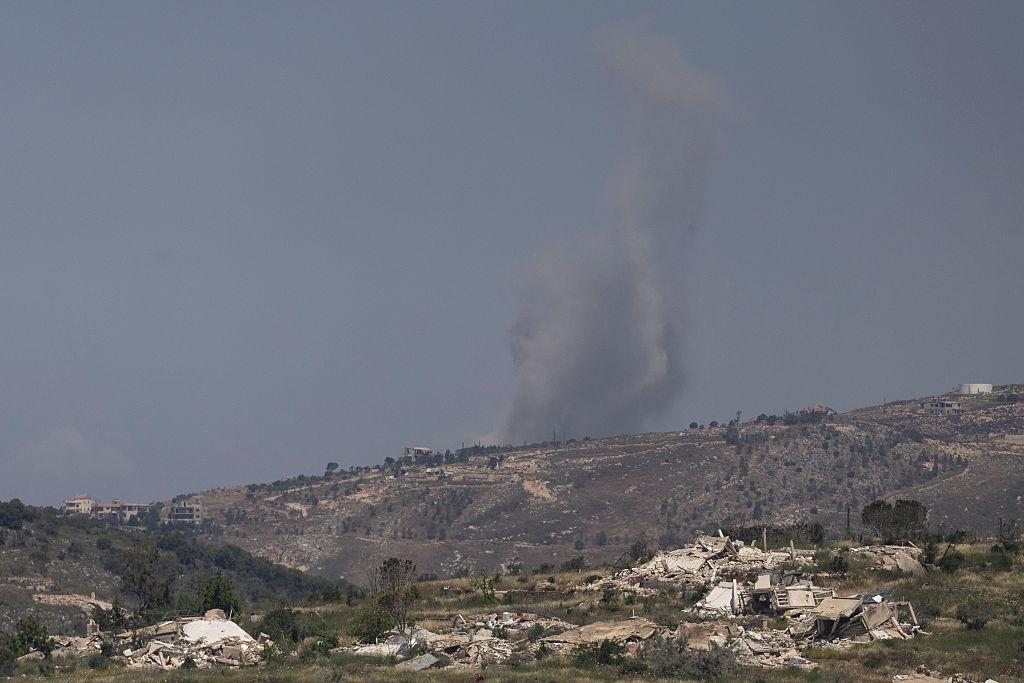
Hezbollah rejected a new ceasefire proposal for Lebanon on Thursday, casting doubt over U.S. efforts to stop fighting between Israel and the Iran-backed group and use the deal as a path toward ending the broader war with Tehran.
The rejection came as Israel signalled it had no intention of withdrawing its forces from Lebanon, where it launched ground operations in March alongside the wider conflict with Iran.
Hezbollah leader Naim Qassem dismissed a U.S.-brokered ceasefire agreement reached between Israel and the Lebanese government, saying the group’s “resistance will continue.” Hezbollah was not part of the negotiations, and there was no immediate response from Israel, Lebanon or the United States.
Iran has made a ceasefire in Lebanon a condition for any wider peace deal with Washington. Tehran has also warned in recent days that it could intervene directly if Israel continues its attacks in Lebanon.
Israel kept up strikes in southern Lebanon on Thursday. Defence Minister Israel Katz said Israeli forces would not withdraw or halt operations, while the commander of Iran’s Revolutionary Guards’ Quds Force said Israel must at least return to the positions it held before the war began.
The dispute adds another obstacle to U.S. President Donald Trump’s attempt to contain multiple fronts of fighting linked to the Iran war. Gaza, northern Israel and Kuwait have also come under fire this week despite U.S.-arranged ceasefires that were supposed to reduce hostilities.
Trump said on Wednesday that the agreements involved “shooting in a more moderate manner,” rather than a full end to fighting.
Iranian and U.S. forces exchanged attacks in the Gulf on Wednesday in one of the most serious escalations since a ceasefire in April halted large-scale fighting. Iranian forces struck Kuwait’s airport, killing one person and injuring more than 60, while the U.S. military carried out strikes near the Strait of Hormuz.
The strait, which normally carries around a fifth of global oil and liquefied natural gas supplies, has been largely closed since the war began three months ago.
Iranian oil exports have dropped to their lowest level in six years, according to shipping data. However, oil prices fell by about 3% on hopes that a Lebanon ceasefire could help open a diplomatic route between Washington and Tehran.
Despite Trump’s repeated claims since late March that a deal is close, there has been little visible progress in negotiations.
The U.S. president is under pressure to reduce fuel prices ahead of November’s congressional elections. On Wednesday, the House of Representatives voted to block him from continuing the war, in a rare rebuke. The vote is largely symbolic, as Trump is unlikely to sign the measure into law.
Iran’s Supreme Leader Ayatollah Mojtaba Khamenei said Thursday that Iran’s enemies had already been defeated on the battlefield and were now trying to create divisions inside the country.
Khamenei has not appeared in public since succeeding his father, who was killed in an airstrike at the start of the war.
Tehran is seeking access to billions of dollars in oil revenue, sanctions waivers on crude exports, an end to the U.S. blockade on its ports and leverage over the Strait of Hormuz.
Trump says his main objective is to prevent Iran from acquiring nuclear weapons. Iran maintains that its nuclear programme is peaceful.
The U.N. nuclear watchdog said Thursday that Iran’s nuclear programme remains largely unchanged despite three months of war.