
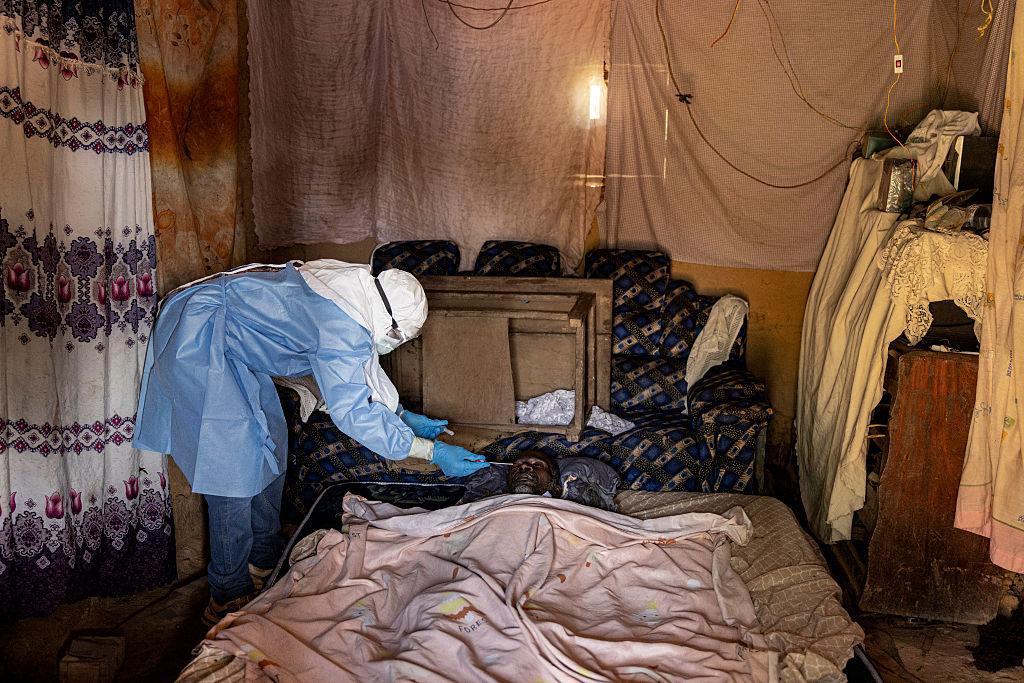
Scientists in the Democratic Republic of Congo and Uganda have traced the Ebola outbreak affecting both countries to a new transmission from wildlife, ruling out fears that the virus had circulated undetected among humans for years.
Researchers from Uganda’s national health laboratory services and the DRC’s National Institute for Biomedical Research said genomic analysis showed the Bundibugyo Ebola virus responsible for the outbreak was genetically distinct from strains detected during previous outbreaks in Uganda in 2007 and Congo in 2012.
“The virus has freshly crossed over from a wild animal reservoir into the human population,” the researchers said in findings released Thursday.
The discovery dismisses speculation that the latest outbreak could be linked to an older epidemic that remained hidden or continued spreading unnoticed.
Congo has recorded more than 800 confirmed cases and 196 deaths since declaring the outbreak on May 15, according to health authorities. Uganda has reported 19 confirmed infections and two deaths.
In eastern Congo, infections have been reported across Ituri, North Kivu and South Kivu provinces. Ituri remains the outbreak’s epicentre, accounting for nearly 95% of confirmed cases.
Scientists said rapid cooperation between Congolese and Ugandan laboratories was helping authorities track the virus’s movement, prepare hospitals and strengthen protection for communities along the heavily travelled border.
They stressed that continued cross-border surveillance would be essential because residents routinely move between the two countries for work, trade and family visits.