
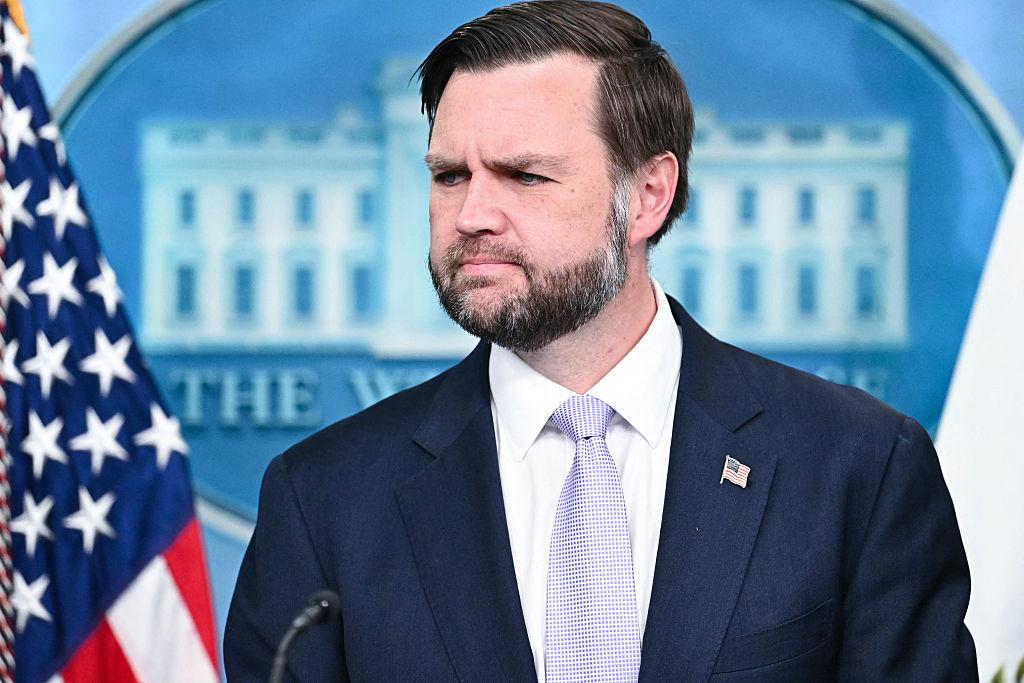
US Vice President JD Vance has issued a blunt warning to Israeli officials attacking President Donald Trump’s agreement with Iran, telling them that Washington remains Israel’s only powerful ally and the principal supplier of the weapons protecting the country.
Speaking at the White House on Thursday, Vance defended the US-brokered agreement intended to end the war with Iran, which has faced fierce criticism in Israel for failing to dismantle Tehran’s nuclear facilities or restrict its ballistic missile programme.
The deal also requires an end to fighting involving Israel and Hezbollah in Lebanon, placing further pressure on Prime Minister Benjamin Netanyahu’s government.
Vance said he had not personally heard reports that Netanyahu was furious about the agreement. However, he strongly criticised members of the Israeli cabinet who had publicly attacked both the deal and Trump.
“If I was in the cabinet of the Israeli government, I might not be attacking the only powerful ally that I have,” Vance told reporters.
He also pointedly reminded Israeli leaders that much of the country’s air-defence equipment had been manufactured in the United States and funded by American taxpayers.
Washington currently provides Israel with approximately $4 billion in annual military assistance, while the two governments are negotiating a new long-term aid package.
Vance said Israeli officials blaming Trump for the country’s problems needed to recognise the increasingly difficult international position Israel now faces.
“The problem for Israel is not Donald J. Trump,” he said.
Netanyahu’s office and the Israeli Foreign Ministry did not immediately comment.
Israeli leaders challenge deal
Tensions between Washington and Israel have risen sharply since the agreement was announced. Senior Israeli officials have described its terms as damaging to Israel because they do not sufficiently address Iran’s nuclear facilities or missile arsenal.
Trump attempted to dismiss those concerns at the G7 summit in France on Wednesday, suggesting Netanyahu should adopt a “softer touch” in Israel’s campaign against Hezbollah.
Netanyahu, however, signalled that Israel would not fully comply with provisions requiring it to withdraw from southern Lebanon.
Speaking publicly for the first time since the agreement, the Israeli prime minister said his government valued its relationship with Washington but would continue occupying a security zone in southern Lebanon for as long as it considered necessary.
Israel subsequently published a map showing an expanded area under its military control and warned that it could continue conducting strikes beyond that zone, directly challenging the terms of the agreement.
Vance targets far-right ministers
Vance also singled out far-right National Security Minister Itamar Ben-Gvir and Finance Minister Bezalel Smotrich, both influential members of Netanyahu’s governing coalition.
In an interview published by The New York Times, Vance questioned what alternative they were proposing, arguing that a country of nine million people could not resolve every security threat through military force.
He described the Israeli reaction to the deal as a “freakout” driven by mistrust of Washington.
Ben-Gvir responded on X by comparing Iran and its allies to Nazi Germany and arguing that they should be confronted in the same manner.
Trump later called on all sides to preserve the ceasefire and allow negotiations to proceed. He said Washington expected fighting to stop across every front, explicitly naming Israel, Lebanon and Hezbollah.
Vance picks a dangerous fight with Trump’s own base
Vance’s intervention may prove politically reckless. At 41, with limited foreign-policy experience, he is lecturing officials from a country that has spent decades confronting Iran and Hezbollah while presenting himself as the final authority on Israel’s security needs.
He has also become the principal salesman—and one of the central architects and signatories—of an agreement that grants Tehran immediate strategic relief while postponing the hardest questions. Iran’s nuclear infrastructure, ballistic missiles and regional network remain unresolved, yet Vance is already declaring success and demanding trust.
The emerging picture is of an inexperienced negotiator who may have been played by Tehran. Iran secured an end to American and Israeli attacks, relief from the naval blockade and a pathway towards sanctions relief without first dismantling the capabilities that supposedly caused the war. Vance appears to have exchanged Washington’s strongest leverage for Iranian promises to negotiate later.
Picking a public fight with Israeli ministers only deepens that impression. Netanyahu is one political leader; Israel is a country with deep support among Republican voters, congressional conservatives and evangelical Christians. Vance risks turning criticism of two controversial ministers into a broader confrontation with Israel itself.
MAGA opinion on Israel is no longer uniform, particularly among younger Republicans and anti-interventionist conservatives. But Christian Zionists and strongly pro-Israel evangelicals remain an important part of Trump’s coalition. They may tolerate disputes with Netanyahu, but many will view forcing Israel to halt operations while Iran retains missiles and nuclear infrastructure as an outright betrayal.
Vance’s reference to American weapons and taxpayer funding was particularly ill-judged. It sounded less like reassurance from an ally than a threat: accept Washington’s deal or risk losing American protection. That language will be welcomed in Tehran and weaponised by Democrats and Republican hawks alike if the agreement collapses.
If Iran uses the 60-day negotiating period to delay, reorganise and extract further concessions, Vance will own the consequences. Having attached himself so closely to the agreement, he cannot easily blame diplomats, mediators or Israeli obstruction later. He has made himself the face of a settlement that currently resembles an Iranian escape from defeat—and his attack on Israel ensures that its failure could damage his political future as much as Trump’s.