
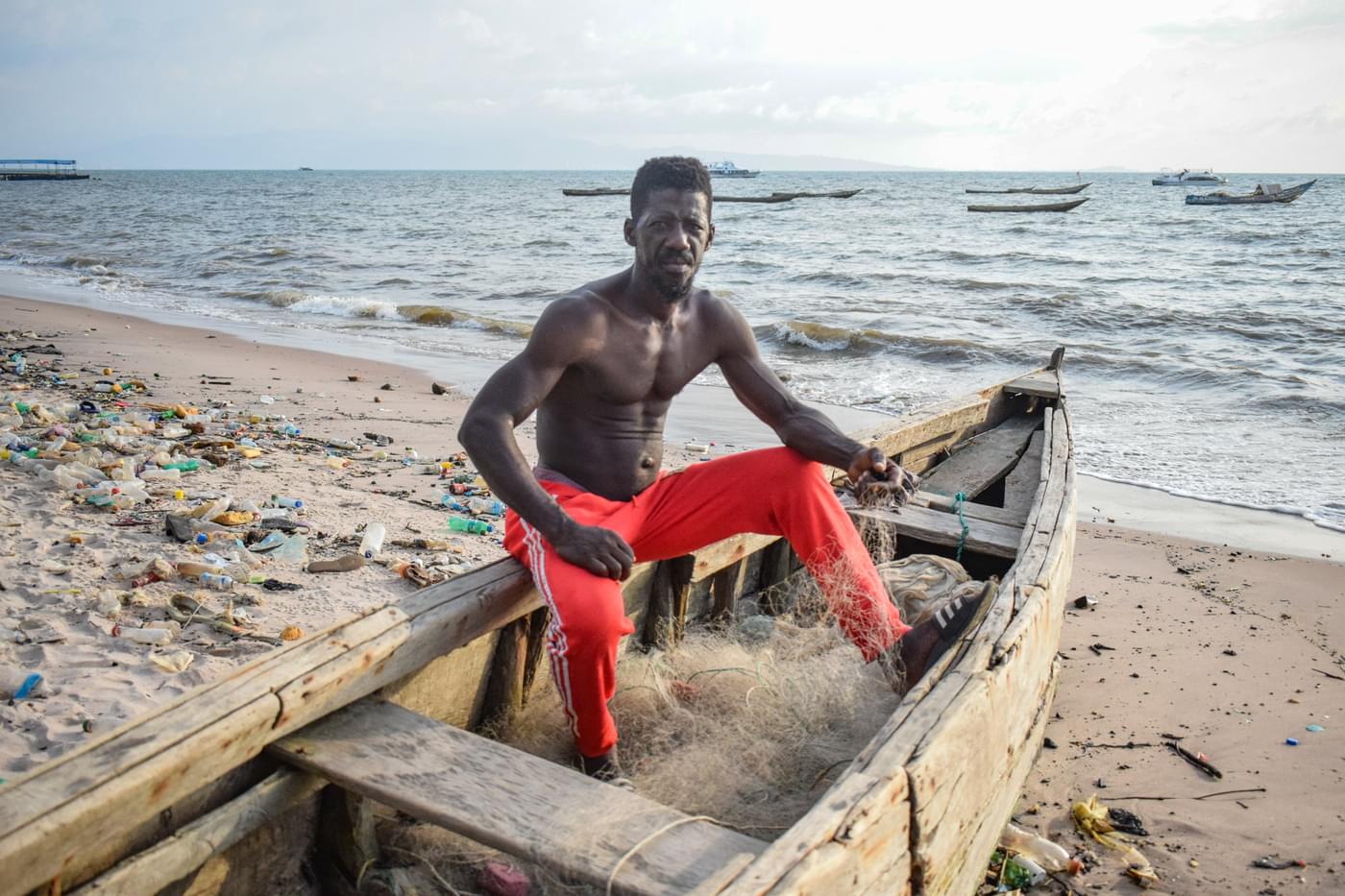
Fishermen on Sierra Leone’s Sherbo Island say their livelihoods are being destroyed by foreign industrial trawlers, accusing the vessels of entering protected coastal waters, cutting nets and depleting fish stocks.
On the island, about 120 kilometres south of Freetown, villagers still practise traditional shore fishing, hauling large nets from the sea with the help of entire communities. But locals say the amount of fish they bring in has fallen sharply in recent years.
They blame the decline on large foreign fishing vessels operating close to shore, despite a seven-mile exclusion zone designed to protect local fishermen.
Marie Pierre, who was sorting sardines from a pile of jellyfish on the beach, said international trawlers were entering coastal waters illegally in growing numbers.
Fisherman Musa Gassimo said the damage was not limited to falling catches. He accused trawlers of deliberately cutting local fishing lines at night after fishermen cast their nets and returned to shore.
Replacing damaged nets can cost fishermen up to $250, he said — a devastating expense for communities that depend almost entirely on the sea.
West Africa is widely regarded as the global centre of illegal fishing. A 2024 report estimated that about 40 percent of the world’s unlicensed catch can be traced to the region’s waters, costing West African countries around $10 billion in lost revenue and threatening food security for millions.
Thomas Turay, president of Sierra Leone’s Fishermen’s Union, said catches among his members had fallen by about 40 percent in recent years.
“The illegal fishing is too much,” Turay said, accusing foreign trawlers of violating the exclusion zone at night. “The sea belongs to us.”
Several fishermen in Tombo harbour, near Freetown, described similar incidents. Abou Waisissé, 70, said small local boats had their nets cut during one attack, while Mohamedi Kamara, 55, said an international trawler damaged his boat in a collision.
Campaigners say Chinese vessels now dominate much of the industrial fishing activity in the region.
Steve Trent, chief executive and co-founder of the Environmental Justice Foundation, said illegal or abusive fishing in West African waters had previously involved vessels from several countries, including South Korea, Taiwan and Europe, but was now overwhelmingly linked to China’s distant-water fleet.
Local fishermen also accuse Sierra Leonean authorities of failing to act on their complaints.
Kamara said fishermen report incidents to the Fisheries Ministry, but their claims “go nowhere.” Turay alleged that corruption was preventing proper enforcement, saying those involved in illegal fishing had the money to pay bribes.
Sierra Leone’s Fisheries Ministry denied that illegal fishing remains a major problem.
Sheku Sei, a director at the ministry, said the government had introduced measures to reduce violations, including transponders to track international vessels and inspectors to monitor fishing operations.
He rejected suggestions that vessels switch off their tracking systems in Sierra Leonean waters and said penalties for breaching the exclusion zone were strong enough to deter offenders. However, he did not provide examples of such penalties being applied in the past decade.
The Chinese Chamber of Commerce in Sierra Leone did not respond to requests for comment. China’s Foreign Ministry recently rejected separate allegations of illegal Chinese fishing in Latin American waters, saying Beijing is a “responsible fishing nation” that regulates its distant-water fleet in line with international law.
Trent said China’s denials were not credible and accused Beijing of failing to properly control its fleet.
He said stronger tracking, greater enforcement and international pressure were needed to stop illegal fishing, warning that seafood taken from West African waters is sold to consumers around the world.
For fishing communities on Sherbo Island, the issue is more immediate. As industrial trawlers continue to operate offshore, local fishermen say the sea that once sustained them is becoming harder to survive from.