
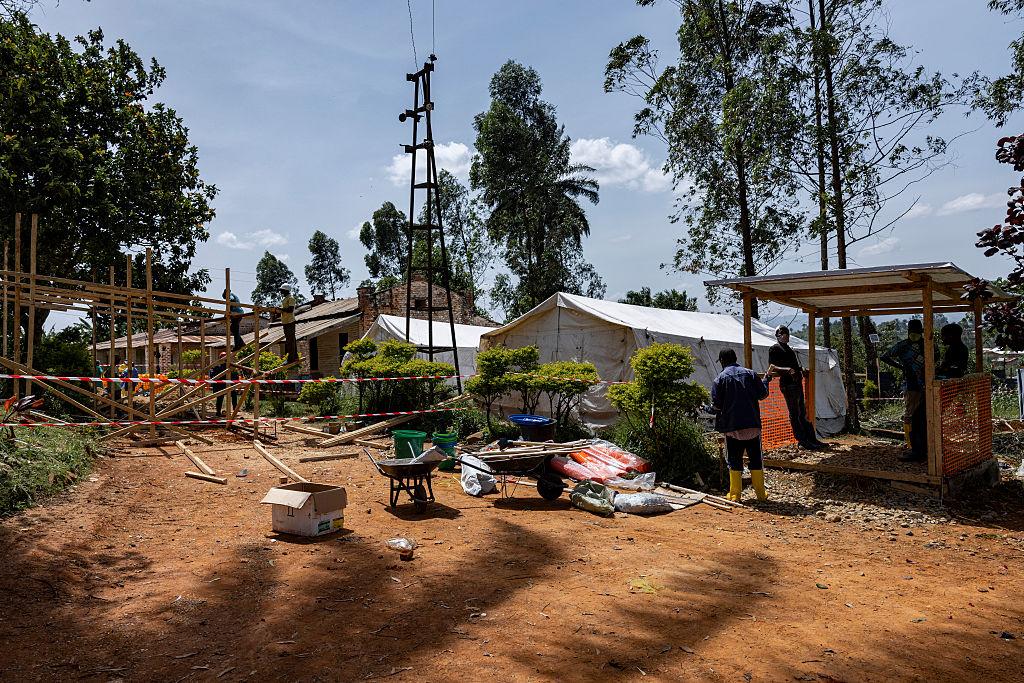
The Democratic Republic of Congo’s rapidly spreading Ebola outbreak may have started as early as January, several months before authorities officially announced it, according to a report published in the journal Science.
Researchers said the outbreak likely began on the outskirts of Mongbwalu, a mining town in the eastern province of Ituri. Their findings were based on interviews with 97 people and a review of medical records, photographs, WhatsApp messages and other evidence.
The investigation identified more than 500 suspected Ebola cases between mid-January and May 15, when the outbreak was formally declared.
One of the earliest suspected transmission chains involved a 50-year-old woman who died on January 25 after vomiting blood. Her mother died six days later, while her husband also became ill but later recovered, the report said.
Researchers interviewed doctors, nurses, survivors, community leaders, bereaved relatives, coffin-makers and cemetery workers to reconstruct how the virus spread before it was officially detected.
They also examined doctors’ notes and funeral biographies that included descriptions of symptoms experienced by those who died.
Health experts had previously told Reuters that the virus may have been circulating for weeks or months before Congo’s 17th recorded Ebola outbreak was declared by Africa’s leading public health agency.
The outbreak has since become the second-largest Ebola epidemic ever recorded, with confirmed cases across Congo reaching 3,532.
Only the 2014-2016 West Africa outbreak was larger, infecting 28,616 people across Guinea, Liberia and Sierra Leone.
The current outbreak is caused by the rare Bundibugyo strain of the Ebola virus, for which there is currently no approved vaccine or specific treatment.