
The United States is considering reducing its military footprint in the Gulf as the Pentagon reassesses how and where American forces should be deployed following months of conflict with Iran, according to a report cited by Alrakoba.
The discussions, first reported by The Washington Post and based on interviews with eight officials and people familiar with the deliberations, could lead to one of the most significant changes in the US military posture in the Middle East in years.
The review remains at an early stage, and Defense Secretary Pete Hegseth has not ordered a formal, comprehensive reassessment. One senior Pentagon official described the discussions as “prudent planning” aimed at informing decisions over whether badly damaged bases should be rebuilt in their previous form.
The Pentagon’s policy office is leading the assessment with input from the Joint Chiefs of Staff and US Central Command.
The war with Iran, which began in February 2026, exposed what officials and analysts see as serious vulnerabilities in America’s network of bases across the Gulf. Before fighting erupted, CENTCOM evacuated personnel from several facilities considered highly exposed to Iranian missile and drone attacks.
Despite those precautions, a number of major US military installations suffered significant damage during months of strikes.
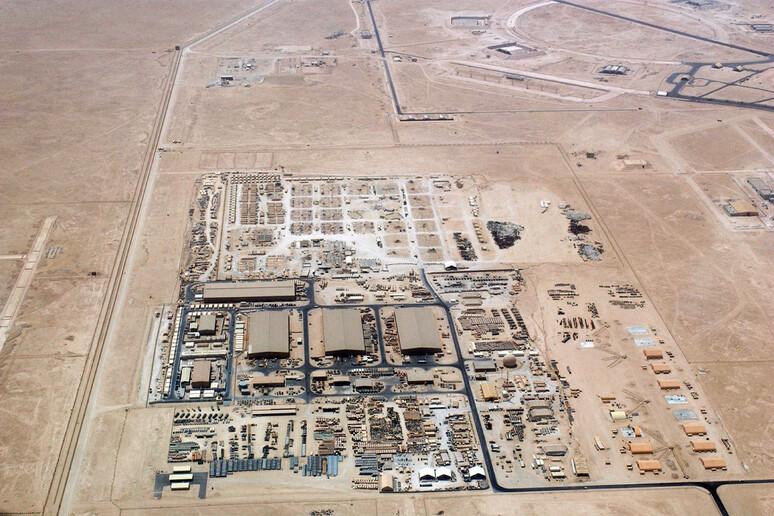
CENTCOM normally deploys around 40,000 US troops across roughly 20 locations stretching from Jordan to Oman. The largest permanent facilities are concentrated in Gulf states, including the headquarters of the US Fifth Fleet in Bahrain and major air and ground bases in Qatar and Kuwait.
Michael Ratney, a former US ambassador to Saudi Arabia who also served as deputy chief of mission in Qatar, said the conflict had highlighted the vulnerability of American forces in the region.
The scale of the damage has prompted some officials and analysts to describe the moment as a rare opportunity to reconsider a military posture developed over decades.
One option under discussion would involve withdrawing some forces from the Gulf and choosing not to fully rebuild certain installations damaged during the conflict.
CENTCOM commander Admiral Brad Cooper is also reported to support examining whether some personnel and assets could be shifted farther west, away from Iran’s immediate missile range, including to Jordan, Israel or Saudi Arabia’s Red Sea coast.
Such a move could reduce exposure to Iranian attacks, but would not eliminate the threat. Tehran demonstrated during the war that it could strike targets at greater distances, including in Jordan and Israel.
Any substantial reduction in the US presence would also take time. Gulf states would need to develop additional military capabilities or rely more heavily on alternative security arrangements if Washington scaled back permanently.
The debate is likely to expose divisions inside the Trump administration between officials who favour maintaining a powerful overseas military presence and those who want to reduce foreign commitments and focus resources on homeland defence and strategic competition with China.
The discussions come alongside a broader reassessment of the US military presence in NATO countries following plans to withdraw thousands of American troops from Germany and Poland.
For Gulf governments, however, any major reduction could carry significant strategic consequences. Countries including Saudi Arabia, Qatar, Bahrain and Kuwait have relied for decades on the US military presence as a central pillar of regional deterrence.
A smaller American footprint could increase concerns about exposure to Iranian pressure, particularly after several Gulf governments expressed frustration over what they viewed as insufficient consultation before the latest conflict began.
Supporters of a reduced military presence argue that Washington could preserve strong regional partnerships through intelligence sharing, weapons sales and training without maintaining the same number of troops and bases.
The American Enterprise Institute has estimated that rebuilding damaged US facilities could cost about $5 billion. Pentagon estimates put the cost of the war itself at roughly $37.5 billion by the end of September, excluding reconstruction expenses.
Officials familiar with the discussions stressed that no permanent decisions have been made and that any major changes would require approval from senior members of the administration.
President Donald Trump signed a preliminary agreement with Tehran in June that initially appeared to bring the conflict closer to an end, but the arrangement later collapsed and intermittent strikes continued.
Although the Pentagon review is still preliminary, the debate suggests Washington is questioning assumptions that have shaped its Gulf strategy for decades — including whether large, fixed bases close to Iran remain an advantage or have increasingly become a liability.