
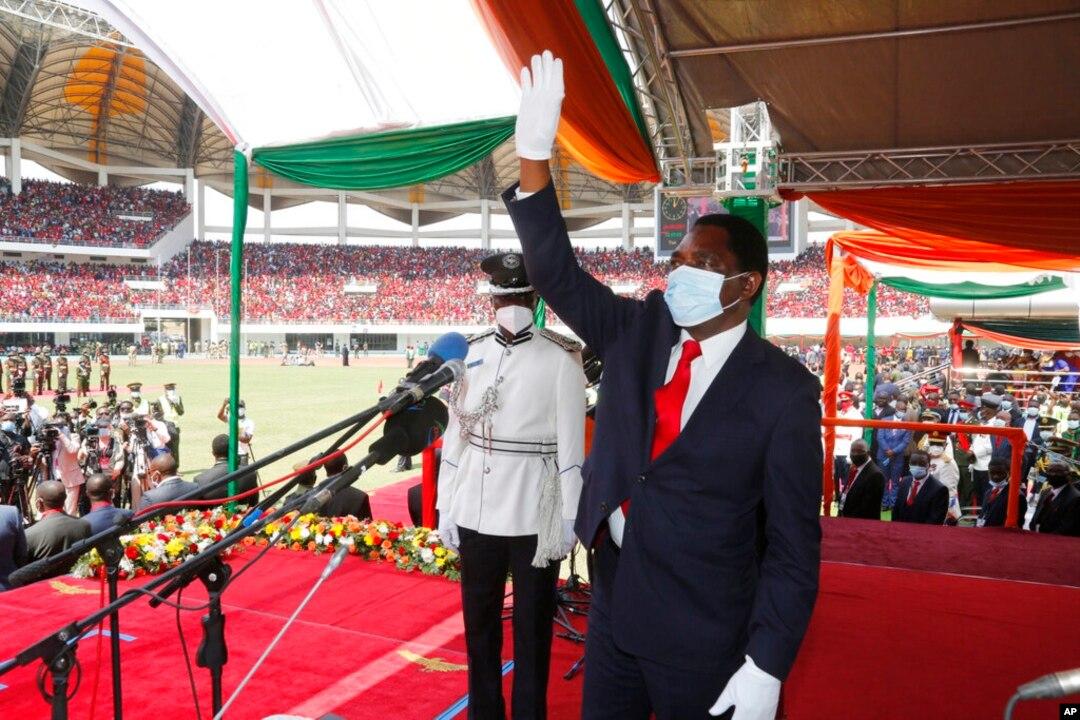
Zambian President Hakainde Hichilema was sworn in for a second five-year term on Tuesday following an election marked by allegations of vote manipulation, military interference and a crackdown on opposition figures.
Hichilema’s main challenger, Brian Mundubile, remained in custody on treason charges during the inauguration. Mundubile’s running mate, Makebi Zulu, was also charged over the weekend.
The arrests capped a turbulent electoral period that included the temporary suspension of vote counting, the deployment of soldiers at polling and counting centres, the detention of opposition lawmakers and restrictions on access to the courts.
Hichilema first took office in 2021 after campaigning on a promise to restore democratic standards and end practices he accused the previous administration of using against political opponents.
Election observers, however, reported serious problems surrounding the August 13 vote. Their findings included indications that votes had been improperly added to Hichilema’s total, although observers generally concluded that the irregularities were not large enough to change the outcome.
The Electoral Commission of Zambia said complaints over discrepancies should be handled by the courts. But authorities blocked access to court buildings as the deadline for filing an election challenge approached, before announcing that no petition had been submitted.
Opposition arrests raise questions
Officials have disclosed little evidence supporting the treason charges against Mundubile and about a dozen other opposition figures.
Authorities said the arrests were connected to suspected threats to national security and alleged that some detainees possessed weapons, but they have not publicly substantiated those claims. Lawyers representing the accused said they would challenge the charges in court.
Historian Euston Chiputa warned that the election had placed Zambia’s democratic reputation at risk, citing the disruption of vote counting, the military presence at counting centres and the subsequent opposition arrests.
Zambia has held regular elections since returning to multiparty politics in the 1990s, although several contests have faced criticism. Analysts fear the latest developments could establish a precedent allowing future governments to consolidate power more easily.
Investors favour economic continuity
Despite the political turmoil, international investors have largely welcomed Hichilema’s re-election.
Zambia’s dollar-denominated eurobonds returned 0.8% following the vote, compared with an average gain of 0.3% across Africa, according to JPMorgan index data. Citi also upgraded the country’s international bonds and indicated an interest in purchasing domestic government debt.
Hichilema oversaw a debt restructuring and economic recovery during his first term, making his continued leadership attractive to investors seeking predictable economic policies.
Christopher Vandome, a senior research fellow at Chatham House, cautioned that investors may be focusing too heavily on short-term stability. Weakening democratic institutions, he said, could ultimately undermine the durable political environment required for sustained investment.
Zambia’s extensive copper reserves have made the country an important arena for economic competition between China and the United States. Both governments congratulated Hichilema and sent representatives to his inauguration.