
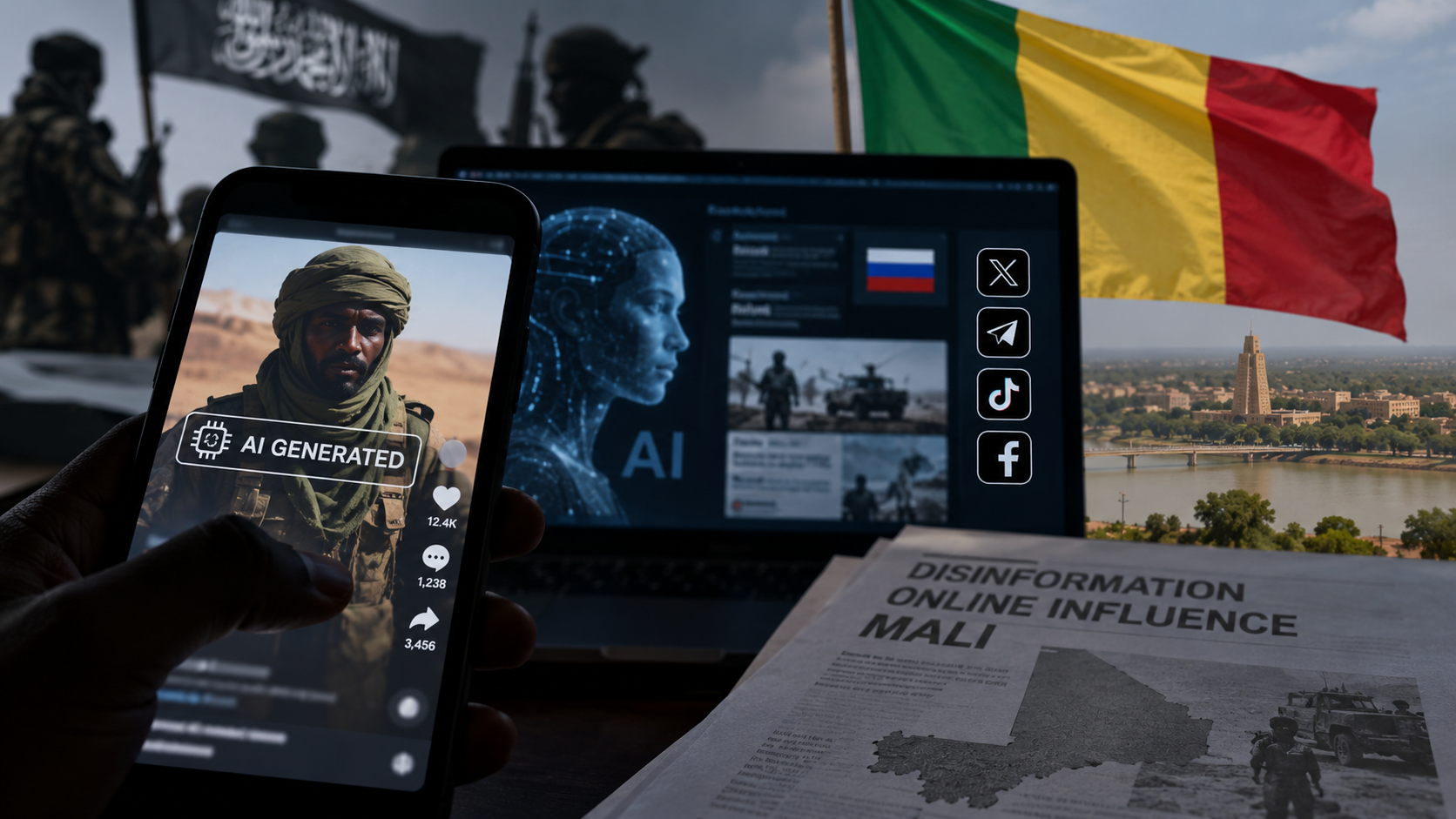
Artificial intelligence is becoming a new tool in Mali’s information conflict, with armed groups and foreign-linked networks using generated content to influence audiences online.
A new study by the Dakar-based Timbuktu Institute says generative AI is helping different actors amplify existing divisions in the West African country.
AI-generated characters appear online
The use of AI varies significantly between groups, according to the study.
The report found relatively limited use by JNIM. However, its media arm released AI-generated posters in June 2026.
AI-generated content has been more visible in online spaces linked to the Azawad Liberation Front (FLA).
Several TikTok accounts have reportedly used AI-generated characters presented as real people to spread messages supportive of the group.
Researchers said these virtual characters can make political or armed causes appear more relatable. At the same time, they can make it harder for audiences to identify who is actually behind the content.
Russia-linked networks show more sophisticated use
The study described Russia and the Africa Corps as the most sophisticated users of generative AI examined in the report.
Researchers said these operations can combine AI-generated material with fake accounts and organised distribution strategies.
The report also pointed to an operation identified by Meta and OpenAI in 2024. It used AI models to produce commentary, articles and images in English and French for audiences in sub-Saharan Africa.
Mali’s security crisis moves online
Mali has faced a prolonged security crisis since 2012 involving armed groups, separatist movements and other actors.
More recently, attacks have increased pressure on the country’s military-led government.
The latest findings suggest that the struggle is increasingly extending beyond the battlefield.
AI now offers competing actors a faster and cheaper way to produce images, messages and online personas — adding another layer to Mali’s already complex information environment.