
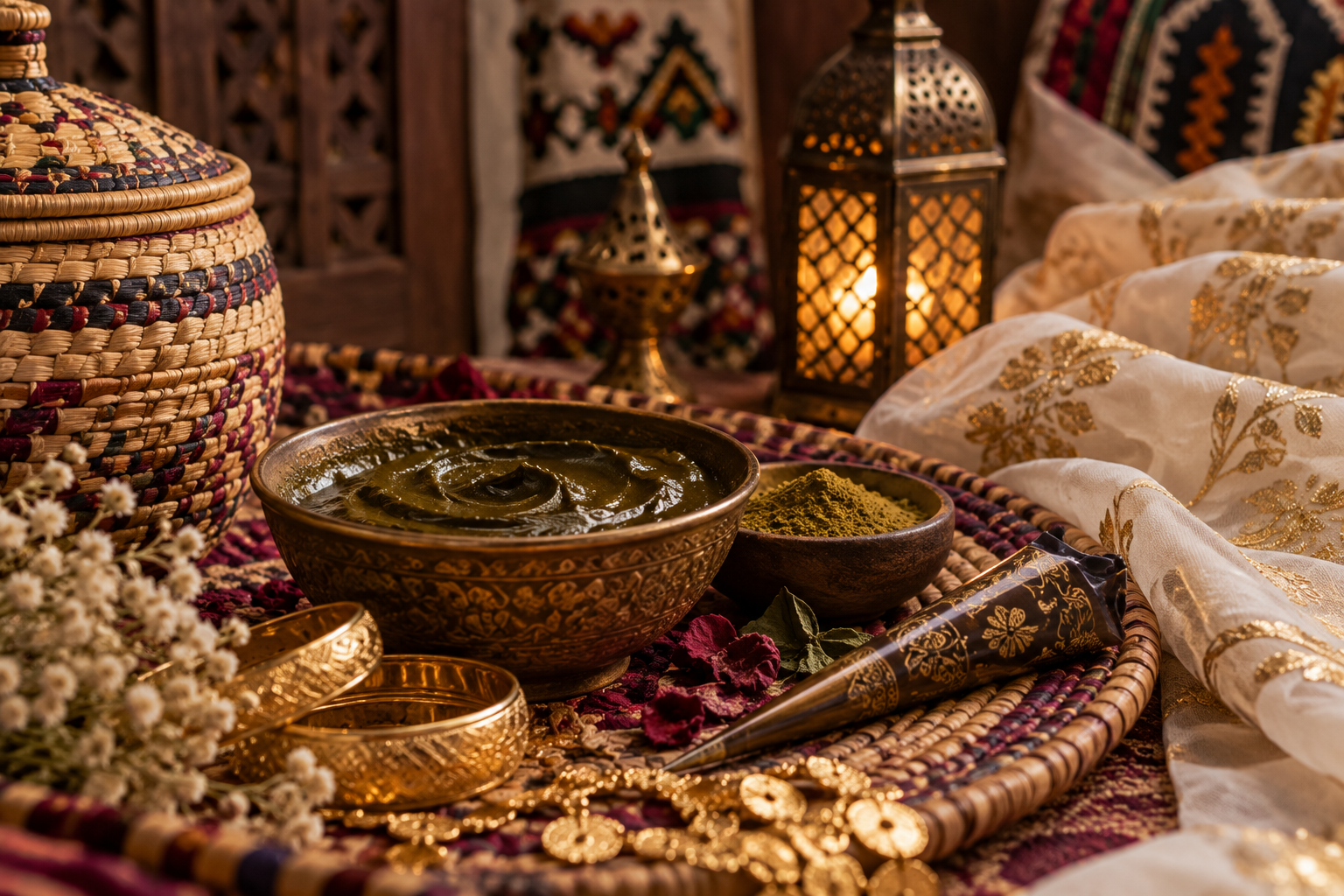
Sudanese women are keeping a centuries-old bridal henna tradition alive despite difficult conditions affecting communities across the country.
Henna has long played an important role in Sudanese weddings. Brides traditionally decorate themselves with detailed henna patterns before marriage celebrations.
For many women, the tradition is also a way to maintain a connection with Sudanese culture.
Henna remains part of Sudanese weddings
Sudanese bridal henna is known for its detailed designs and deep colour.
Beauty salon owner Omnia El Sayyed described henna as an important part of Sudanese women’s cultural identity.
She told AP that the tradition has been passed down through generations.
Today, henna artists continue to create traditional designs for brides and families.
Water shortages challenge henna farmers
However, producing henna has become more difficult.
Farmers say unreliable access to water is affecting cultivation.
Henna farmer Abdallah Mohammed told AP that long gaps in irrigation have reduced production.
Water can sometimes stop arriving when crops need it most, he said.
As a result, farmers face difficulties maintaining healthy plants and reliable harvests.
Trade routes have also changed
Henna producers have also had to adapt to changes in trade.
Before the current conflict, producers exported henna directly from Omdurman to markets abroad.
Now, much of the produce is transported through Egypt before reaching international buyers, according to henna factory owner Mohamed Ramadan, who spoke to AP.
Despite these challenges, farmers, businesses and henna artists continue working to maintain the tradition.
For many Sudanese women, bridal henna remains more than decoration. It is a tradition passed between generations and a lasting part of the country’s cultural heritage.