
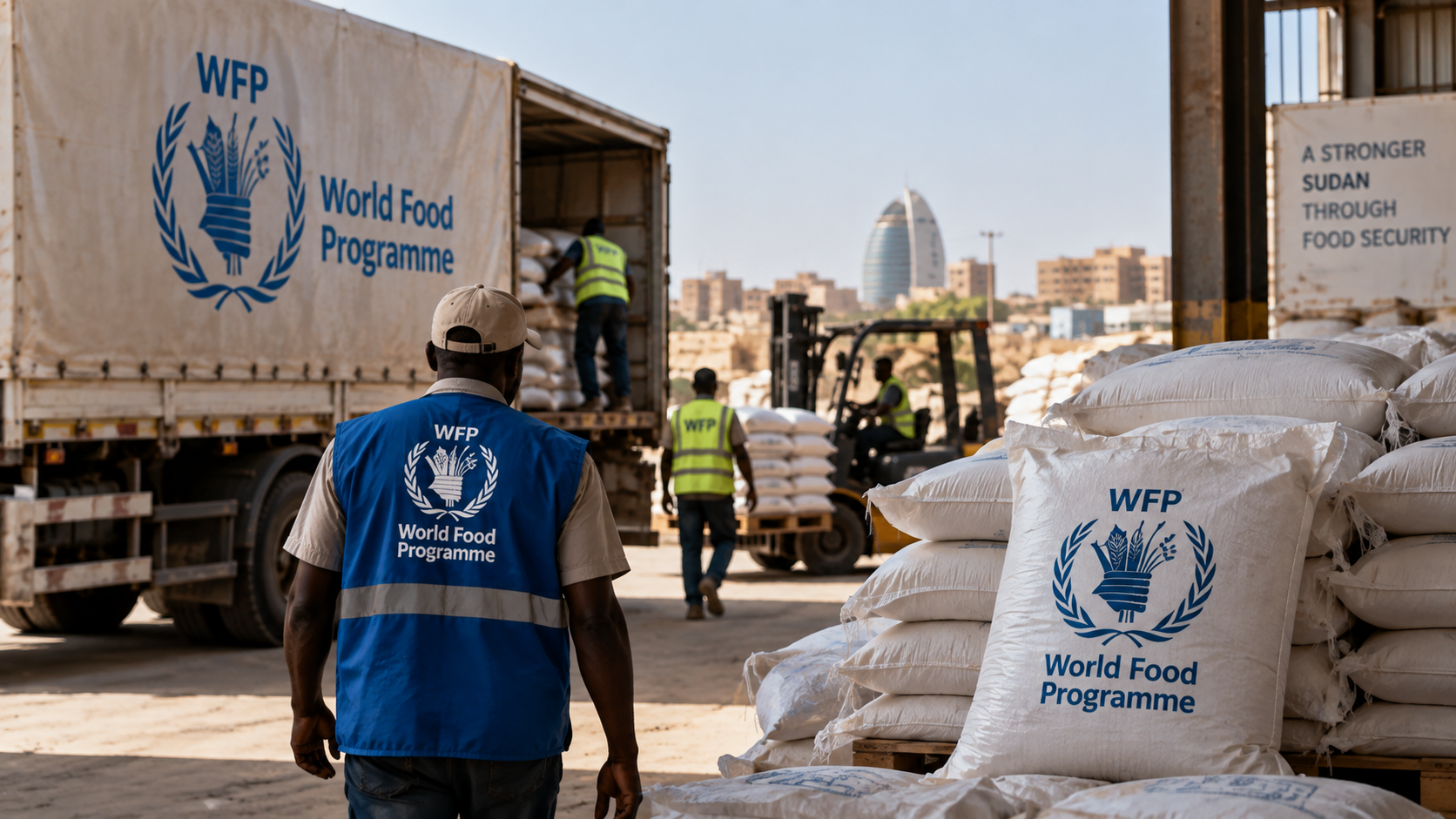
The World Food Programme’s annual food purchases from Sudan have fallen by half since the war began.
The UN agency now buys around 200,000 tonnes of food from Sudan each year.
Before the conflict, that figure stood at about 400,000 tonnes.
A senior UN official said the decline reflects major disruption to farming, markets and the wider economy.
Sudan food purchases fall sharply
Denise Brown, the UN humanitarian coordinator in Sudan, discussed the figures at an economic recovery conference in Khartoum.
She said the WFP previously bought around 400,000 tonnes of food commodities from Sudanese markets each year.
However, annual purchases have now dropped to about 200,000 tonnes.
The decline comes as the war continues to affect agricultural production and economic activity across the country.
Brown also called for greater attention to investment and economic recovery.
She described the private sector as an important part of efforts to restore stability and growth.
Humanitarian funding also declines
Sudan continues to face major humanitarian needs.
Brown said the country’s humanitarian response plan has received around $1.2 billion so far this year.
That compares with $1.9 billion in 2025.
Meanwhile, humanitarian agencies continue to provide assistance to people affected by the conflict.
The reduction in local WFP purchases also shows how the war has affected Sudan’s ability to supply food through domestic markets.
Private sector seeks greater role
The economic recovery conference opened in Khartoum on Monday.
Sudan’s Finance Ministry, the Sudanese Employers’ Federation and UN agencies took part.
Representatives of countries with investments in Sudan also attended.
Muawiya al-Birair, head of the Sudanese Employers’ Federation, called for new financing channels.
He said these should connect Sudanese businesses with regional and international financial institutions.
Al-Birair said the war had caused unprecedented damage to businesses across the country.
He also called for the private sector to have a greater role in shaping economic policy.
The conference comes as Sudan faces the challenge of rebuilding economic activity while the conflict continues.