
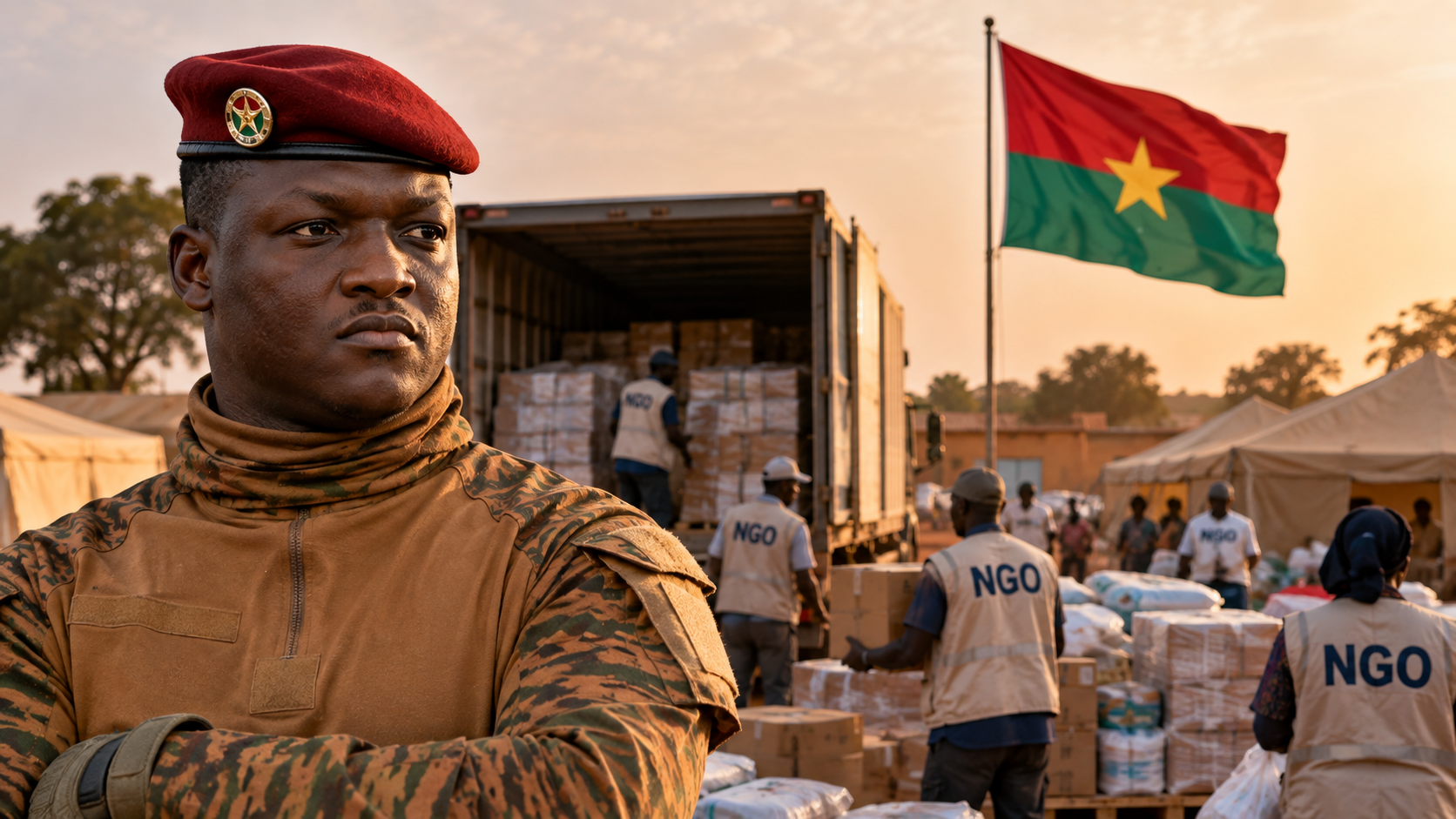
Burkina Faso has introduced new rules requiring NGOs to spend at least 80% of their budgets on direct investments in the field.
The measures were approved during a Council of Ministers meeting on September 24. The government says the changes will ensure more funding reaches intended beneficiaries rather than being absorbed by operating costs.
The rules also introduce new requirements for organizations seeking official NGO status.
Burkina Faso sets 80% spending rule for NGOs
Under the new measures, NGOs operating in Burkina Faso must direct at least 80% of their overall budgets towards direct investments.
The government says the policy aims to improve the impact of funds raised for vulnerable communities.
As a result, organizations will have less room to allocate large shares of their budgets to administrative and operating expenses.
The requirement applies to both local and foreign organizations operating in the country.
NGOs face new legal requirements
The government has also introduced stricter conditions for obtaining NGO status.
Burkinabè associations must sign a framework agreement with the state. Meanwhile, foreign organizations will operate under a separate headquarters agreement.
Economy and Finance Minister Aboubakar Nacanabo said the measures formalize the process for granting official NGO status.
Organizations must also meet a minimum level of cumulative investment to qualify for NGO status.
Organizations given two years to comply
Existing aid organizations will have two years to adapt to the new requirements.
During this period, authorities can review their administrative, financial and technical operations.
The measures build on reforms introduced under Burkina Faso’s 2025 law on freedom of association.
The government has presented the latest changes as an effort to increase accountability and align NGO spending with national priorities. However, some NGOs have raised concerns that the measures could increase government control over their work.