
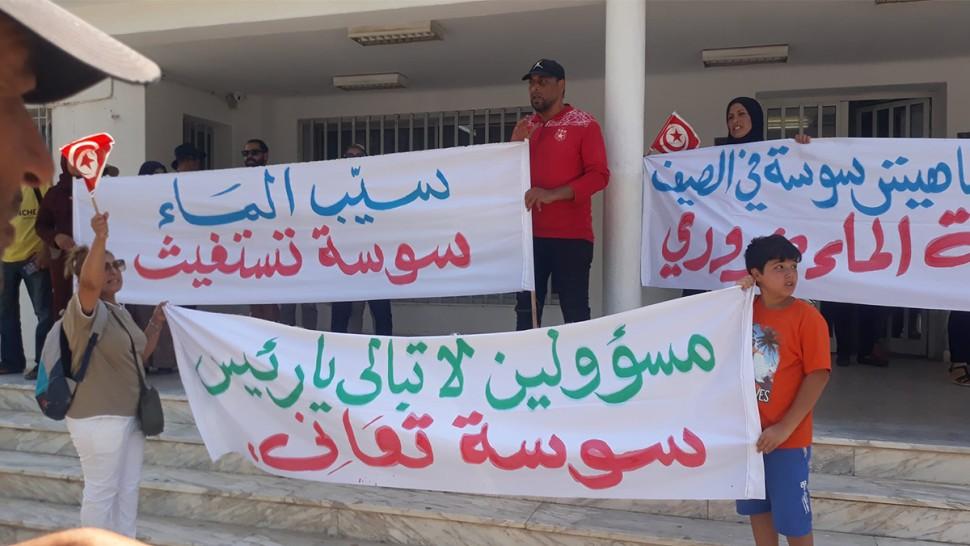
Public anger is growing across Tunisia over repeated water cuts, with residents staging protests outside government offices and lawmakers demanding urgent action to address what demonstrators have described as a worsening “thirst crisis.”
Frequent disruptions to drinking water supplies have triggered unrest in several provinces, including road blockades, burning tyres and gatherings outside official buildings.
The shortages initially affected northern provinces such as Kef, Jendouba and Beja but have recently spread to coastal areas, including Sousse and Monastir, where tensions have risen amid prolonged interruptions.
Residents in Monastir demonstrated on Wednesday outside a branch of Tunisia’s state-run water distribution company, demanding that supplies be restored immediately.
Protesters accused the government of failing to resolve the recurring outages, saying the disruptions had severely affected their daily lives.
The demonstrations have coincided with growing criticism from members of Tunisia’s parliament, who have called on the authorities to deal more seriously with repeated water and electricity cuts.
Lawmaker Fakhr Eddine Fadhloun appealed directly to President Kais Saied to intervene, saying parliamentarians were no longer able to explain the reasons for the disruptions to frustrated residents.
In a video posted on Facebook, Fadhloun said several communities in Monastir had been without water for an extended period. He added that he had contacted numerous officials but received no meaningful response.
“Mr President, you must intervene,” he said.
His appeal followed a protest by several lawmakers inside parliament, where they raised banners declaring that “water is a constitutional right” and called for long-term solutions to shortages that return each summer.
The Tunisian Water Observatory, a non-governmental organisation, said it received 423 complaints related to water services in June. Of those, 374 concerned unannounced cuts or disruptions to drinking water supplies, while six involved pollution or poor water quality.
The group also recorded 20 leaks in the distribution network and 23 protests demanding solutions to water shortages in different parts of the country.
The observatory said the sharp increase in complaints at the start of summer reflected the impact of heatwaves and rising pressure on water networks. It also exposed the fragility of Tunisia’s infrastructure and the distribution system’s inability to meet increased demand.
Tunisia’s water utility frequently announces temporary supply cuts in various districts, often attributing them to repairs, technical faults or electricity outages that disrupt pumping and storage operations.
President Saied has described the simultaneous water and electricity cuts, along with a series of fires, as “unusual phenomena.”
During a meeting with ministers and senior officials at Carthage Palace, Saied said the state would not remain passive in the face of anyone seeking to harm citizens or inflame public tensions.
He said service interruptions lasting more than 24 hours in some areas must be ended immediately and called on the authorities to notify residents in advance when cuts are unavoidable.
Saied also urged officials to schedule planned disruptions at times that would minimise hardship, particularly during periods of extreme heat.