
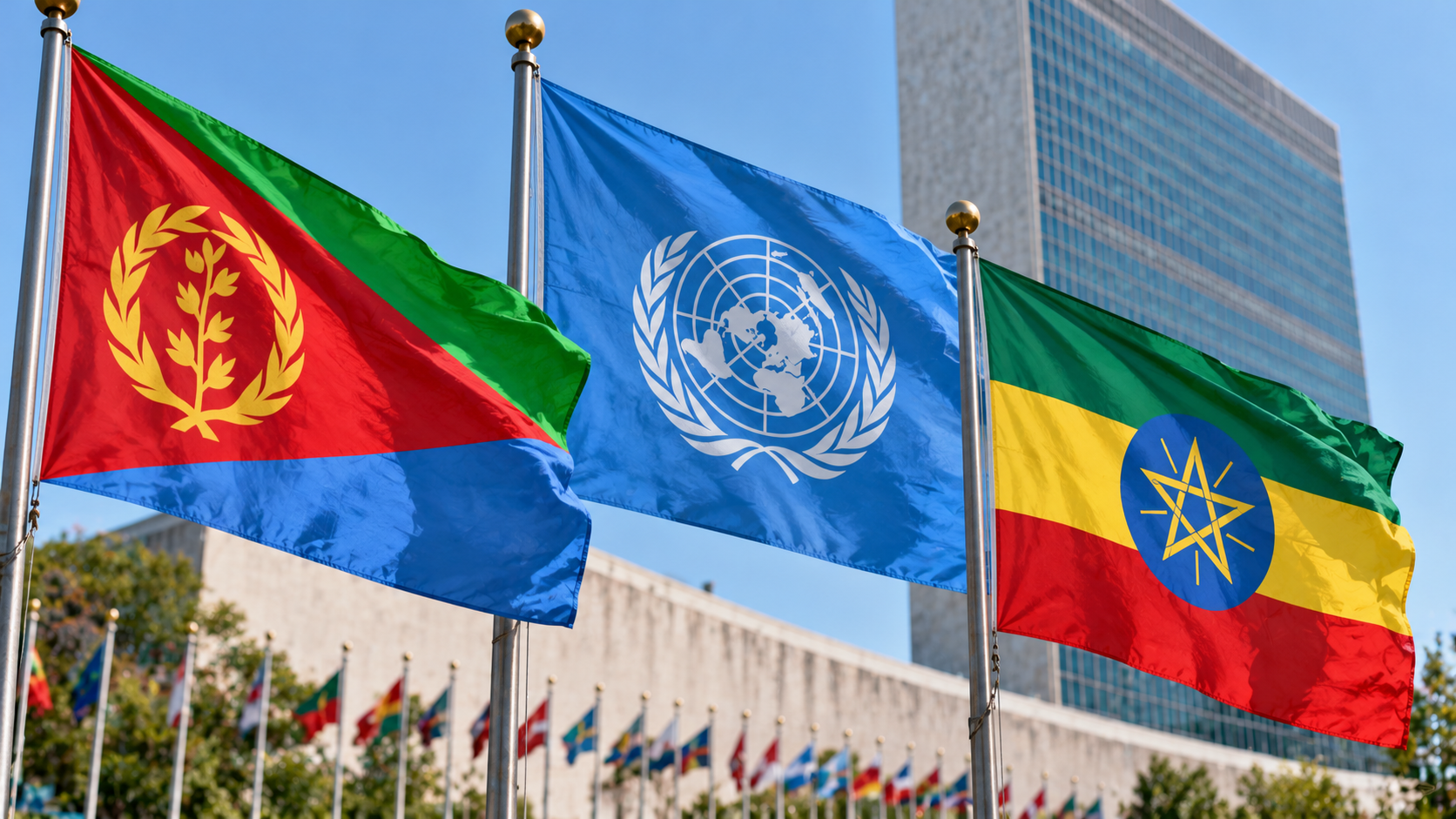
Eritrea has called for United Nations intervention as tensions with Ethiopia escalate, with both countries accusing each other of military aggression amid renewed fighting in the Tigray region.
Eritrean Foreign Minister Osman Saleh urged the UN Security Council on Saturday to take measures against what he described as Ethiopia’s declaration of war.
The appeal followed allegations from Addis Ababa that Eritrean forces had crossed into northern Ethiopia and advanced deep into Tigray.
According to Al Jazeera, AFP and the Associated Press, the diplomatic confrontation has raised concerns about a wider conflict in the Horn of Africa.
Eritrea urges UN Security Council to intervene
Eritrea submitted a letter to the UN Security Council on Saturday, rejecting Ethiopia’s accusations of a military incursion.
Foreign Minister Osman Saleh argued that the allegations were intended to justify an Ethiopian military offensive against Eritrea.
He urged the council to condemn Ethiopia’s actions and consider measures under Chapter VII of the UN Charter.
Chapter VII allows the Security Council to respond to threats to international peace and security. Its measures can include sanctions and, under certain conditions, the authorisation of military force.
Saleh warned that further escalation could cause widespread destruction and threaten stability across the region.
Eritrea maintains that Ethiopia’s allegations are part of an effort to justify military action.
Ethiopia accuses Eritrea of invading Tigray
Ethiopia presented a different account in a letter to the Security Council on Friday.
Foreign Minister Gedion Timothewos accused Eritrea of launching a major military incursion into Ethiopian territory.
Addis Ababa claimed that Eritrean troops had advanced as far as 60 kilometres into Tigray.
Ethiopia also accused Eritrea of supporting armed groups fighting against the federal government.
The Ethiopian government invoked Article 51 of the UN Charter, which recognises the right of self-defence following an armed attack.
However, the foreign minister did not outline specific military measures in his letter.
The competing claims could not be independently verified from the information available in the reports.
Fighting in Tigray raises regional concerns
The diplomatic dispute comes amid renewed fighting between Ethiopian government forces and armed groups in the country’s northern region.
An alliance of seven armed groups reportedly launched attacks against federal forces in September, seeking to remove Prime Minister Abiy Ahmed’s government.
Ethiopian forces subsequently announced that they had regained control of Mekelle, Tigray’s regional capital.
The Ethiopian military also reported carrying out drone strikes against Eritrean forces operating in the region.
Eritrea has not publicly confirmed the troop movements alleged by Ethiopia.
The developments have raised concerns about the possibility of a broader confrontation involving neighbouring countries.
Horn of Africa analyst Faisal Roble told Al Jazeera that both governments appeared to be moving closer to open conflict.
He suggested that their appeals to the United Nations were also aimed at securing international diplomatic support.
Red Sea access remains a source of tension
Disagreements over Ethiopia’s access to the Red Sea have added to tensions between the neighbouring countries.
Ethiopia has no coastline and relies heavily on regional transport routes for international trade.
Prime Minister Abiy Ahmed has repeatedly argued that direct access to the Red Sea is important for Ethiopia’s economic and strategic interests.
Eritrea views some of these statements as a potential threat to its sovereignty, particularly concerning the port of Assab.
Eritrean Information Minister Yemane Gebremeskel accused Ethiopia on Friday of pursuing an aggressive policy linked to its demands for sea access.
The disagreement has complicated relations between the two countries.
History of conflict between Ethiopia and Eritrea
Eritrea gained independence from Ethiopia in 1993 following decades of conflict.
The two countries later fought a border war between 1998 and 2000, causing substantial loss of life.
Relations improved after Abiy Ahmed became Ethiopia’s prime minister in 2018.
However, the relationship deteriorated again following the 2020–2022 Tigray war, during which Eritrean forces supported Ethiopia’s federal government against the Tigray People’s Liberation Front.
The latest tensions have revived concerns about regional instability and the possibility of another interstate conflict.
Both governments continue to present opposing accounts of the current military situation.
The UN Security Council now faces calls to address the dispute as international concern grows over the risk of further escalation.