
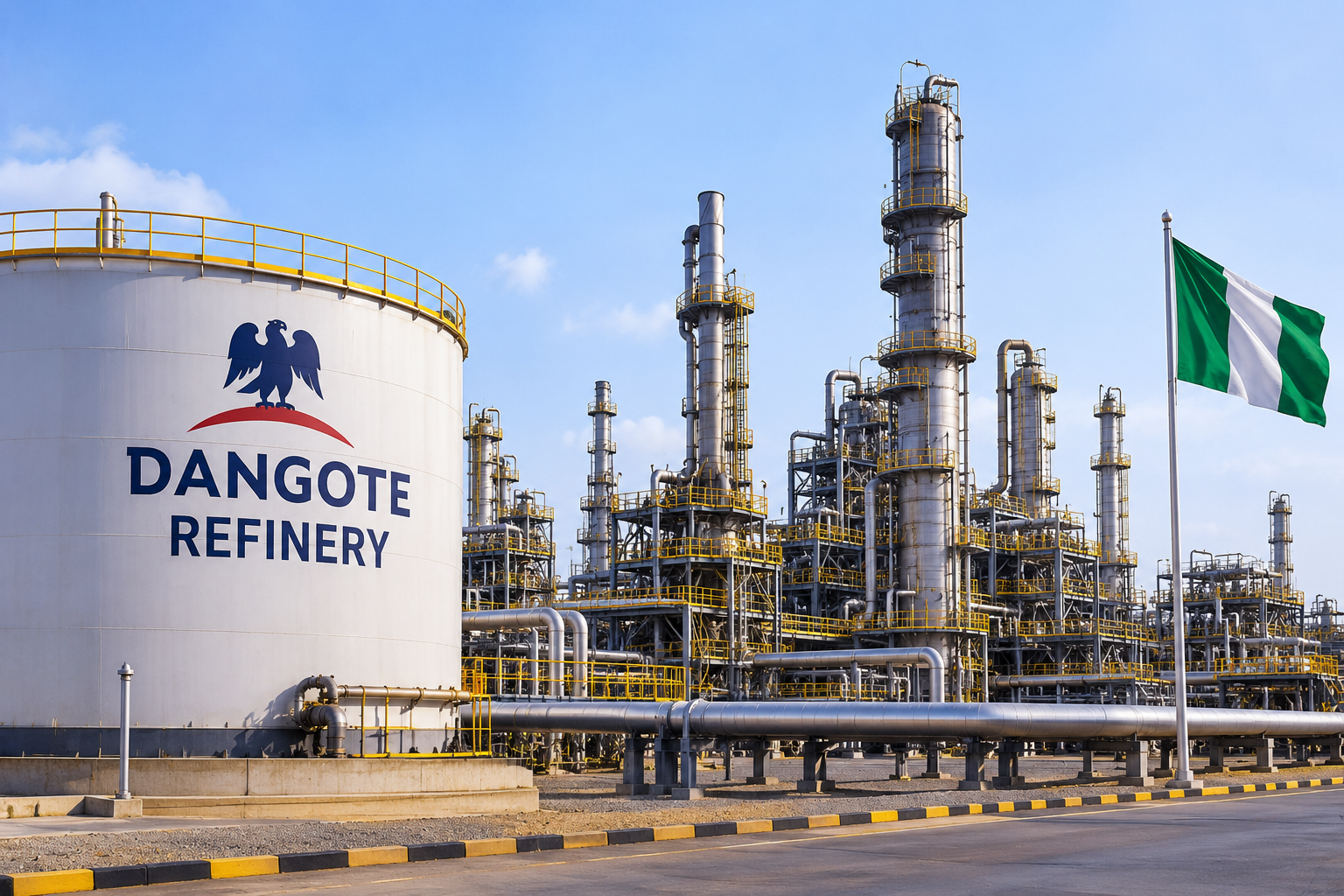
Nigeria is struggling to meet the Dangote refinery crude oil supply requirements, despite being Africa’s largest oil producer, as the facility prepares for a major expansion.
Finance Minister Taiwo Oyedele said the government does not currently have enough available crude oil to meet the refinery’s full needs.
Speaking on Channels Television’s Politics Today programme on October 9, Oyedele explained that existing contracts, production costs and financial commitments limit the amount of oil the government can supply.
The refinery currently has a crude-distillation capacity of 700,000 barrels per day and plans to expand that capacity to 1.4 million barrels per day.
However, the supply challenge does not mean the facility has run out of oil. The refinery continues to purchase crude from domestic producers and international markets.
Dangote refinery crude oil supply faces limitations
Oyedele said Nigeria’s total crude oil production should not be confused with the amount available for government allocation.
Under production-sharing agreements and joint ventures, crude oil is divided between the government and commercial partners.
Production expenses, royalties and other obligations also affect how much oil remains available for domestic refineries.
As a result, Nigeria cannot currently allocate the refinery’s full daily requirement of 700,000 barrels.
According to Business Insider Africa, the minister acknowledged that previous borrowing arrangements secured against future oil production had placed further pressure on available supplies.
The government has renegotiated some commitments and taken measures to reduce oil theft.
Nevertheless, these efforts have not yet released enough crude to satisfy all domestic refining requirements.
Why Dangote refinery continues importing crude oil
The Dangote refinery imports crude oil from international markets to supplement domestic supplies.
However, limited availability is not the only reason for these purchases.
Oyedele explained that refineries often process different grades of crude to achieve their preferred fuel output and operating efficiency.
Nigeria produces substantial quantities of light, sweet crude oil.
Yet the Dangote facility may also require heavier grades to achieve its desired product mix.
This means that even if Nigeria could provide enough domestic crude, the refinery might still purchase certain grades from overseas.
The minister did not disclose the exact volume of the refinery’s current domestic supply shortfall.
Dangote refinery expansion could double capacity
The supply challenge comes as the refinery prepares to increase its processing capacity.
According to company information cited in the report, the facility currently has a crude-distillation capacity of 700,000 barrels per day.
Its expansion plans could raise that figure to 1.4 million barrels per day.
The proposed increase would strengthen the refinery’s potential role in supplying petroleum products to Nigeria and other African markets.
However, greater processing capacity would also increase the importance of securing reliable crude supplies.
The refinery has already diversified its sources.
Company disclosures indicate that it had processed 36 different crude grades from Africa, South America, the United States and the Middle East by June 30, 2026.
This flexibility allows the facility to obtain oil from multiple markets rather than depend entirely on Nigerian production.
Nevertheless, the company has acknowledged that supply arrangements cannot guarantee uninterrupted deliveries.
Nigeria’s crude payment reforms face limits
Nigeria introduced a domestic-currency crude sales arrangement in October 2024.
The initiative was designed to support local refining and reduce pressure on foreign exchange demand.
Under the arrangement, qualifying crude purchases could be settled in Nigerian naira rather than relying entirely on foreign currency.
Oyedele said the programme had helped improve stability in crude supply arrangements.
However, he emphasised that changing payment methods cannot increase the physical quantity of oil available.
The challenge involves not only how crude is purchased but also how much oil the government can allocate after meeting its existing obligations.
Reliable oil supplies remain essential for expansion
The latest comments highlight an important challenge facing Nigeria’s refining industry.
Although the country produces significant volumes of crude oil, contractual commitments and commercial arrangements determine how much reaches domestic processing facilities.
For the Dangote refinery, continued access to both Nigerian and imported crude will remain important as expansion plans advance.
Increasing domestic oil production could help improve availability, but existing commitments and the refinery’s need for different crude grades will also influence future supply decisions.
The government’s acknowledgement of these constraints has renewed attention on the relationship between Nigeria’s oil production, domestic refining ambitions and international crude markets.