
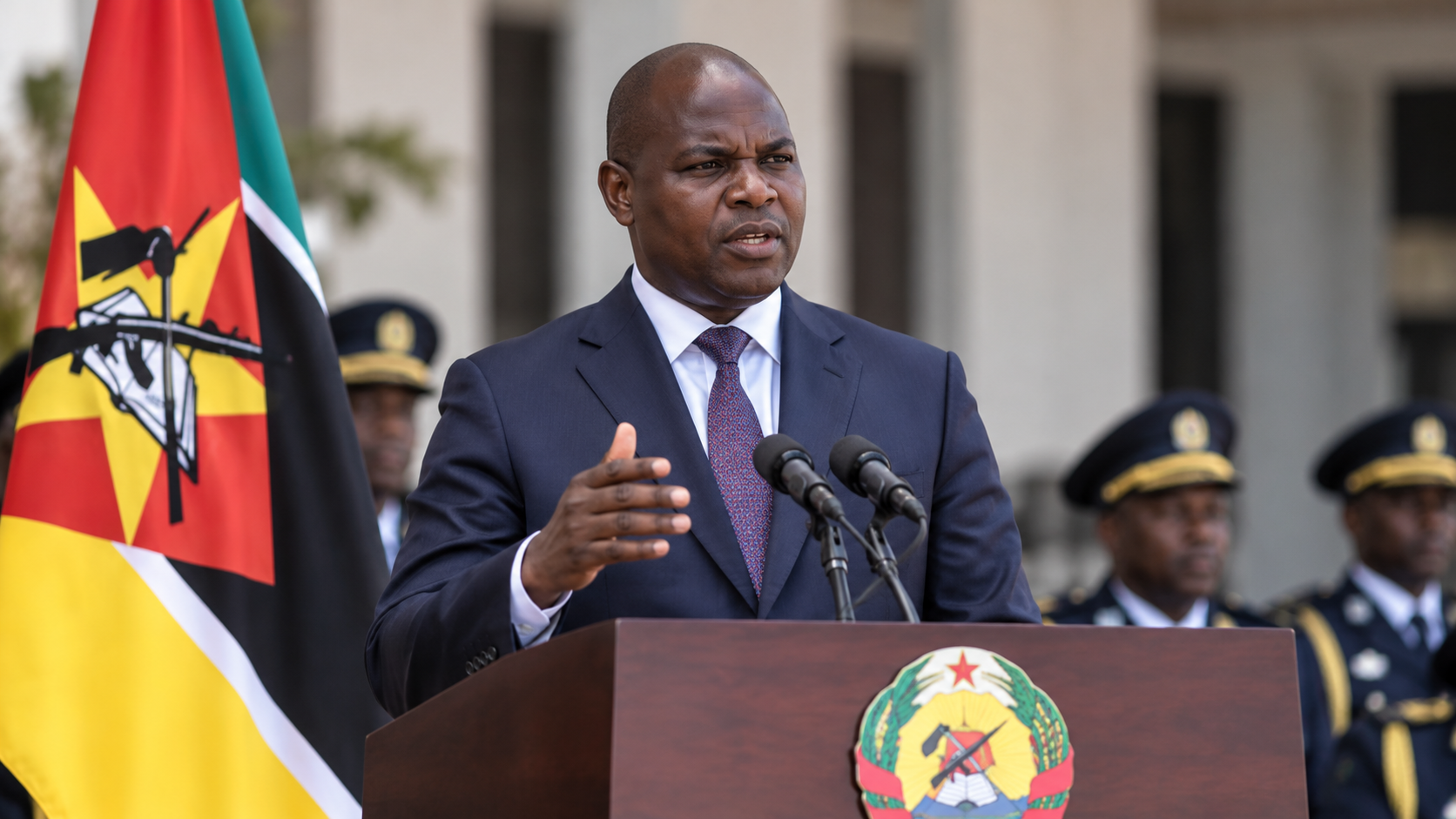
Mozambique illegal weapons must be handed over before the end of December, President Daniel Chapo has warned, as authorities prepare to end a police amnesty programme.
Chapo said people who voluntarily surrender firearms before the deadline will not face questioning, punishment or detention.
However, police will begin forcibly collecting illegally held weapons after the amnesty expires.
The president announced the measure on Sunday during the closing ceremony of a special police operations training course.
Mozambique illegal weapons amnesty ends in December
The government has given residents until December to hand over firearms held without legal authorisation.
According to Africanews and agency reports, Chapo said the amnesty would allow people to surrender weapons without facing legal consequences.
However, authorities plan to introduce stricter enforcement once the deadline passes.
The announcement forms part of wider efforts to improve public safety and strengthen law enforcement.
Chapo also urged citizens to cooperate with the police during the programme.
President calls for disciplined police operations
During his speech, Chapo emphasised the importance of professionalism and respect for the law.
He said police officers must exercise their authority responsibly, regardless of their training or operational abilities.
The president stressed that specialised security forces must maintain high standards of discipline.
He also called for respect for human rights and fundamental freedoms during police operations.
According to Chapo, public security plays an important role in protecting national sovereignty and supporting economic development.
He therefore urged continued investment in police training and operational preparedness.
Mozambique faces growing security challenges
The president also highlighted several security threats facing the country.
These include human trafficking, drug trafficking, kidnappings, organised crime and cybercrime.
Chapo called for stronger cooperation between police and other defence and security agencies.
He said better coordination would help authorities respond to increasingly complex criminal activities.
Furthermore, he linked improvements in public security to the country’s broader economic goals.
The government views security as an important factor in attracting investment and maintaining stability.
Cabo Delgado remains a security concern
Mozambique continues to face security challenges in its northern Cabo Delgado province.
Armed groups have carried out attacks in the region since 2017, causing deaths and displacement.
Chapo said the security situation had improved over the past two years.
He credited Mozambique’s Defence and Security Forces, along with military support from Rwanda and Tanzania.
However, international observers have raised concerns about continued violence.
In August, a United Nations Special Rapporteur warned that attacks against civilians had increased in frequency, severity and scale over the previous year.
The differing assessments highlight the challenges facing efforts to restore lasting stability in northern Mozambique.
Government seeks stronger public security
The weapons amnesty forms part of Mozambique’s broader efforts to strengthen public safety.
Authorities hope the programme will encourage people to surrender illegally held firearms before enforcement measures begin.
Meanwhile, the government continues to invest in police training and cooperation between security agencies.
Chapo has stressed that effective law enforcement must operate within the law and respect citizens’ rights.
The December deadline now gives people holding unauthorised weapons a final opportunity to surrender them voluntarily under the announced amnesty.