
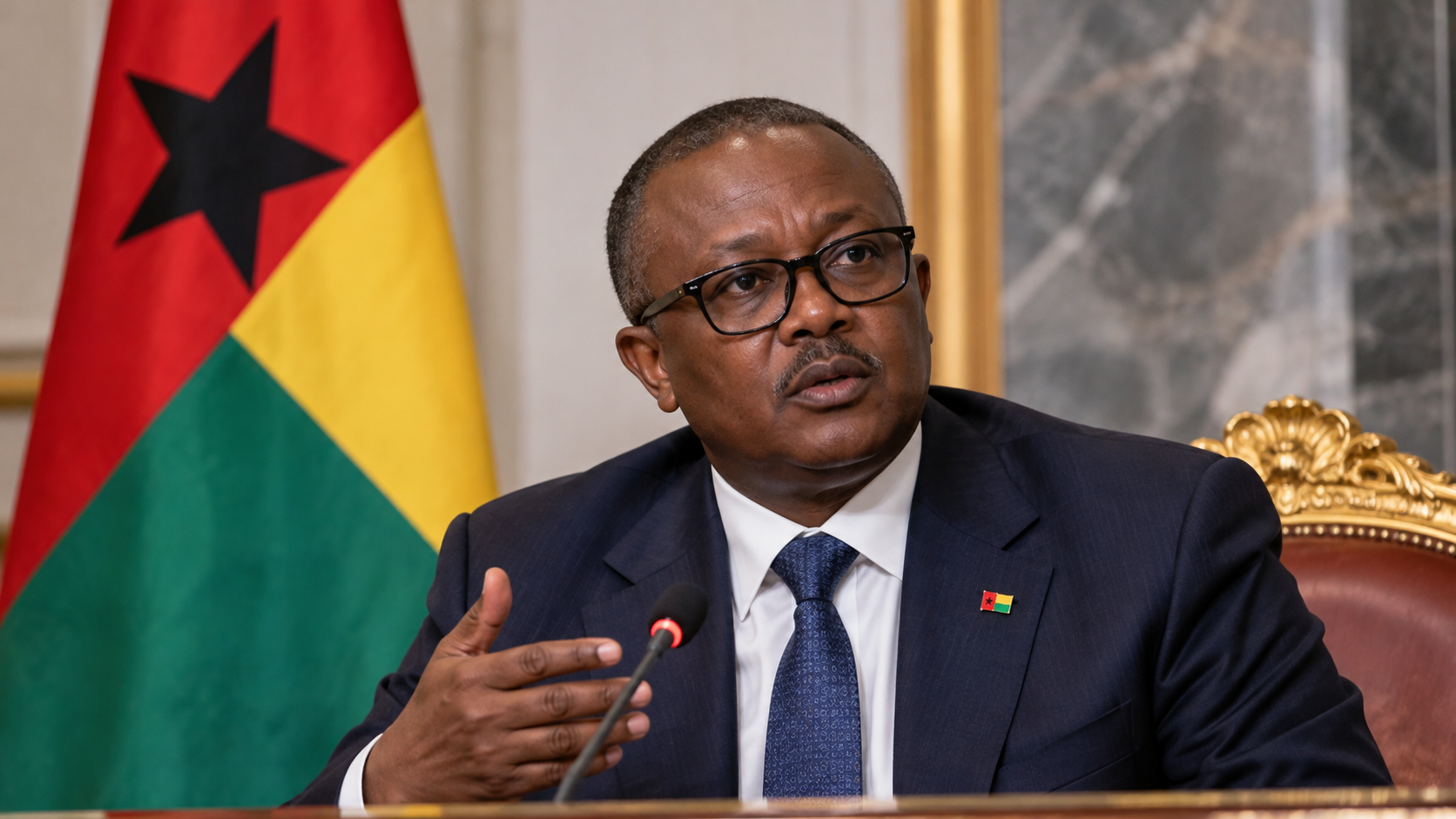
Guinea-Bissau’s military leadership has dismissed a senior officer close to former President Umaro Sissoco Embaló.
Lieutenant-General Sadji Fati previously served as defence minister and military adviser to Embaló. He also headed the presidential civil office.
According to Africanews and AFP, a decree issued by the military authorities ordered his immediate dismissal.
The decision follows several other dismissals involving officials linked to Embaló. The former president currently lives in exile in Morocco.
Guinea-Bissau military removes senior officials
Guinea-Bissau’s military leadership has removed several senior officials since taking power.
Fati is the latest officer to lose his position.
The authorities have also removed several members of Embaló’s former presidential guard. Other officers close to the former president have reportedly lost influential positions.
Recently, the military dismissed Interior Minister General Mama Saliu Embaló and Fisheries Minister Maria Da Cruz Correia.
Both officials were considered close allies of the former president.
These changes suggest that the military leadership is reshaping the country’s security and political institutions.
However, officials have not provided detailed reasons for every dismissal.
Military takeover creates political uncertainty
Guinea-Bissau’s military seized power on November 26, shortly before officials were due to announce election results.
The takeover removed Embaló from office and suspended the electoral process.
Some observers have questioned the circumstances surrounding the takeover.
They have suggested that Embaló may have helped organise the intervention to prevent an election defeat.
However, these allegations remain unproven. The available reporting does not establish that Embaló played a role in the takeover.
Meanwhile, the military has continued removing officials associated with his administration.
General Horta N’tam currently leads the country’s military authorities.
Guinea-Bissau elections face growing uncertainty
The military leadership has announced plans to hold presidential and legislative elections on December 6.
The vote is intended to support a return to civilian government.
However, Guinea-Bissau’s National Electoral Commission has raised concerns about the timetable.
Last week, the commission said conditions were not in place to hold the elections.
As a result, uncertainty remains over whether voting can proceed as planned.
Before the commission’s announcement, Embaló told AFP that he intended to run for president again.
However, his political future remains unclear.
Questions remain over return to civilian rule
The latest dismissal highlights continuing changes within Guinea-Bissau’s political and security institutions.
Military authorities have removed several officials associated with the former president. At the same time, questions remain about the country’s planned elections.
The electoral commission’s warning has added to concerns about the transition.
For now, Guinea-Bissau faces uncertainty over its political leadership and the timetable for restoring civilian government.