
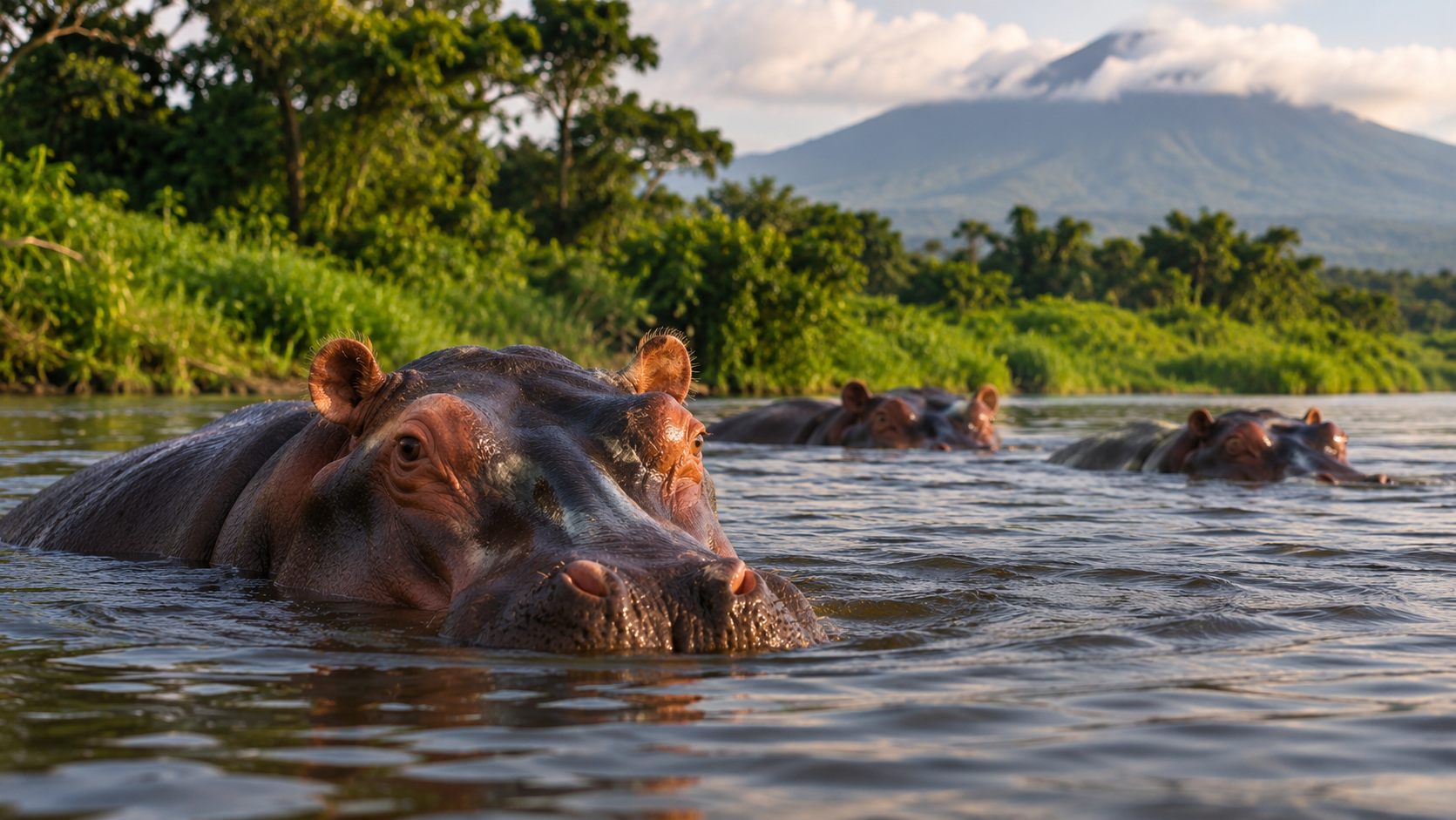
An anthrax outbreak in DR Congo has killed 28 hippopotamuses in Virunga National Park, raising concerns about wildlife conservation and public health.
The deaths occurred over approximately one month in the Semuliki River, near Africa’s oldest national park.
Laboratory tests confirmed that anthrax, a bacterial disease caused by Bacillus anthracis, was responsible.
According to Al Jazeera, park authorities are monitoring the affected area and warning nearby communities against touching or consuming dead animals.
The outbreak comes as eastern DR Congo faces ongoing armed conflict, environmental pressures and a major Ebola health emergency.
Anthrax outbreak in DR Congo kills 28 hippos
Residents near the Semuliki River began noticing unusual numbers of dead hippopotamuses in September.
The deaths caused concern among communities living along the river.
Michael Kambale, a resident of Vitshumbi, said people became increasingly worried as animal carcasses appeared in the water.
Vitshumbi lies approximately 100 kilometres north of Goma, the capital of North Kivu province.
Following laboratory investigations, Virunga National Park confirmed the presence of anthrax.
Officials reported that 28 hippos had died over approximately four weeks.
The park has since increased surveillance and introduced measures to reduce further infections.
Can anthrax spread from hippos to humans?
Anthrax is a bacterial infection that can affect both animals and humans.
The disease is caused by Bacillus anthracis, a bacterium that can survive in the environment for long periods.
Humans can become infected through contact with contaminated animals or animal products.
Handling infected carcasses or consuming contaminated meat can increase the risk of transmission.
Therefore, Virunga National Park has urged nearby communities to avoid touching, skinning or eating animals found dead.
Residents have also been advised to report animal carcasses and suspected infections to the authorities.
Park officials are coordinating the safe handling and disposal of dead animals.
These measures aim to protect both wildlife and local communities.
Drought increases anthrax risks in Virunga
Environmental conditions may contribute to recurring anthrax outbreaks.
During droughts, animals often gather around limited water sources and grazing areas.
This concentration can increase their exposure to contaminated soil.
Anthrax bacteria can survive in soil as spores for decades.
As a result, outbreaks may occur again when environmental conditions become favourable for transmission.
Virunga officials said previous anthrax outbreaks had affected hippos and other wildlife during dry periods.
Veterinary expert Joel Mbusa Mapoli also identified environmental deterioration and difficulties in monitoring wildlife health as contributing factors.
The park is closely monitoring conditions around the affected river.
Virunga lost 65 hippos to anthrax in 2025
The latest outbreak is not the first to affect Virunga’s hippopotamus population.
According to park records, an anthrax outbreak killed 65 hippos in 2025.
Park workers used excavators to remove animal carcasses from the water.
The repeated outbreaks have raised concerns about the long-term health of the park’s wildlife.
A population survey conducted in February 2026 estimated that Virunga had more than 2,700 hippopotamuses.
The animals were distributed across 171 groups.
Although the latest deaths represent a relatively small share of the estimated population, recurring outbreaks could create additional conservation challenges.
Experts have therefore called for stronger disease monitoring and prevention measures.
Why are hippos important to Virunga’s ecosystem?
Hippopotamuses play an important role in maintaining aquatic ecosystems.
They move between land and water, helping transfer nutrients between different environments.
Their movements and feeding habits also influence ecological conditions in rivers and surrounding habitats.
Mapoli described hippos as an important species within Virunga’s ecosystem.
He warned that significant population losses could disrupt the balance of aquatic environments.
Protecting hippos is therefore not only about preserving one species.
It also supports the wider ecosystem and other wildlife that depend on healthy rivers and surrounding habitats.
Armed conflict complicates wildlife protection
Virunga National Park faces conservation challenges beyond disease outbreaks.
Armed conflict in eastern DR Congo has disrupted environmental protection efforts for years.
The park says it has lost control of significant areas of its territory during the past four years.
Fighting between Congolese government forces and the M23 armed group has affected access to parts of the park.
Environmental activist Olivier Ndoole Bahemuke said prolonged insecurity has contributed to poaching and deforestation.
The M23 group, however, says it is working to protect areas under its control from poachers and other threats.
The competing claims reflect the difficulties facing conservation efforts in conflict-affected regions.
Insecurity can also limit the movement of veterinary teams and wildlife monitoring personnel.
Consequently, responding quickly to animal disease outbreaks becomes more difficult.
Authorities strengthen wildlife disease surveillance
Virunga National Park says teams are monitoring the affected area and documenting new animal deaths.
Workers are also coordinating the safe removal and disposal of carcasses.
Meanwhile, local communities are receiving information about the disease and ways to reduce exposure.
Experts have called for an approach that connects wildlife conservation with public health.
Known as the One Health approach, this strategy recognises the relationship between human, animal and environmental health.
Mapoli said stronger surveillance and cooperation between institutions would help improve the response.
He also emphasised the importance of protecting communities living near affected wildlife habitats.
What happens next in Virunga National Park?
The latest anthrax outbreak highlights the environmental and public health challenges facing eastern DR Congo.
With 28 hippos dead, authorities are working to prevent additional losses.
However, recurring outbreaks, drought and armed conflict continue to complicate conservation efforts.
Park officials are expected to maintain surveillance and strengthen awareness among nearby communities.
The safe disposal of infected carcasses will also remain important.
For Virunga National Park, protecting its hippopotamus population is part of a wider effort to preserve biodiversity.
As the outbreak continues to be monitored, cooperation between conservation experts, health authorities and local communities will be essential.