
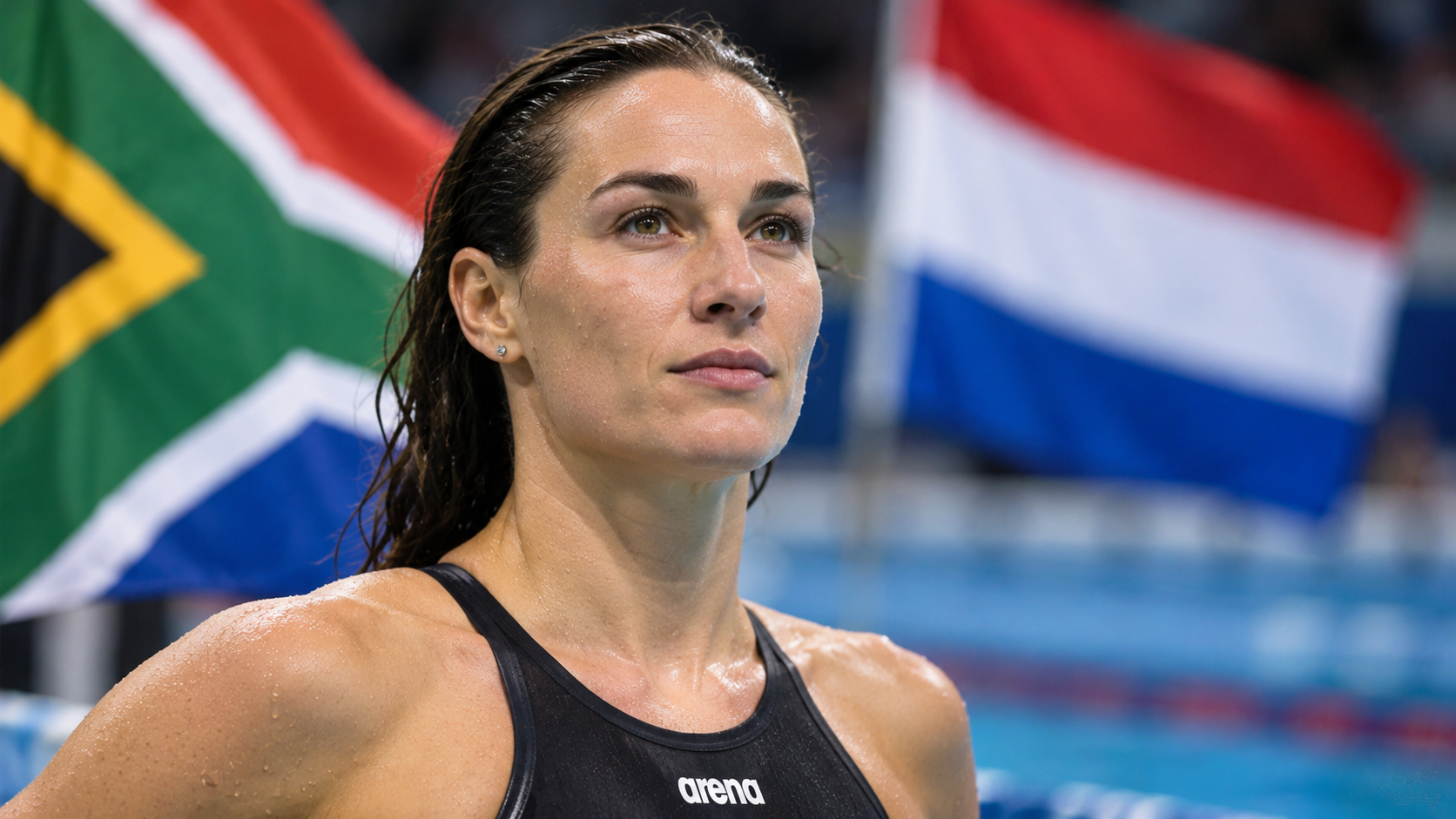
South Africa’s most decorated Olympian, Tatjana Smith, is reportedly switching her sporting allegiance to the Netherlands. The decision has sparked debate among South Africans over national representation, sporting opportunities and dual citizenship.
According to Al Jazeera, the announcement has divided public opinion. Some people have criticised South Africa’s swimming authorities, while others have questioned the ethics of athletes representing another country.
The development has also raised questions about how national sporting bodies support elite athletes.
South Africans react to nationality switch
Tatjana Smith is one of South Africa’s most successful Olympic swimmers.
Her reported decision to represent the Netherlands has attracted attention because of her achievements while competing for South Africa.
According to Al Jazeera, reactions have been mixed.
Some South Africans have blamed the country’s swimming authorities, suggesting that sporting institutions should do more to retain successful athletes.
Others have questioned whether athletes with dual citizenship should change their sporting nationality after representing another country.
However, the available report does not establish the reasons behind Smith’s reported decision.
Debate focuses on sporting opportunities
The controversy has brought wider questions about athlete development into focus.
Elite swimmers depend on coaching, training facilities, financial support and access to international competitions.
As a result, national sporting organisations play an important role in helping athletes develop their careers.
However, Al Jazeera’s brief report does not confirm whether funding, training conditions or disagreements with officials influenced Smith’s reported switch.
These factors should therefore not be presented as established explanations for her decision.
Meanwhile, the debate highlights the different expectations placed on athletes who have connections to more than one country.
Dual citizenship raises questions
Dual citizenship allows individuals to hold nationality in more than one country, depending on national laws.
However, eligibility to represent a country in international sport follows separate rules.
Swimming’s international governing body, World Aquatics, oversees sporting nationality requirements for international competitions.
Therefore, citizenship alone does not automatically establish eligibility to compete for a different national team.
The available reporting does not explain Smith’s eligibility arrangements or confirm when she could begin representing the Netherlands.
Sporting decision remains under scrutiny
Smith’s reported nationality switch has prompted discussion about the relationship between athletes and their home countries.
Some observers see international sporting opportunities as an important part of an athlete’s career.
Others place greater emphasis on national representation and the responsibilities associated with competing under a country’s flag.
For now, the debate continues in South Africa.
Further statements from Smith, swimming authorities or relevant sporting organisations would help clarify the circumstances of the reported move.