
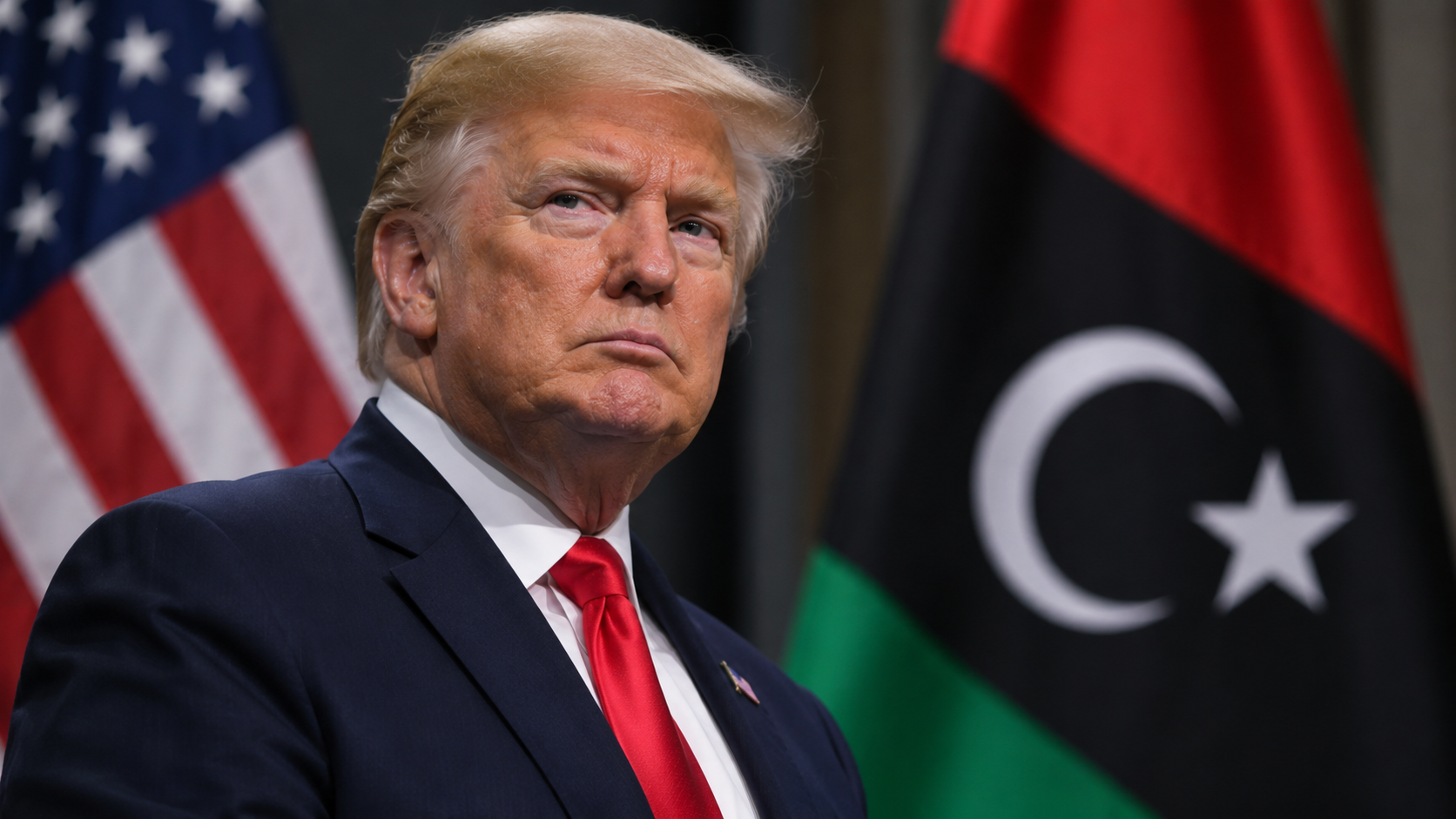
Libya has lodged a formal diplomatic protest over remarks by US President Donald Trump, prompting an apology from a senior American official and a conciliatory statement from the president.
The dispute followed comments Trump made during a political rally in Georgia on October 24, when he described Libya as a country affected by terrorism and questioned immigration from several nations.
Libyan authorities condemned the remarks as offensive to their country and its people.
According to Business Insider Africa, the diplomatic disagreement prompted responses from several Libyan institutions before Washington moved to ease tensions.
Libya summons US diplomat over remarks
On October 25, Libya’s Government of National Unity (GNU) Foreign Ministry summoned US Chargé d’Affaires Inga Hemmink to deliver a formal protest.
The ministry demanded an official explanation and correction of Trump’s statements.
It also stressed that Libya should not become part of domestic political disputes in the United States.
Meanwhile, the House of Representatives Foreign Affairs Committee separately called for clarification from Washington.
The Libya Observer reported that the committee rejected the remarks as damaging to Libya’s international standing.
Libya’s Presidential Council also condemned the comments, according to the Libyan News Agency (LANA).
It called for an explicit apology and urged the Foreign Ministry to pursue the matter through diplomatic channels.
Despite Libya’s political divisions, institutions associated with its rival administrations expressed objections to Trump’s statements.
Trump praises Libyans following criticism
Following the diplomatic protests, Trump adopted a more conciliatory tone.
In a statement on Truth Social, he praised the Libyan people and acknowledged their sacrifices in the fight against the Islamic State group.
He also expressed support for Libya’s political unification and the development of its national institutions.
Furthermore, Trump highlighted cooperation between Washington and Tripoli in counterterrorism efforts.
The statement represented a change in tone from his earlier remarks.
However, the president did not personally issue the apology subsequently reported by Libyan diplomats.
US official apologises to Libyan diplomats
The diplomatic response continued during a meeting at the US State Department in Washington.
According to the Libyan Embassy, Leslie Hayden, the State Department’s Director of North African Affairs, expressed regret and apologised over the incident.
The Libya Observer reported that Hayden met Mahmoud Al-Futaisi, Libya’s chargé d’affaires in Washington, and embassy official Fathi Al-Hafi.
During the discussions, both sides reaffirmed the importance of mutual respect and continued diplomatic engagement.
They also explored opportunities to strengthen political, economic, educational, investment and cultural cooperation.
Al-Futaisi emphasised that respect for Libya’s sovereignty and national institutions remained essential to constructive relations.
Diplomatic ties remain in focus
The controversy highlighted sensitivities surrounding US political rhetoric about African countries.
Nevertheless, the subsequent diplomatic exchanges indicated that both governments intended to maintain communication.
Libyan officials continued to emphasise national dignity and sovereignty, while American representatives reaffirmed the importance of bilateral relations.
The reported apology came from a senior State Department official rather than Trump himself.
For now, the episode illustrates how domestic political statements can generate diplomatic consequences beyond US borders.