
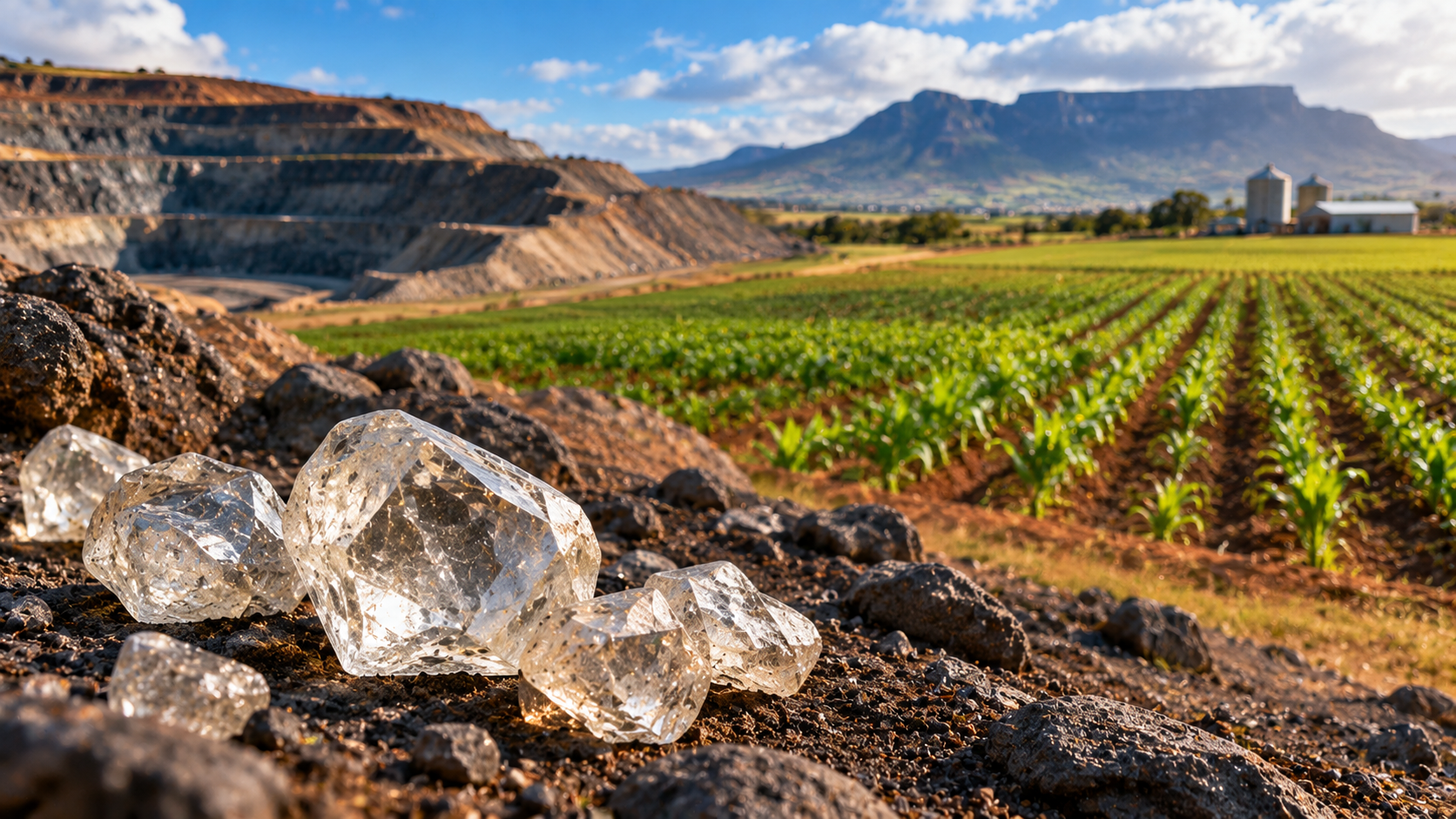
Some South African diamond miners are turning to farming as falling prices, rising production costs and competition from laboratory-grown diamonds put pressure on the industry.
According to Business Insider Africa, changing consumer preferences in major markets, including the United States, China and India, have weakened demand for natural diamonds.
The State Diamond Trader’s (SDT) 2025/26 annual report shows that some smaller mining companies have suspended operations, entered liquidation or shifted their resources towards agriculture.
South African diamond miners face growing pressure
The number of compliant diamond producers submitting stones for inspection fell from 44 to 32 during the financial year, a decline of 27.3 percent.
Meanwhile, the average value of inspected rough diamonds dropped by 20.7 percent, from $140 to $111 per carat.
The decline reflects weaker market conditions as well as changes in the size and quality of diamonds.
Smaller mining companies face particular challenges as weak prices and high operating costs threaten their financial sustainability.
South Africa sources diamonds from Botswana
As domestic supplies weakened, the State Diamond Trader began purchasing rough diamonds from neighbouring Botswana for the first time during the 2025/26 financial year.
The agency sourced the stones through Botswana’s Okavango Diamond Company to diversify supplies and support South Africa’s diamond processing industry.
Sales of diamonds sourced from Botswana generated 23.4 million rand in revenue.
However, the agency’s overall diamond purchase volumes fell by 19 percent to 101,841 carats.
Lab-grown diamonds reshape demand
Laboratory-grown diamonds are gaining popularity among younger and price-conscious consumers.
Their lower prices have increased competition in the jewellery market, particularly for less expensive natural diamonds.
However, De Beers reported signs of improving demand in the United States and India during the third quarter of 2026.
Despite these signs, weak prices and excess inventories continue to affect smaller producers.
Agriculture offers an alternative
Some South African diamond miners are redirecting their land and capital towards agricultural activities.
Separately, President Cyril Ramaphosa’s government plans to release 2.5 million hectares of state-owned land to black farmers to expand commercial agriculture and create jobs.
The agricultural programme is not directly linked to the challenges facing diamond producers.
Meanwhile, the State Diamond Trader expects any recovery in the diamond industry to be gradual.
Stronger consumer demand, reduced inventories and improved market confidence will remain important factors in the sector’s recovery.