
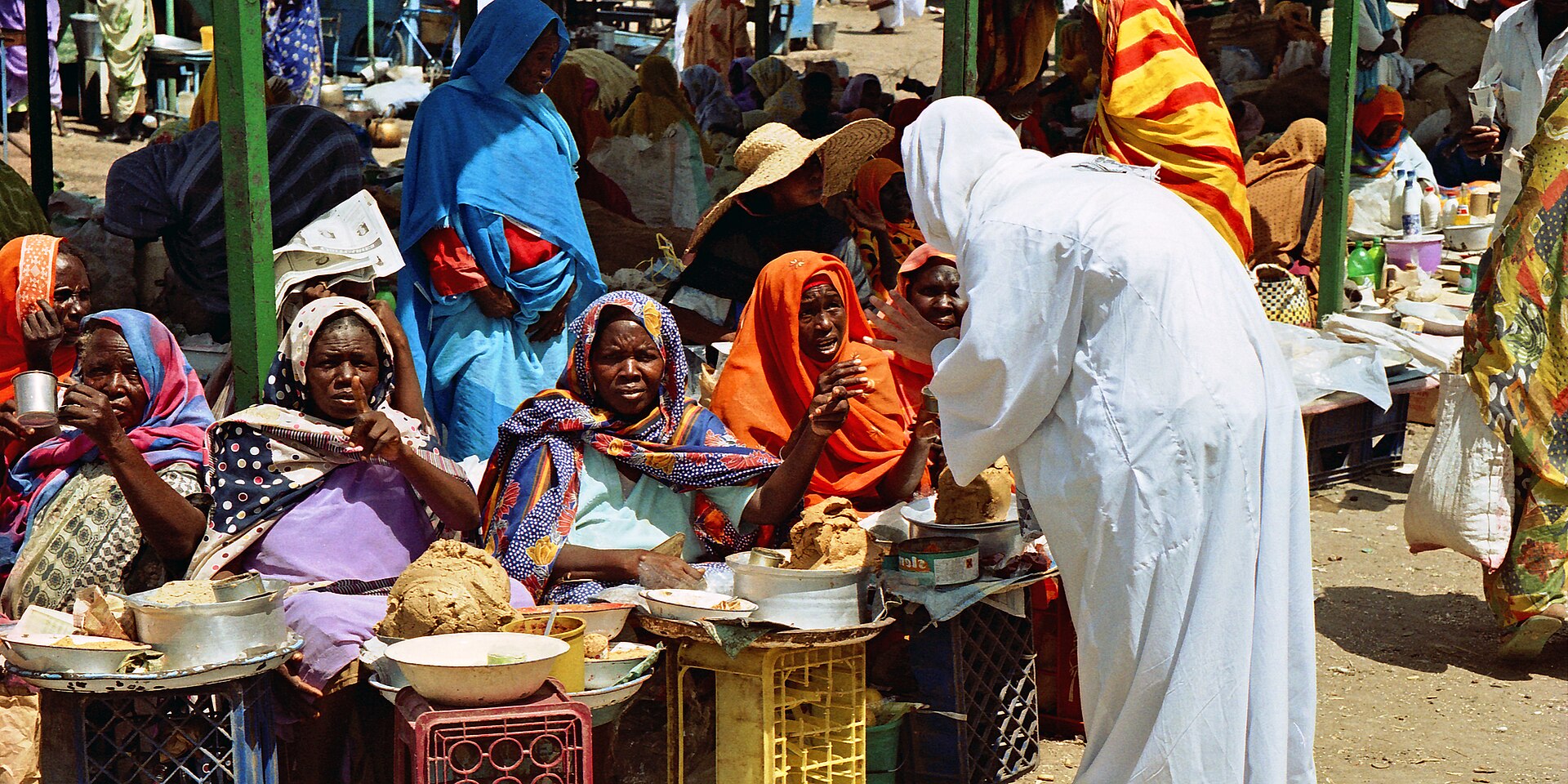
Dozens of shops in Khartoum have temporarily closed or suspended sales as the Sudanese pound falls sharply against foreign currencies.
The currency decline has pushed up the cost of basic goods. It has also made it harder for traders to replace their stock.
Local media reported disruptions at several markets, including Libya Market and the Popular Market. Some fuel stations have also stopped operating.
Khartoum traders suspend sales
Darfur24 reported that traders had temporarily closed shops or stopped selling goods because of rapid changes in prices.
Some traders said replacement costs were rising so quickly that they risked selling goods for less than it would cost to restock them.
According to the outlet, a 50-kilogram sack of sugar was selling for between 430,000 and 450,000 Sudanese pounds.
A container of cooking oil reached about 350,000 pounds. White rice was selling for around 250,000 pounds per sack, while lentils reached 200,000 pounds.
Farah Abdullah, a trader at Libya Market who spoke to Darfur24, said some merchants had stopped selling because they feared further currency losses would reduce the value of their capital.
He said he had suspended sales at his own shop and moved some of his money into foreign currency and gold to preserve its value.
Sudanese pound falls sharply
The disruption comes amid another sharp decline in the Sudanese pound.
Currency traders and local media reported the US dollar trading around or above 8,000 Sudanese pounds on the parallel market this week.
Rates can differ between traders, locations and times of day. However, the recent rise highlights the pressure facing Sudan’s currency.
The weaker pound also makes imported goods more expensive. As a result, businesses can face higher costs when replacing products.
For households, the effect is particularly difficult because wages often fail to rise as quickly as food, transport and other everyday expenses.
Fuel shortages add pressure
Sudan is also facing fuel shortages.
Long queues have been reported at fuel stations in Khartoum and other parts of the country.
Diesel shortages and higher fuel costs can also affect freight and public transport. This increases the cost of moving food and other goods between cities and markets.
The currency crisis comes against the backdrop of more than three years of war, which has severely damaged Sudan’s economy and disrupted production, trade and supply chains.
For traders and families, continued currency volatility means the cost of everyday life can change rapidly.
The growing pressure on shops, transport and household budgets shows how Sudan’s wider economic crisis continues to affect daily life.