
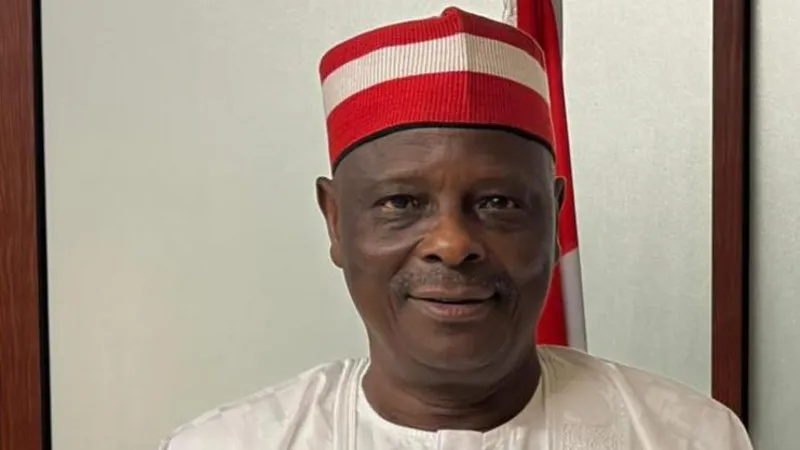
A growing opposition coalition in Nigeria has received a significant boost after prominent political figure Rabiu Musa Kwankwaso announced he was joining the African Democratic Congress (ADC) ahead of next year’s general election.
Kwankwaso, a former governor of Kano State, confirmed on Monday that he had defected to the ADC, a day after resigning from the New Nigeria People’s Party (NNPP), citing the need for “strategic realignment” in Nigeria’s political landscape.
His move strengthens an emerging alliance seeking to challenge President Bola Tinubu and his ruling All Progressives Congress (APC), which has held power since 2015.
The ADC coalition already includes major opposition figures such as former Vice-President Atiku Abubakar and ex-governor Peter Obi, both of whom were leading contenders in the 2023 presidential election.
Kwankwaso, who finished fourth in that race, brings with him a loyal grassroots following, particularly in northern Nigeria. His supporters, known as the “Kwankwasiyya” movement, are widely recognised for their signature red caps and have remained a consistent political force across multiple party shifts.
However, the influx of high-profile figures into the ADC has raised questions over who will ultimately emerge as the coalition’s presidential candidate — a potential fault line that could test unity within the bloc.
In announcing his departure from the NNPP, Kwankwaso said he was seeking a platform capable of delivering meaningful national change. He later confirmed his new affiliation on social media, declaring: “New dawn. We are ADC.”
His defection comes less than a year before Nigeria’s next general election, with Tinubu already endorsed by the APC to seek a second term in the January 2027 vote.
Kwankwaso’s entry is expected to bolster the ADC’s appeal in northern Nigeria, a critical electoral battleground, while his past experience as defence minister may also strengthen the coalition’s messaging on security — a key issue facing the country.
The realignment comes as Nigeria’s traditional opposition parties face internal challenges. The People’s Democratic Party (PDP) remains divided by factional disputes, while the Labour Party (LP) is also grappling with internal tensions.
Meanwhile, Nigeria’s electoral commission has introduced reforms aimed at improving transparency following disputes over the 2023 vote, including the electronic transmission of results. Opposition parties, however, have expressed concern over provisions allowing manual collation in areas without internet access.