
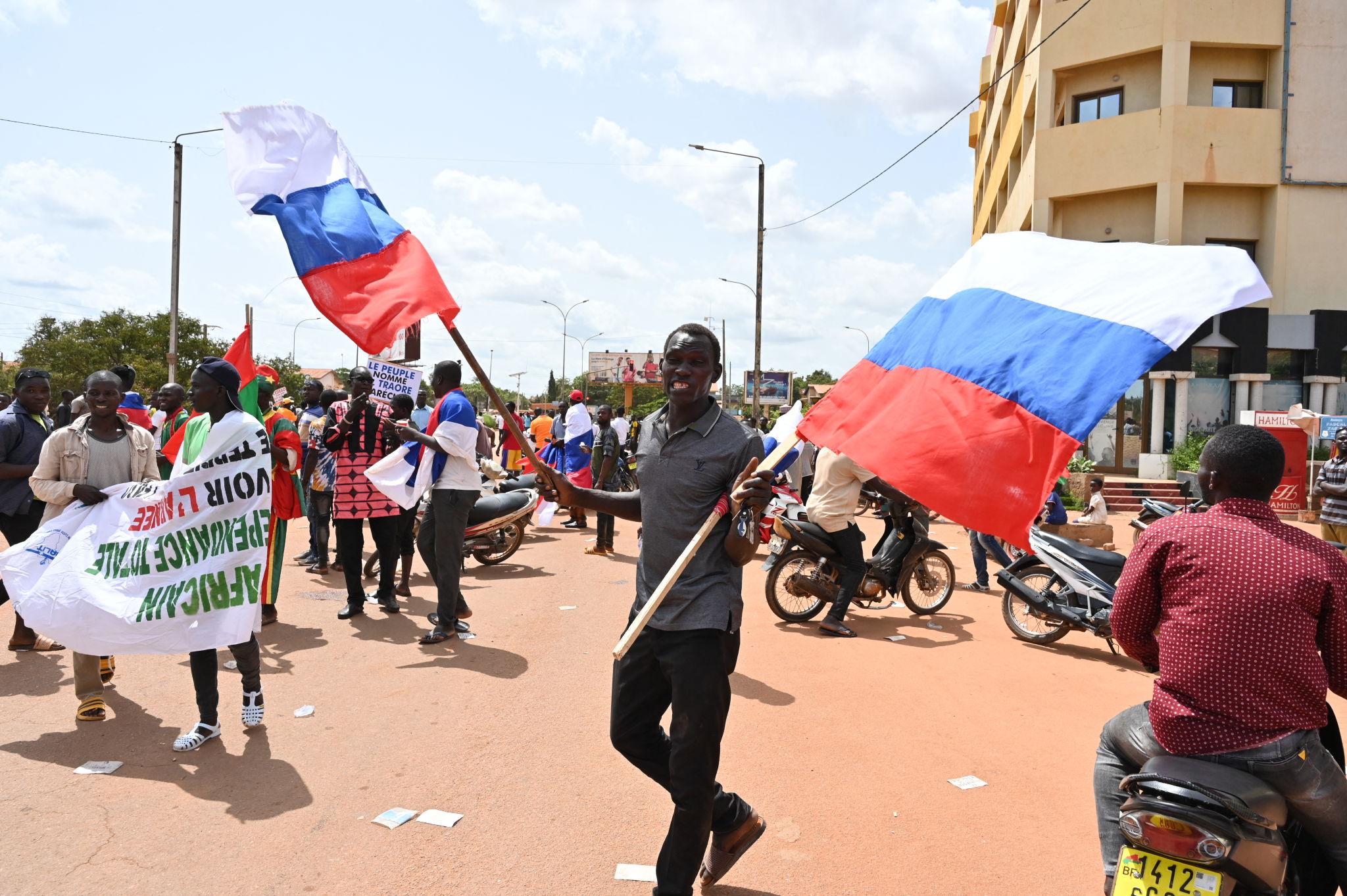
Russia has overtaken France in perceived influence among young Africans, with its presence viewed as particularly strong in Burkina Faso, the Republic of Congo and Chad, according to the 2026 African Youth Survey.
The poll, conducted by PSB Insights on behalf of the Ichikowitz Family Foundation, surveyed 4,901 people aged between 18 and 24 across 16 African countries in March 2026.
Launched in 2020, the survey is described as the largest study of its kind and is intended to provide governments, businesses, civil society organisations and the media with a clearer understanding of the views and priorities of Africa’s younger generation.
Russia gains ground
The 2026 findings show a noticeable decline in France’s perceived influence, while Russia has recorded significant gains, particularly in parts of French-speaking Africa.
The proportion of respondents who said France had influence in their countries fell from 49% in 2024 to 47% in 2026. Russia’s perceived influence, meanwhile, rose from 44% to 54%.
Russian influence was especially pronounced in Burkina Faso, where 95% of respondents acknowledged its presence, and in the Republic of Congo, where the figure reached 69%.
France nevertheless continues to be viewed favourably by many young Africans. Among those who recognised French influence, 87% described it positively, while 85% regarded France as an ally.
Russia recorded similarly strong ratings, with 83% viewing its influence positively and 86% describing Moscow as an ally.
The survey also suggests that young Africans increasingly prioritise practical benefits over historical relationships.
Around 55% of respondents said African countries should favour international partners capable of delivering trade and investment opportunities, regardless of their political systems. Only 15% said partnerships should be based primarily on historical or cultural ties.
Burkina Faso also recorded some of the highest levels of optimism in the survey. About 60% of respondents said Africa was moving in the right direction, while 83% said the same about their own country. A further 91% said they felt optimistic or excited about Burkina Faso’s future.
A dramatic shift
The latest results represent a sharp reversal from the first African Youth Survey in 2020, when 62% of respondents said France exercised influence in their countries, compared with just 37% who identified Russian influence.
Two years later, France remained ahead, with 55% recognising its influence compared with 39% for Russia.
By 2026, however, Russia had moved into the lead with 54%, while France had fallen to 47%.
“France is confronting a harsh reality: history is no longer a strategy,” Ivor Ichikowitz, founder and commissioner of the African Youth Survey, told the French magazine Mondafrique.
“Young Africans do not owe any former colonial power permanent influence, and they will not preserve old relationships simply out of sentiment,” he said.
Ichikowitz added that Russia had moved decisively into spaces vacated by France in Burkina Faso, the Republic of Congo and Chad, promoting messages centred on sovereignty, strength and respect.
Young Africans are now assessing France, Russia, China and the United States according to similar criteria, including investment, security, employment opportunities and respect for national sovereignty, the survey found.
Burkina Faso, the Republic of Congo and Chad have all strengthened diplomatic, economic and military relations with Russia in recent years.
The findings underline the rapid transformation of foreign influence in parts of Africa where France once held a dominant political, cultural and security role.
They also point to a wider generational shift in how young Africans select and evaluate international partners.
Since its launch in 2020, the survey has been conducted in 28 countries and has included nearly 19,000 face-to-face interviews.