
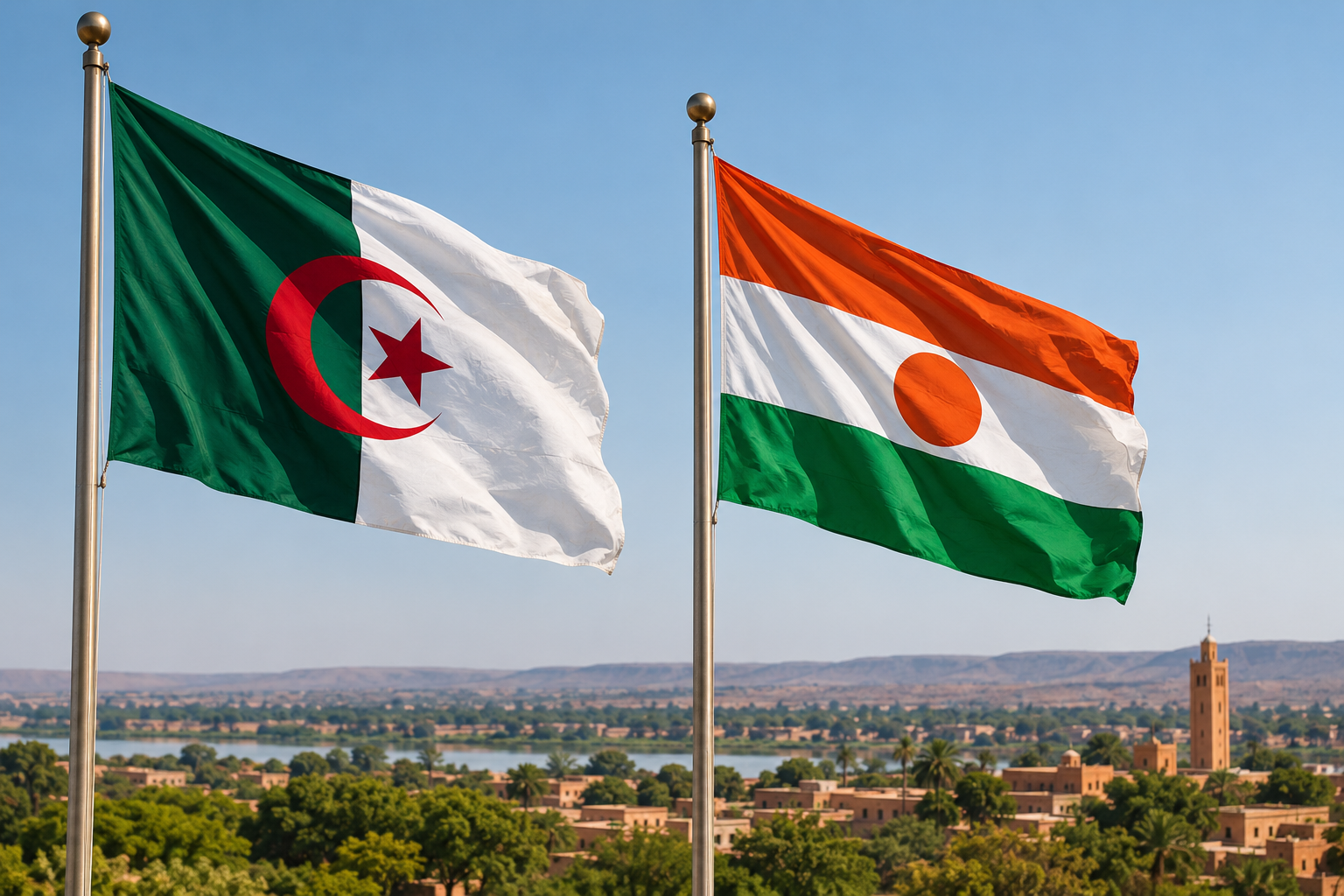
Algeria’s upper house of parliament has unanimously approved sending troops to neighbouring Niger, marking a potentially historic shift in the country’s military policy following a new defence agreement between the two nations.
The Council of the Nation voted in favour of the deployment during an emergency parliamentary session on Sunday, October 25.
However, the decision still requires approval from Algeria’s lower house before military personnel can be sent abroad.
According to Al Jazeera, the proposed deployment would focus on protecting oil facilities in Niger.
The move comes amid growing military cooperation between Algeria and Niger following months of improving diplomatic relations.
Algeria moves closer to deploying troops abroad
Under Algeria’s constitution, the president can authorise military operations outside the country’s borders.
However, such deployments require approval from both chambers of parliament by a two-thirds majority.
The upper house has now unanimously endorsed the proposal.
The People’s National Assembly, Algeria’s lower house, was expected to hold a separate vote later on Sunday.
According to Algerian newspaper El Khabar, lawmakers were called into an emergency session to consider the deployment.
If both chambers approve the proposal, it would mark Algeria’s first military mission abroad since the 1973 Arab-Israeli war.
That conflict, known as the October War in the Arab world and the Yom Kippur War in Israel, involved several Arab countries.
Algeria’s participation in the conflict remains an important part of its military history.
The proposed mission in Niger would therefore represent a significant development in Algeria’s approach to regional security.
Algerian troops expected to protect Niger’s oil facilities
The military units are expected to help secure oil infrastructure in Niger.
However, Algerian authorities have not publicly disclosed the number of troops involved or the expected duration of the mission.
Further operational details also remain unclear.
Niger’s oil industry has become increasingly important to the country’s economy.
Protecting energy infrastructure is therefore a major security concern for authorities in Niamey.
The proposed deployment follows a visit to Algeria by Niger’s Defence Minister, General Salifou Modi.
During the visit last week, Modi met Algerian President Abdelmadjid Tebboune.
He also held discussions with Algeria’s military chief, General Said Chanegriha.
The two countries subsequently signed a military cooperation protocol.
However, the terms of the agreement have not been made public.
Algeria previously sent fighter jets to Niger
The proposed ground deployment follows earlier Algerian military assistance to Niger.
In August, Algeria sent fighter jets to support Nigerien authorities during what officials described as an attempted coup.
President Tebboune confirmed the operation earlier in October.
According to Algeria’s Ministry of Defence, the aircraft were deployed at the request of Niger’s government.
The ministry said the mission aimed to support Niger’s military against an attempt to destabilise the country.
Algerian officials reported that Sukhoi Su-30 fighter aircraft arrived at Niamey airport alongside an aerial refuelling aircraft.
The deployment highlighted the growing security relationship between the two neighbouring countries.
It also demonstrated Algeria’s willingness to provide direct military assistance to Niger.
Algeria and Niger strengthen military ties
Relations between Algeria and Niger have improved considerably in recent months.
The two countries have expanded cooperation in political, diplomatic, military and economic affairs.
This rapprochement follows an earlier period of tension.
The latest defence agreement suggests both governments are seeking closer coordination on regional security.
Algeria shares a long southern border with Niger, making stability in the neighbouring country an important national security concern.
Both countries also have interests in protecting cross-border trade and energy infrastructure.
The proposed military mission could further strengthen their security partnership.
However, the full scope of the agreement remains unknown.
What does the deployment mean for the Sahel?
The potential deployment comes at a time of significant political and security developments across the Sahel.
Several countries in the region have strengthened regional partnerships while reassessing their relationships with foreign military powers.
Algeria has traditionally emphasised diplomacy and regional security cooperation.
A deployment to Niger would represent a notable step beyond that approach.
It could also increase Algeria’s direct involvement in security developments south of its borders.
However, the mission’s reported focus on protecting oil facilities suggests that its immediate objectives may be limited.
The extent of Algeria’s involvement will depend on the final parliamentary decision and the terms agreed between the two governments.
Final parliamentary approval still required
Although Algeria’s upper house has approved the deployment, the process is not yet complete.
The lower house must also endorse the proposal by the required two-thirds majority.
Until that vote takes place, the military mission cannot be considered fully authorised.
Authorities have not announced when troops would be deployed or how long they might remain in Niger.
Nevertheless, the unanimous upper-house vote signals strong political support for closer military cooperation.
If the proposal receives final approval, Algeria could undertake its first overseas military mission in more than five decades.
The decision would mark a significant moment in relations between Algeria and Niger, with wider implications for security cooperation across the Sahel.