
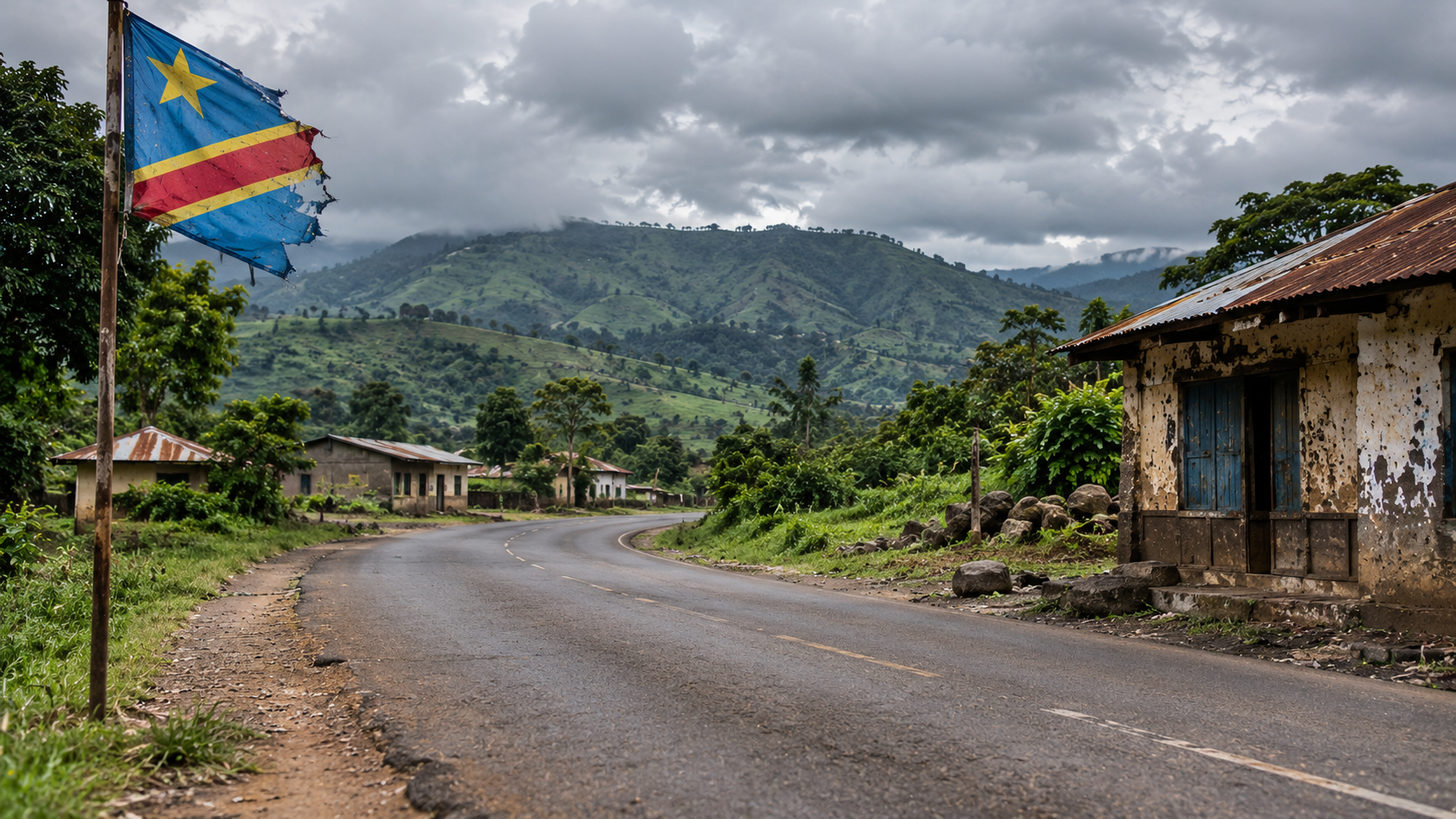
Peace efforts in the Democratic Republic of the Congo (DRC) have failed to halt fighting in the country’s east, leaving civilians facing renewed displacement and insecurity.
Despite diplomatic agreements negotiated in Washington and Doha, clashes continue across North and South Kivu provinces.
According to Al Jazeera, recent fighting between Congolese forces and the Front for the Refoundation of the Nation (FRN) has raised fresh concerns about the effectiveness of international mediation.
Residents say repeated negotiations have brought little improvement to their daily lives.
Fighting continues despite DR Congo peace agreements
Two major diplomatic initiatives are attempting to address the conflict in eastern DRC.
The Washington Accords, signed in December 2025, focus on tensions between the DRC and Rwanda.
Meanwhile, the Doha process addresses negotiations between Kinshasa and the armed coalition previously known as AFC/M23.
The Doha framework was signed in November 2025. Further discussions in August 2026 produced a roadmap for implementation.
However, fighting has continued despite these commitments.
In October 2026, the FRN emerged under the leadership of former President Joseph Kabila.
The movement announced that it had replaced the AFC political-military coalition and assumed its existing commitments.
Nevertheless, questions remain about the relationship between the new structure and M23.
Armed clashes intensify in South Kivu
In early November, FRN fighters launched an offensive through Kahuzi-Biega National Park and along National Road 3.
The route connects Bukavu with areas farther north.
According to conflict monitoring reports cited by Al Jazeera, fighters captured several localities, including Bitale and central Bulambika, on November 8.
However, the Congolese army disputed aspects of those reports.
Military officials said their forces had halted the advance at Bulambika and were preparing a counteroffensive.
The competing accounts highlight uncertainty over territorial control.
Meanwhile, civilians continue to face the consequences of the fighting.
Humanitarian organisations warn of worsening conditions
Renewed violence has forced more families from their homes and disrupted essential services.
Doctors Without Borders (MSF) said it reduced its staff presence in the Bunyakiri health zone because of worsening insecurity.
Some personnel were relocated to Bitale and Bukavu.
The organisation called on all parties to protect civilians, healthcare facilities and humanitarian workers.
Meanwhile, residents have expressed frustration over the lack of progress.
Bukavu resident Blaise Chasumba told Al Jazeera that repeated diplomatic meetings had failed to deliver peace.
He said communities continued to lose relatives and homes despite promises from the parties involved.
Rwanda and DRC remain divided
The conflict also reflects longstanding tensions between Rwanda and the DRC.
Congolese military officials accuse Rwandan forces of supporting armed groups operating in eastern Congo.
Rwanda denies supporting armed groups and points to the Democratic Forces for the Liberation of Rwanda (FDLR) as a security threat.
In February 2025, the United Nations Security Council condemned M23’s offensive and described direct support and participation by Rwandan forces.
The resolution also criticised support from Congolese forces to armed groups, particularly the FDLR.
It called for the withdrawal of Rwandan forces and the neutralisation of the FDLR.
However, the two governments remain divided over how their security commitments should be implemented.
African Union calls for inclusive dialogue
The African Union has expressed concern about the limited progress of peace efforts.
Following an October 26 meeting, its Peace and Security Council called for stronger coordination between the Washington and Doha processes.
The AU also urged broader political dialogue involving Congolese communities.
Civil society representatives say negotiations should address local grievances, political exclusion and the needs of displaced families.
Dieumerci Mungu Akonkwa, a civil society coordinator in North Kivu, told Al Jazeera that negotiations had failed to improve conditions for civilians.
He called for inclusive national dialogue involving political actors, religious leaders and civil society.
Civilians await meaningful peace
Eastern DRC has experienced decades of conflict involving armed groups, regional tensions and disputes over land and political representation.
Although diplomatic initiatives have produced agreements, their implementation remains limited.
For affected communities, the priority is ending violence, restoring essential services and allowing displaced families to return home.
Until fighting stops, the gap between diplomatic promises and conditions on the ground will remain a major challenge for DR Congo’s peace process.