
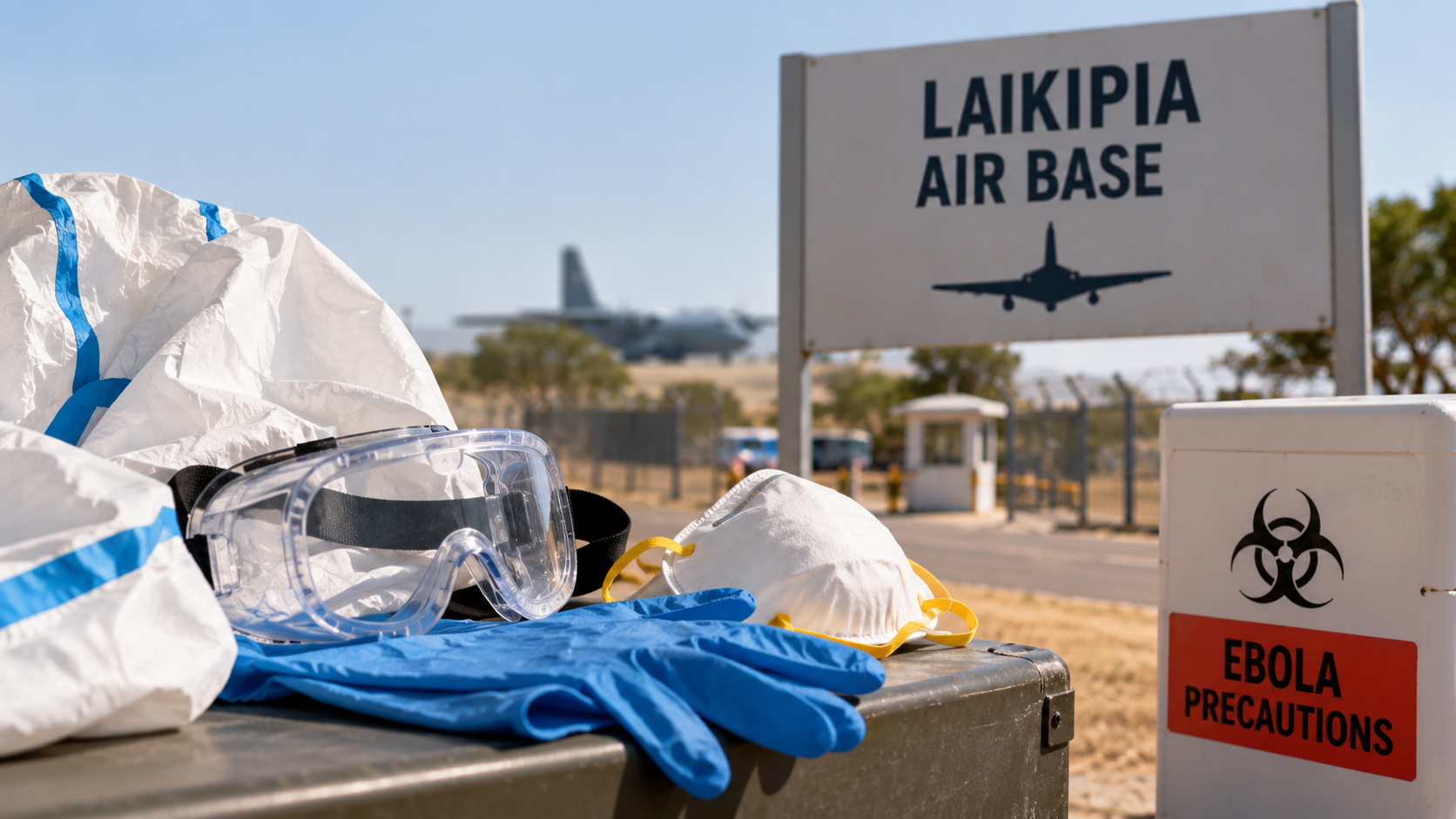
A US-supported Ebola quarantine camp in Kenya reportedly cost about $70 million but housed only seven people.
The 50-bed facility is at Laikipia Air Base. It was set up for Americans who may have been exposed to Ebola while working in the Democratic Republic of Congo.
Business Insider Africa, citing a Reuters investigation, reported that the camp later stood empty.
The large reported cost and limited use have raised questions. However, the number of people housed there does not alone show whether the money was wasted.
Why was the Ebola quarantine camp built?
The Ebola quarantine camp in Kenya was created to monitor people who may have been exposed to the virus.
It was not designed mainly as a treatment centre for people already confirmed to have Ebola.
Quarantine and treatment serve different purposes. A quarantine facility monitors people after possible exposure. A treatment centre cares for people who are infected or suspected of being infected.
The facility has 50 beds.
Kenya’s Daily Nation previously reported that American aid personnel arrived there in July. They had returned from an Ebola response mission in Congo.
There have also been questions about whether Kenyans can use the facility.
Health Cabinet Secretary Aden Duale later said the site would serve multiple users. However, available reports do not clearly establish the current rules for public access.
Kenya increases Ebola precautions
The issue has gained more attention after Kenya confirmed its first imported Ebola infection on October 6.
Kenyan authorities have increased surveillance and contact tracing.
Government figures reported by Kenya Broadcasting Corporation show that 652,584 travellers had been screened by October 6.
Authorities had also tested 267 samples across five laboratories.
Meanwhile, 4,971 healthcare workers had received training in Ebola prevention, detection and management.
President William Ruto also asked the National Security Council Committee to assess the situation.
The government has identified hospitals and county isolation centres as part of its response.
Does limited use mean the camp was a waste?
The reported $70 million cost is likely to attract scrutiny. Still, an empty emergency facility does not automatically mean the spending was wasted.
Emergency facilities need to be ready before a crisis develops. That can require equipment, staff and infrastructure even when beds are empty.
Several questions therefore remain important.
It is unclear from the available reporting exactly what the estimated $70 million covered. Questions also remain over how long the camp will operate and who can use it.
Its equipment may also remain available for future emergencies.
Ebola remains a regional concern
The Ebola quarantine camp in Kenya was established against the backdrop of a wider regional outbreak.
The World Health Organization declared the Bundibugyo Ebola outbreak in Congo and Uganda a public health emergency of international concern on May 17.
WHO has stressed the importance of surveillance, laboratory testing and safe patient referral. It has also called for properly equipped treatment facilities.
Kenya is now strengthening its own Ebola response following the country’s first imported infection.
The Laikipia facility remains one part of that wider preparedness system.