
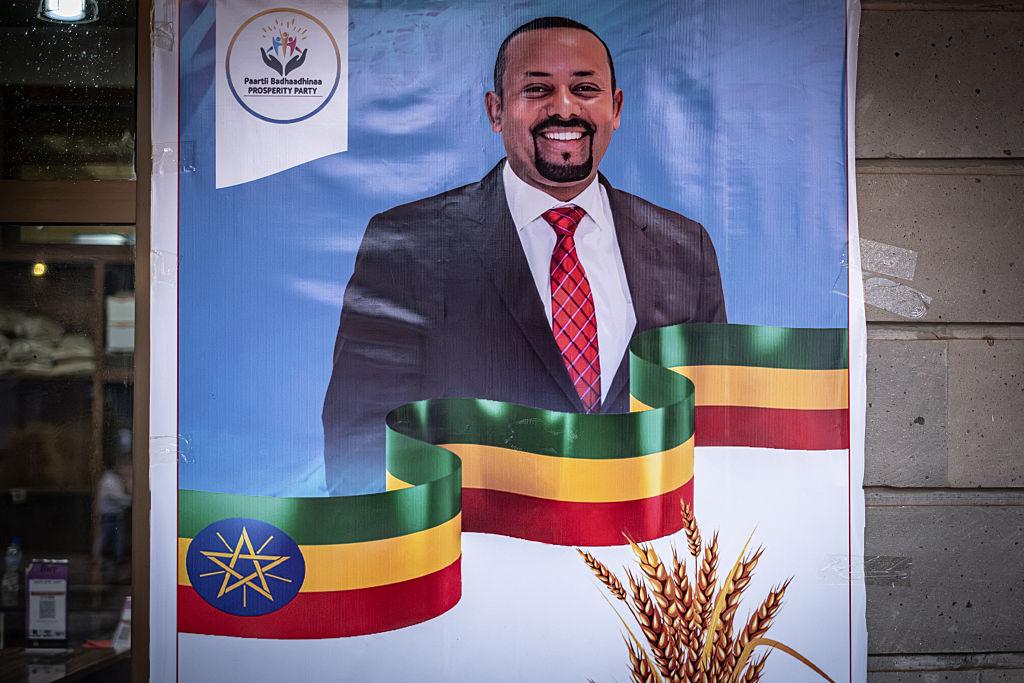
Ethiopian Prime Minister Abiy Ahmed’s ruling Prosperity Party has secured another sweeping parliamentary majority, according to election results released by the national electoral board on Sunday.
The party won 438 seats, around 90 percent of the seats for which results were announced, easily passing the 274-seat threshold needed to control the lower house of parliament.
The outcome was widely expected, with Abiy’s party facing a fragmented opposition and limited competition in several parts of the country. Not all of Ethiopia’s 547 parliamentary seats were contested, as voting did not take place in the northern Tigray region or in parts of Amhara.
Abiy, 49, came to power in 2018 after mass protests helped bring down the long-ruling Ethiopian People’s Revolutionary Democratic Front coalition. He formed the Prosperity Party the following year, replacing the coalition system that had dominated Ethiopian politics for more than a quarter of a century.
The party’s latest victory gives Abiy another strong mandate at a time when Ethiopia continues to face armed unrest, ethnic grievances and deep political divisions across several regions.
The Prosperity Party campaigned on promises of improved food security and rapid economic growth. Ethiopian officials have projected economic expansion of more than 10 percent in 2026, which would make the country one of Africa’s fastest-growing economies.
More than 50 million people were registered to vote. However, elections were not held in Tigray, where authorities cited “unfavourable conditions” following the region’s devastating two-year civil war and ongoing political turmoil.
The federal government also continues to face insurgencies in Oromiya and Amhara, the country’s two largest regions. In Oromiya, fighting between government forces and the Oromo Liberation Army has killed hundreds of people in recent years. In Amhara, the Fano militia has seized control of large rural areas since 2023, preventing voting in at least eight constituencies.
Although a 2022 peace deal formally ended the war in Tigray, political tensions remain high. Ethiopian officials and analysts have warned of renewed instability after the region’s main political party recently moved to reassert control over the local administration.
Opposition parties have accused the federal government of weakening political rivals through arrests, legal restrictions and pressure on party leaders. The government denies the allegations.
The latest result mirrors the 2021 elections, when the Prosperity Party also won a dominant share of the contested parliamentary seats.