
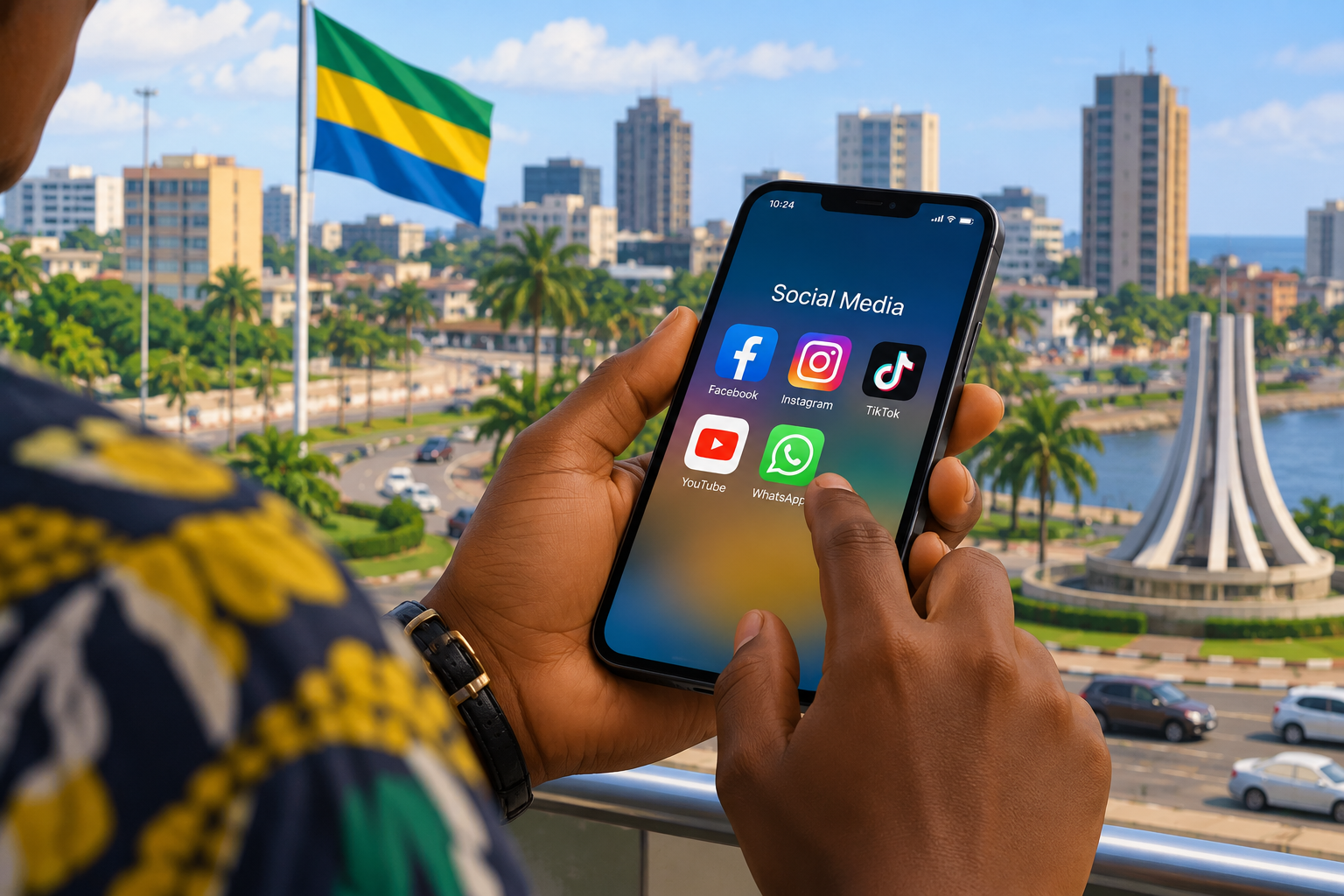
Gabon has restored access to major social media platforms after an eight-month suspension, ending restrictions that sparked widespread criticism over freedom of expression and government control of online communication.
The country’s media regulator, the High Communication Authority (HAC), announced that access to social networks was restored on Saturday, October 24.
The decision allows users to return to platforms including Facebook, TikTok, Instagram and YouTube.
However, new regulations requiring users to provide identification have raised questions about online privacy and anonymity.
According to Africanews and AFP, the government says the restrictions were necessary to establish stronger rules for social media use.
Why did Gabon ban social media?
Gabon suspended access to major social media platforms on February 17, 2026.
The HAC argued that online content was contributing to tensions and divisions within society.
The decision came during a period of social unrest under President Brice Oligui Nguema.
Authorities blocked access to Facebook, TikTok, Instagram and YouTube, while WhatsApp services remained unreliable.
The restrictions affected millions of users who depend on social networks for communication, news and business activities.
However, some residents continued accessing the platforms through virtual private networks, commonly known as VPNs.
These services allow users to route their internet traffic through encrypted connections.
VPN provider Proton reported a 60,000% increase in downloads of its VPN application the day after the restrictions began.
The sharp increase highlighted attempts by internet users to bypass the suspension.
Gabon introduces new social media rules
Although access has now been restored, the government has introduced additional requirements for social media users.
Under the new framework, users must provide formal identification.
The measure effectively removes the possibility of anonymous participation on social media platforms, according to the regulator’s announcement.
The HAC says the eight-month suspension gave authorities time to revise the country’s legal framework for regulating online content.
Officials also confirmed discussions with major technology companies about improving content moderation.
These include Meta, which owns Facebook and Instagram, alongside TikTok and YouTube.
The government argues that stronger oversight will help address harmful online content and prevent social tensions.
However, the identification requirements could raise concerns about privacy and the ability to express opinions anonymously.
Opposition criticises restrictions
Gabon’s opposition strongly criticised the social media suspension.
Political figures and activists described the restrictions as an abuse of government power.
Several legal challenges were filed against the ban, but courts rejected them.
Former Prime Minister Alain-Claude Bilie-By-Nze was among the most prominent critics.
He has been detained since April over allegations of abuse of trust and fraud linked to events dating back to 2008.
Activists have pointed to his detention and the social media restrictions as signs of growing pressure on political opposition.
The government has defended its actions, while critics continue to question their implications for civil liberties.
Gabon’s political transition faces scrutiny
The controversy comes as Gabon continues its political transition following the military coup of August 2023.
The takeover ended more than five decades of rule by the Bongo family.
Brice Oligui Nguema, the military general who led the coup, subsequently became president.
His rise initially generated hopes of political reform and democratic change.
However, the social media restrictions and treatment of opposition figures have prompted renewed debate about the country’s political direction.
Critics argue that limits on digital communication undermine those earlier expectations.
Meanwhile, the government maintains that regulating online platforms is necessary to protect social stability.
What does the decision mean for internet users?
The restoration of social media access marks a significant change for Gabon’s internet users.
Facebook and TikTok are among the country’s most widely used platforms.
Businesses, journalists and ordinary citizens can once again access these services without relying on VPNs to bypass the restrictions.
However, the new identification requirements mean online activity will take place under tighter regulatory oversight.
Questions remain about how the rules will be implemented and how personal information will be protected.
The HAC has not provided detailed information about the enforcement of the new identification requirements in the report.
For now, Gabon’s decision ends eight months of restricted social media access.
But the debate over digital freedoms, privacy and government oversight is likely to continue.